


The landscape of American retirement planning and social policy underwent a significant shift this week as the nation’s two largest financial institutions, JPMorgan Chase and Bank of America, announced their participation in a burgeoning federal pilot program designed to seed the financial futures of the next generation. By committing to match the U.S. government’s $1,000 contribution to newly established “Trump accounts” for eligible employees’ children, these banking behemoths are signaling a major private-sector endorsement of a policy aimed at mitigating the country’s systemic wealth gap through the power of early-life compounding.
The initiative, colloquially known as "Trump accounts," represents an experimental foray into a concept often described by economists as "baby bonds" or universal savings accounts. Under the current pilot framework, the U.S. Treasury deposits a one-time $1,000 sum into a tax-advantaged investment vehicle for eligible children born in the United States between January 1, 2025, and December 31, 2028. By offering a dollar-for-dollar match, JPMorgan and Bank of America effectively double the starting capital for the children of their staff, creating a $2,000 principal before a single cent of household income is contributed.
The move by these financial titans is not merely a philanthropic gesture but a strategic alignment with a growing movement to democratize capital. The program was conceptualized in part by Brad Gerstner, the founder of Altimeter Capital, who has long advocated for a "shareholder democracy" where every American child has a stake in the growth of the U.S. economy. The logic is rooted in the mathematical inevitability of long-term investing: a $2,000 investment at birth, assuming a conservative 7% annual return, could theoretically grow to over $160,000 by the time the beneficiary reaches retirement age, without any additional deposits.
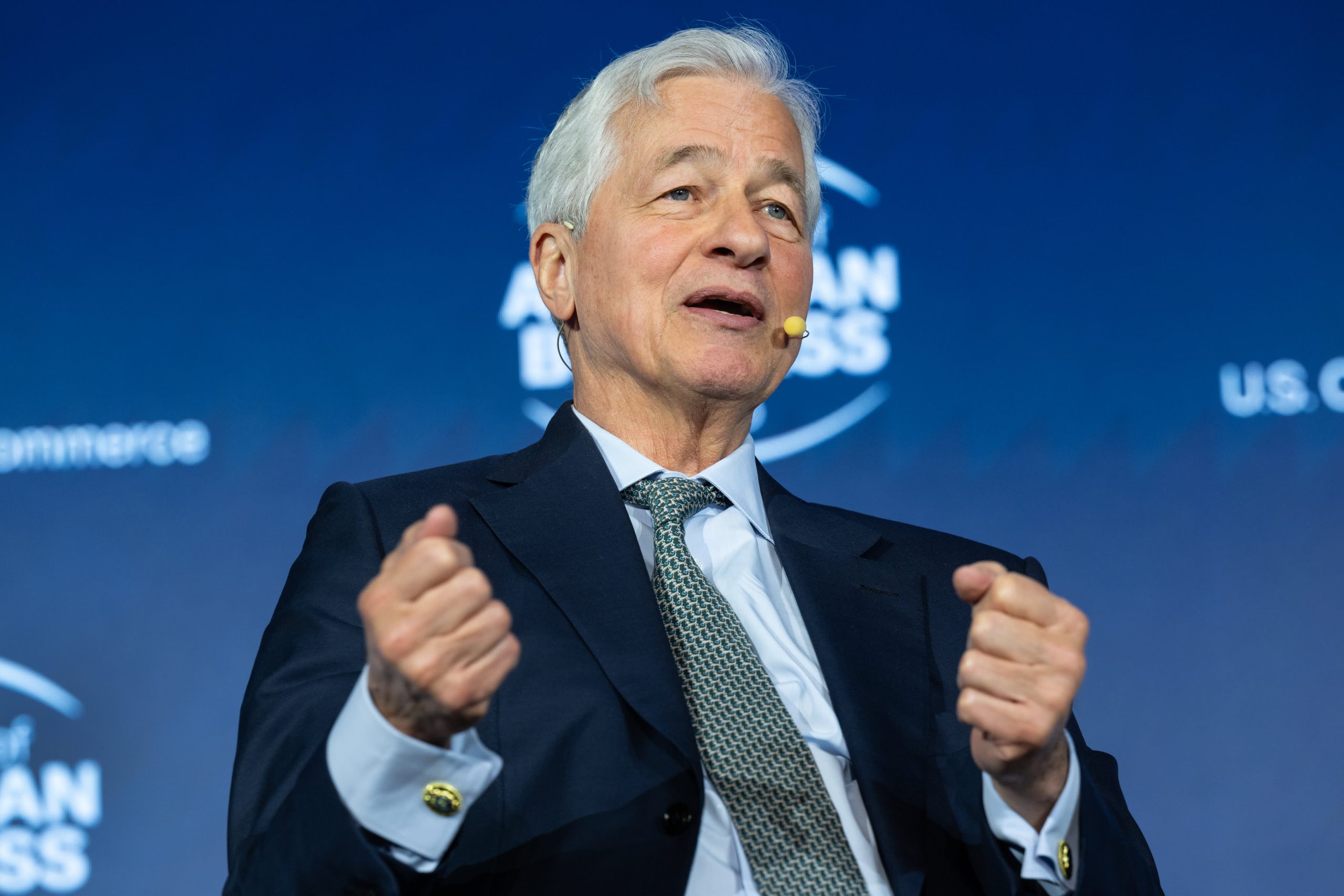
Jamie Dimon, Chairman and CEO of JPMorgan Chase, emphasized the firm’s role in fostering long-term stability for its workforce. In a statement addressing the bank’s 190,000 U.S.-based employees, Dimon noted that the match is part of a broader commitment to the financial health of families. For a firm like JPMorgan, which manages trillions in assets, the endorsement of such a program lends significant institutional weight to the idea that early-childhood financial intervention is a viable tool for economic mobility. Similarly, Bank of America’s internal communication to its staff lauded the government’s "innovative solutions," positioning the match as a key component of its competitive benefits package.
The participation of the "Big Two" follows a trail blazed by other major players in the financial services sector. A coalition of firms including BlackRock, the world’s largest asset manager, as well as BNY, Charles Schwab, and fintech disruptors like Robinhood and SoFi, have already pledged similar matches. This corporate surge suggests that the financial industry views these accounts not just as a social good, but as a mechanism to expand the future investor class. By turning millions of children into account holders, the industry is effectively cultivating a new generation of market participants who will grow up with a tangible connection to the performance of the S&P 500 and the broader equity markets.
The economic implications of a nationwide rollout could be profound. Critics of traditional welfare programs often point to the "velocity of money" and the lack of asset accumulation among lower-income brackets. "Trump accounts" seek to flip this script by ensuring that the least wealthy citizens have exposure to the same wealth-building engines as the top 1%—namely, the stock market and compounding interest. If scaled beyond the pilot phase to the approximately 3.6 million children born in the U.S. annually, the program could represent a massive, decentralized sovereign wealth fund for the American people.

However, the program is not without its skeptics and complexities. Economic analysts point out that the success of such accounts depends heavily on the underlying investment vehicles and the fees associated with them. There is also the question of fiscal sustainability. While the current pilot is funded for a specific four-year window, making the program permanent would require a long-term commitment from the Treasury, potentially adding billions to the federal budget. Furthermore, global comparisons offer a mixed bag of results. The United Kingdom attempted a similar "Child Trust Fund" initiative in the early 2000s, which was eventually curtailed due to budget constraints following the 2008 financial crisis. Conversely, countries like Singapore have seen success with their Child Development Accounts (CDA), though those are often tied more closely to education and healthcare than to long-term retirement.
The involvement of high-profile private citizens has also added a layer of cultural momentum to the initiative. Beyond the boardroom, the program has attracted financial backing from billionaires Michael and Susan Dell and hedge fund veteran Ray Dalio. Even figures from the entertainment industry, such as Nicki Minaj, have voiced support or made commitments to the cause, suggesting that the concept of "starting at zero" is becoming socially unfashionable in the context of modern American capitalism.
For the employees at JPMorgan and Bank of America, the immediate impact is a tangible increase in household net worth. In an era where many middle-class families struggle to balance student loan debt, mortgage payments, and rising childcare costs, a $2,000 "head start" for a newborn can alleviate some of the long-term anxiety regarding generational wealth transfer. From a corporate perspective, these matches serve as a powerful retention tool. In a tight labor market where "financial wellness" has become a buzzword in human resources, providing a benefit that grows over decades creates a unique bond between the employer and the employee’s family legacy.
As the pilot program progresses through 2028, researchers will likely monitor the "Trump accounts" for their impact on financial literacy. One of the secondary goals of the initiative is to encourage parents to engage with the financial system. When a parent sees a $2,000 balance in their child’s name, they are statistically more likely to contribute their own funds, even in small increments. This "nudging" effect could lead to a significant increase in the national savings rate, which has historically lagged behind other developed economies.
The broader market data supports the necessity of such interventions. According to Federal Reserve data, the top 10% of U.S. households hold approximately 67% of the nation’s wealth, while the bottom 50% hold just 2.5%. By seeding accounts at birth, the government and its corporate partners are attempting to address the "wealth gap" at its source—the lack of initial capital. While a $2,000 deposit does not solve the immediate challenges of poverty, it changes the long-term trajectory of a family’s economic standing.
In the coming months, more Fortune 500 companies are expected to follow the lead of the banking sector. Retailers, tech giants, and manufacturing firms are reportedly evaluating the cost-benefit analysis of matching these accounts as part of their 2026 and 2027 benefits planning. If the trend continues, the "Trump account" match could become as standard as the 401(k) match, fundamentally altering the American social contract.
Ultimately, the commitment from JPMorgan Chase and Bank of America represents a pivotal moment where the machinery of Wall Street is being leveraged to support a populist financial goal. By aligning the interests of the Treasury, the largest banks in the world, and the average American worker, the program seeks to prove that capital accumulation is not a zero-sum game. Whether this experiment will successfully bridge the divide between the "haves" and the "have-nots" remains to be seen, but with billions of dollars in corporate and federal backing now flowing toward the cribs of America’s newborns, the foundation for a new era of generational wealth is undeniably being laid.