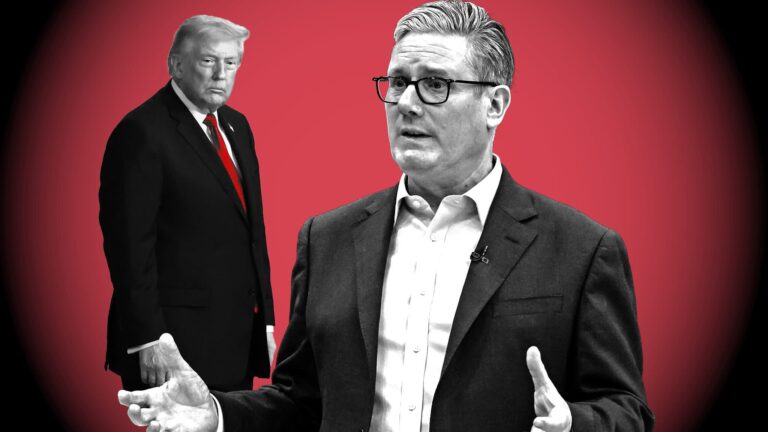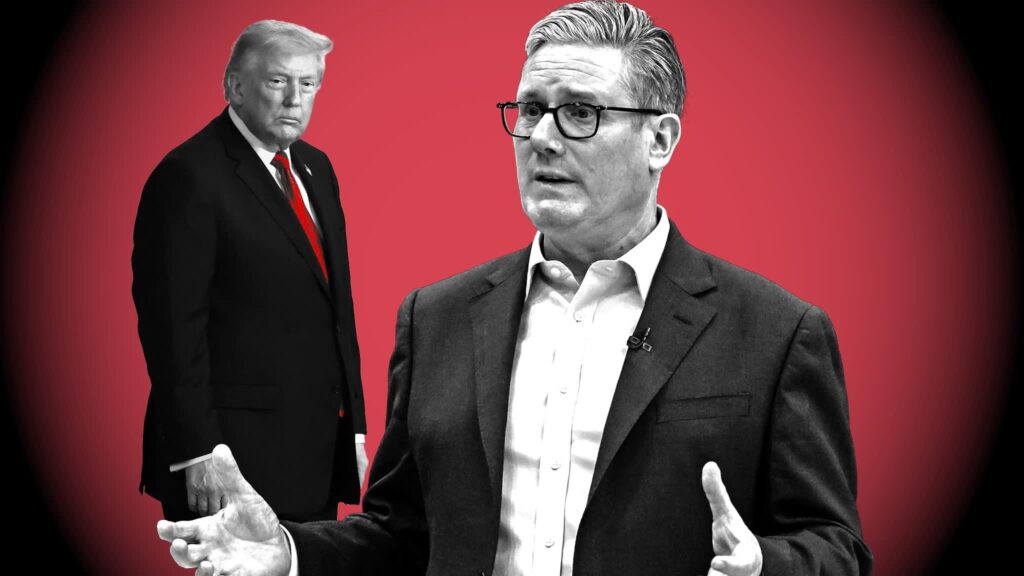


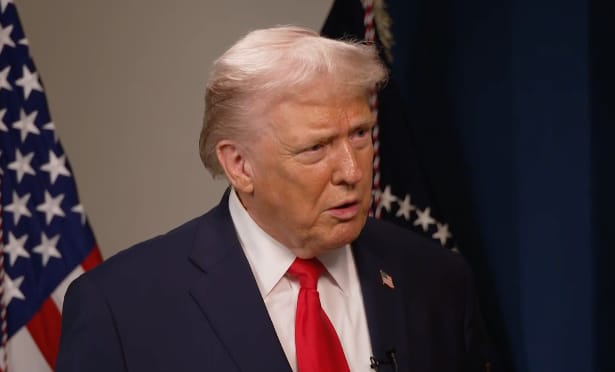
The intersection of global high finance and executive power reached a fever pitch this week in Davos, Switzerland, as President Donald Trump signaled that the exhaustive search for the next Chair of the Federal Reserve is nearing its conclusion. Speaking during a high-stakes interview at the World Economic Forum, the President indicated that a process which began in September with nearly a dozen potential candidates has been whittled down to a singular favorite. While the President stopped short of naming his choice, his comments have sent shockwaves through global markets, where investors are desperately seeking clarity on the future of American monetary policy and the institutional independence of the world’s most powerful central bank.
The search for a successor to Jerome Powell has been one of the most scrutinized personnel decisions of the current administration. Initially featuring a list of 11 high-profile economists, regulators, and financiers, the field has narrowed significantly. According to the President, the selection committee—led by Treasury Secretary Scott Bessent—has refined the list to a final few, with the President himself suggesting that, in his mind, the decision may already be made. This pivot marks a critical juncture for the U.S. economy, as the next Fed Chair will inherit a complex landscape defined by lingering inflationary pressures, a massive federal deficit, and a global shift toward protectionist trade policies.
Among the finalists, several names have consistently surfaced as frontrunners, each representing a distinct philosophy for the Federal Reserve’s future. Former Fed Governor Kevin Warsh and current Governor Christopher Waller are widely viewed as the leading "institutional" candidates. Warsh, who served on the Board of Governors during the 2008 financial crisis, is known for his skepticism of prolonged quantitative easing and his advocacy for a more rule-based approach to monetary policy. Waller, on the other hand, is a respected academic economist who has become an influential voice on the current board, often seen as a pragmatist who balances the Fed’s dual mandate of price stability and maximum employment.
The potential inclusion of Rick Rieder, the head of global fixed income at BlackRock, introduces a different dynamic. Rieder’s candidacy represents the possibility of a "Wall Street" chair—someone with deep, real-time experience in bond markets and liquidity management. Trump’s public praise for Rieder, describing him as "impressive" following their recent interview, suggests the President is seriously considering a non-traditional pick who might prioritize market functionality and credit availability. Conversely, the exclusion of Kevin Hassett, the National Economic Council chief, from the Fed shortlist appears to be a strategic move to keep a trusted economic advisor within the White House’s inner circle.
The backdrop to this selection process is one of unprecedented tension between the executive branch and the Federal Reserve. For years, the President has been a vocal critic of Jerome Powell, frequently targeting the Chair’s decisions on interest rate hikes and the pace of balance sheet reduction. This friction has escalated into a broader debate over the limits of presidential authority. The recent Supreme Court hearing regarding the attempted removal of Governor Lisa Cook underscores the legal complexities of "at-will" terminations within independent regulatory bodies. If the administration succeeds in reshaping the board’s composition, it could signal a fundamental shift in how the Fed operates, potentially moving away from the era of technocratic isolation toward a model more responsive to the administration’s broader economic agenda.
Economists warn that any perceived erosion of the Federal Reserve’s independence could have dire consequences for the U.S. dollar and the stability of the Treasury market. Historically, the Fed’s ability to make unpopular decisions—such as raising rates to combat inflation despite political pressure to keep them low—has been the bedrock of global confidence in American finance. If the next Chair is seen as a political appointee tasked with facilitating fiscal expansion through low rates, the "inflation premium" on long-term bonds could rise, inadvertently driving up borrowing costs for consumers and the government alike.

The personal animosity between the President and the current Fed leadership has also manifested in more granular criticisms, most notably regarding the $2.5 billion renovation of the Federal Reserve’s headquarters in Washington, D.C. The President has frequently cited the project as an example of bureaucratic waste, claiming he could have completed the work for a fraction of the cost. This issue has moved beyond mere rhetoric, as the Justice Department has issued subpoenas related to the project’s management. This legal pressure, combined with the President’s assertion that Powell has "not done a good job," suggests that the transition of power at the central bank will be far from a traditional hand-off.
A significant point of uncertainty remains: whether Jerome Powell will choose to stay on the Board of Governors after his term as Chair expires. While his chairmanship is clearly nearing its end, Powell’s term as a governor lasts until 2028. Should he choose to remain, he would continue to hold a vote on the Federal Open Market Committee (FOMC), potentially serving as a dissenting voice against any radical shifts in policy. The President appeared indifferent to this possibility, suggesting that while Powell is free to stay, the environment within the Fed may become increasingly uncomfortable for him. This dynamic could lead to a fractured FOMC, where the "old guard" and the "new appointees" clash over the direction of interest rates and the management of the Fed’s nearly $7 trillion balance sheet.
From a global perspective, the stakes could not be higher. Central banks around the world, from the European Central Bank to the Bank of Japan, often take their cues from the Federal Reserve. A significant shift in U.S. monetary policy—particularly one that favors a weaker dollar to boost domestic manufacturing—would force a realignment of global trade and capital flows. Emerging markets, which hold vast amounts of debt denominated in U.S. dollars, are particularly sensitive to the Fed’s trajectory. A "dovish" turn by a Trump-appointed Chair might provide short-term relief for these nations but could spark a global inflationary cycle if not managed with precision.
Market data suggests that investors are already beginning to price in a "Trump Fed." Expectations for a more aggressive series of rate cuts have fluctuated based on the perceived likelihood of different candidates. A Warsh or Waller appointment might be viewed as a "stability" pick, likely to maintain a predictable, data-dependent path. A Rieder appointment, however, might signal a more creative or interventionist approach to market liquidity. Regardless of the final name, the primary concern for the bond market remains the "term premium"—the extra yield investors demand for holding long-term debt in an environment of political and economic uncertainty.
As the President prepares to make his formal announcement, the focus remains on the "one" candidate who has captured his confidence. The selection will be more than just a personnel change; it will be a referendum on the future of the American economy. Will the Federal Reserve remain a bulwark of institutional stability, or will it become a more integrated tool of executive economic policy? The answer will define the next four years of global finance, influencing everything from the interest on a suburban mortgage to the valuation of the world’s largest corporations.
In the hallowed halls of Davos, where the world’s financial elite gather to forecast the future, the consensus is one of wary anticipation. The Federal Reserve is the "lender of last resort" and the guardian of the world’s reserve currency. Any move that alters its DNA is a move that alters the global order. With the President indicating he has found his person, the wait for a formal nomination begins—a nomination that will arguably be the most consequential economic appointment of the decade. The coming weeks will reveal if this new leader can navigate the narrow path between political expectations and the cold, hard realities of economic data, a balance that has defined the American central bank for over a century.