

In the early months of the conflict in Ukraine, military analysts and defense economists were quick to draft the obituary of the attack helicopter. Images of sophisticated Russian Ka-52 "Alligators" being downed by shoulder-fired missiles suggested that the rotary-wing era had reached a terminal point, rendered obsolete by the proliferation of low-cost man-portable air-defense systems (MANPADS) and the ubiquitous presence of First-Person View (FPV) drones. However, as the theater of war has matured, a more nuanced reality has emerged. Rather than disappearing from the battlefield, the "war chopper" is undergoing a profound tactical and technological metamorphosis, sparking a renewed wave of investment and strategic reassessment across the global defense industry.
The initial skepticism was rooted in undeniable data. According to open-source intelligence trackers, Russia lost a significant portion of its modern attack helicopter fleet within the first year of the invasion. These losses were not merely tactical setbacks but represented billions of dollars in lost capital equipment. This prompted a cooling effect on global markets, as defense ministries questioned the wisdom of committing vast portions of their procurement budgets to platforms that appeared vulnerable to a $50,000 missile. Yet, the narrative of obsolescence overlooked the adaptability of rotary-wing operations and the unique capabilities that fixed-wing aircraft and unmanned aerial vehicles (UAVs) have yet to replicate.
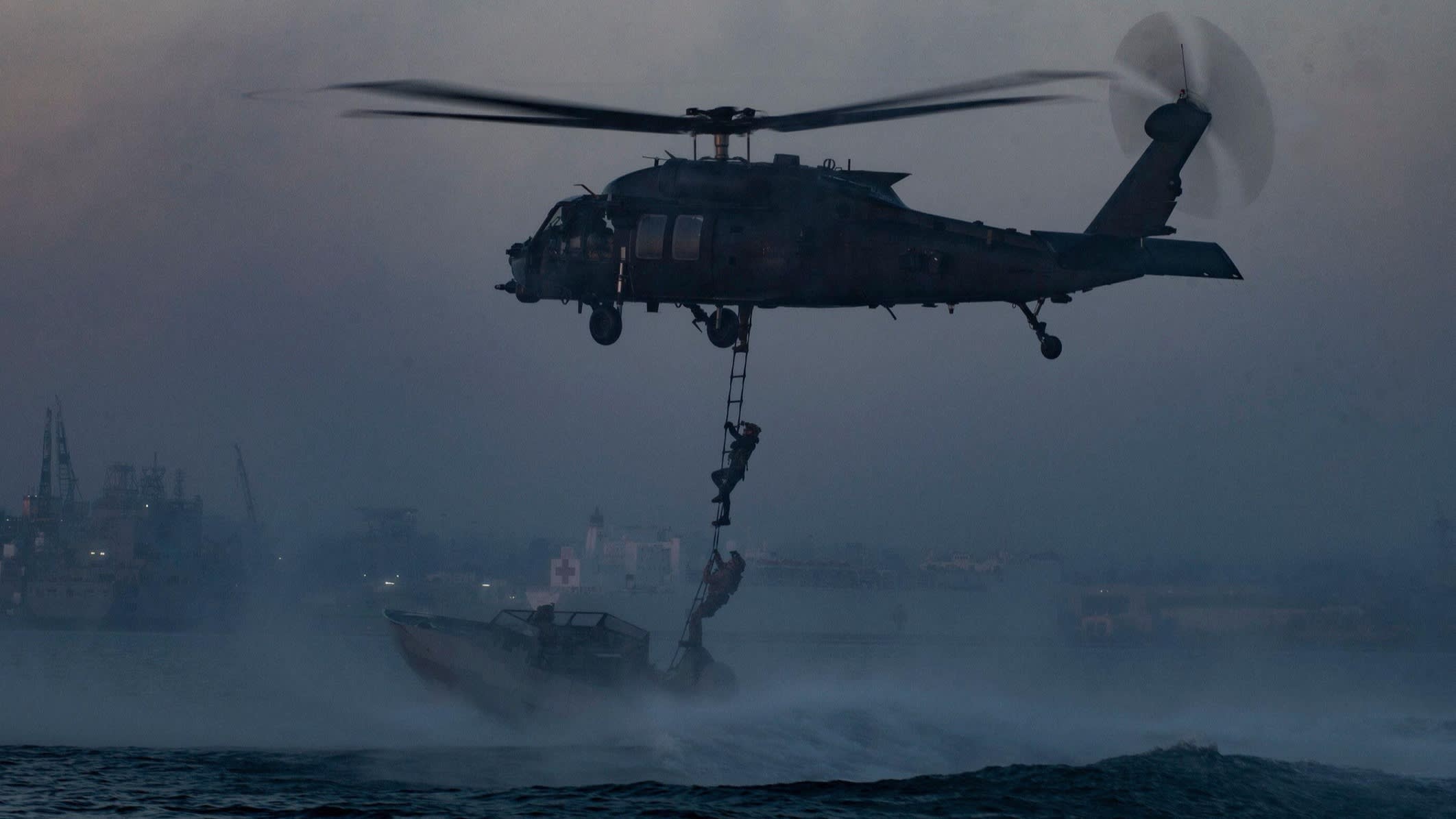
The resurgence of the helicopter is characterized by a shift from "close-in" tank hunting to "standoff" precision strikes and integrated electronic warfare. Modern pilots have transitioned to low-altitude, nap-of-the-earth flying, utilizing the terrain to mask their signatures from radar. More importantly, the integration of long-range munitions—such as the Israeli Spike NLOS or the American AGM-114 Hellfire—allows helicopters to engage targets from distances exceeding 10 to 30 kilometers. By operating outside the range of most short-range air defenses, the attack helicopter has transformed into a highly mobile, "flying artillery" platform capable of rapid repositioning across hundreds of miles of front line.
From an economic perspective, the global attack helicopter market remains surprisingly robust, projected to grow from approximately $19 billion in 2023 to over $25 billion by 2030. This growth is driven not by traditional procurement alone but by a massive cycle of modernization and the integration of Manned-Unmanned Teaming (MUM-T) technologies. In this new doctrine, the helicopter acts as a central command node for a swarm of drones. The pilot remains in a safe standoff position while controlling a "loyal wingman" UAV that flies ahead to scout targets or draw enemy fire. This hybrid approach preserves the human decision-making and heavy-payload capabilities of the helicopter while mitigating the risks to the airframe and crew.
The United States Army recently sent shockwaves through the aerospace sector by canceling its Future Attack Reconnaissance Aircraft (FARA) program, a multi-billion dollar initiative intended to replace the retired OH-58 Kiowa. While some interpreted this as a move away from helicopters, the decision was actually a strategic reallocation of capital. The Pentagon realized that the specific requirements of a light scout helicopter were better met by advanced drones, allowing them to funnel resources into the Future Long-Range Assault Aircraft (FLRAA) program. Bell Textron’s V-280 Valor, a tilt-rotor aircraft, represents the next generation of this investment, combining the vertical takeoff flexibility of a helicopter with the speed and range of a fixed-wing plane.
This shift has significant implications for the "Big Three" of Western rotary-wing manufacturing: Boeing, Lockheed Martin (via Sikorsky), and Airbus. Boeing’s AH-64E Apache Guardian remains the gold standard for heavy attack, with a backlog of orders that includes a massive $12 billion deal with Poland for 96 units. This sale underscores a broader trend in Eastern Europe, where nations are prioritizing heavy armor and attack aviation as a deterrent against conventional ground incursions. For these nations, the helicopter is not just a weapon but a critical component of a combined-arms strategy that includes tanks, infantry fighting vehicles, and air superiority.
In the Indo-Pacific region, the strategic calculus for helicopters is dictated by maritime geography and the "tyranny of distance." Here, the focus has shifted toward navalized versions of attack and utility helicopters capable of operating from the decks of destroyers and amphibious assault ships. Countries like Australia, Japan, and South Korea are investing heavily in platforms that can conduct anti-submarine warfare (ASW) and provide over-the-horizon targeting for anti-ship missiles. The economic impact is felt in the specialized supply chains required for corrosion-resistant materials and folding-rotor technology, creating a high-margin niche for aerospace firms.
European manufacturers are also vying for dominance in this shifting landscape. The Airbus Tiger, despite some maintenance challenges reported by the Australian military, continues to be upgraded by France and Spain to the "MkIII" standard. This modernization focuses on digitizing the cockpit and integrating the latest European missile systems, ensuring the platform remains relevant through 2040. Meanwhile, Turkey has emerged as a disruptive player in the global market. The Turkish Aerospace Industries (TAI) T129 Atak, developed in partnership with Leonardo, has found success in export markets like the Philippines and Nigeria, offering a cost-effective alternative to more expensive American or European platforms.
However, the "return of the war chopper" is not without its economic hurdles. The cost of a modern attack helicopter has ballooned, with some fully equipped units rivaling the price of a fifth-generation fighter jet. This creates a high "opportunity cost" for smaller nations. Furthermore, the supply chain for advanced sensors, such as Longbow fire-control radars and thermal imaging systems, is under immense strain. The scarcity of semiconductors and specialized aerospace alloys has led to lead times extending beyond 36 months for new builds. For defense contractors, the challenge is no longer just about engineering superiority but about manufacturing resilience and the ability to scale production in a "just-in-case" rather than "just-in-time" global economy.
Expert analysis suggests that the future of the platform lies in its ability to survive in a "contested electromagnetic environment." As electronic warfare (EW) becomes the primary weapon of the 21st century, helicopters are being outfitted with increasingly sophisticated self-protection suites. These systems can jam incoming missiles, spoof enemy radar, and even use high-powered lasers to blind optical sensors. The R&D expenditure in these "soft kill" technologies is now outpacing the investment in traditional "hard kill" weaponry, reflecting a shift in how air superiority is maintained at low altitudes.
The role of the helicopter is also being redefined by the rise of "asymmetric rotary wing" tactics. In various theaters, light utility helicopters are being up-armed with modular weapon kits, transforming them into "light attackers" at a fraction of the cost of a dedicated gunship. This democratization of attack aviation allows middle-power nations to field significant airpower without the fiscal burden of a heavy Apache or Tiger fleet. This trend is particularly evident in Africa and Southeast Asia, where internal security and counter-insurgency operations favor versatile, multi-role platforms over specialized tank-hunters.
Ultimately, the enduring value of the attack helicopter lies in its psychological and tactical flexibility. It remains the only platform capable of hovering, providing persistent overwatch for ground troops, and delivering devastating firepower with surgical precision in complex urban or forested environments. While drones will undoubtedly take over the "dull, dirty, and dangerous" reconnaissance missions, the helicopter’s role as a mobile command post and heavy-hitter is being reinforced rather than replaced.
As global defense spending continues to climb toward $2.5 trillion annually, the rotary-wing sector is entering a period of high-stakes evolution. The lessons learned on the battlefields of today are being baked into the designs of tomorrow. The "war chopper" is not returning to its former glory; it is evolving into a more intelligent, more connected, and more lethal component of the modern integrated force. For investors and policymakers, the message is clear: the age of the helicopter is far from over—it is simply entering its most sophisticated chapter yet.