


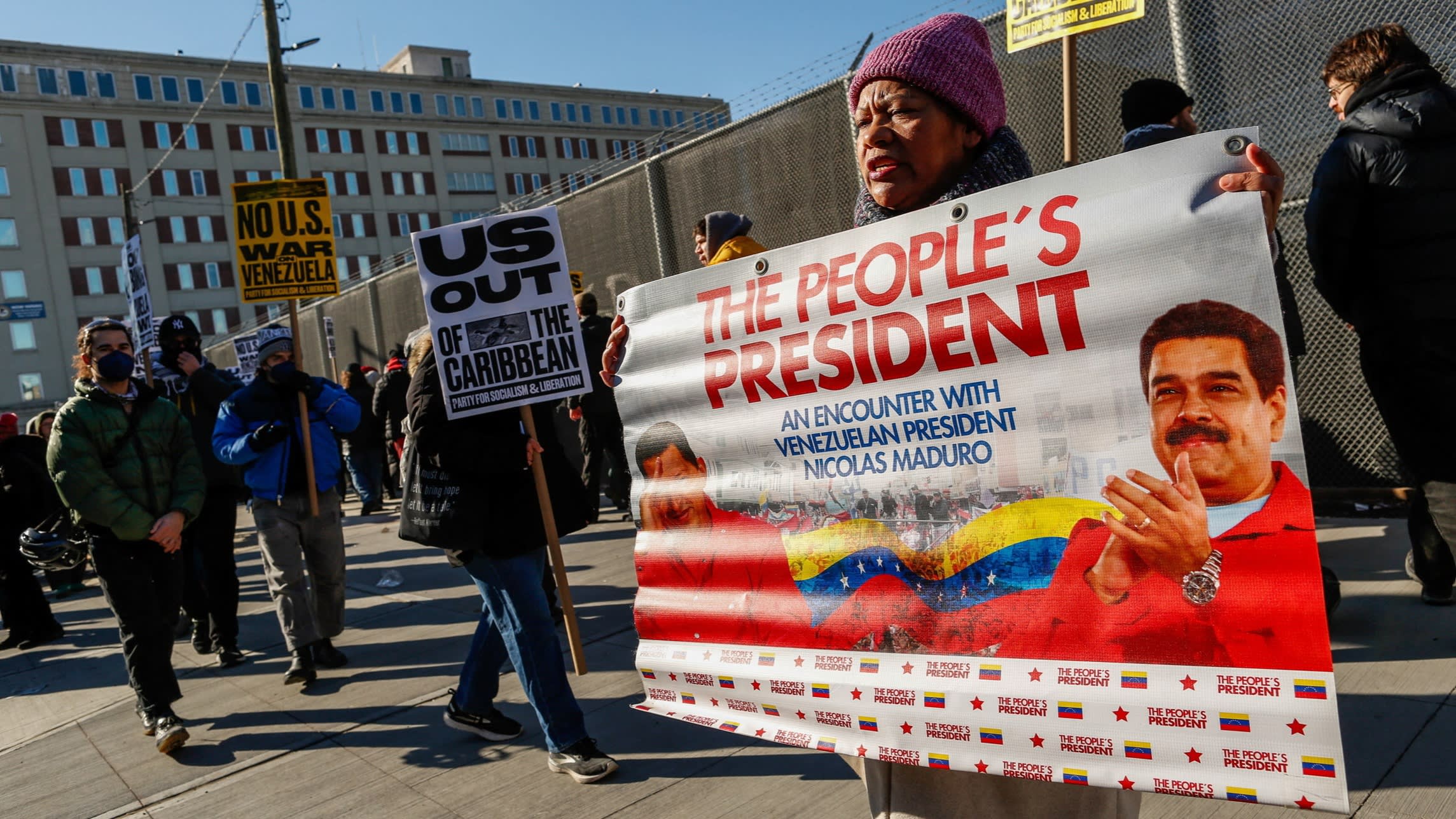
The intersection of international diplomacy, federal criminal law, and the doctrine of sovereign immunity is currently facing its most rigorous test as the United States Department of Justice intensifies its long-standing legal campaign against Venezuelan leader Nicolás Maduro. This judicial pursuit, which began in earnest with a 2020 indictment charging Maduro and several high-ranking associates with narco-terrorism and corruption, has evolved into a complex geopolitical chess match. At the heart of the matter is a fundamental question that challenges the bedrock of global governance: can a domestic court hold a foreign head of state accountable for crimes committed while in power, or does the tradition of "head-of-state immunity" provide an impenetrable shield against foreign prosecution?
For decades, the principle of sovereign immunity has served as a cornerstone of international relations, ensuring that world leaders can conduct state business without the constant threat of litigation in foreign jurisdictions. However, the U.S. government’s case against Maduro argues that the protections typically afforded to a head of state do not extend to "official acts" that constitute a criminal enterprise. The 2020 indictment alleges that Maduro led a cocaine-trafficking organization known as the "Cartel of the Suns," which purportedly sought to "flood" the United States with narcotics as a means of undermining American social stability. By framing the Venezuelan government not merely as a political adversary but as a criminal syndicate, the U.S. legal strategy seeks to bypass traditional immunity hurdles.
The timing of this legal pressure is inextricably linked to the volatile economic landscape of Venezuela, a nation that sits atop the world’s largest proven oil reserves yet remains mired in a decade-long financial collapse. Since Maduro took office in 2013, Venezuela’s Gross Domestic Product (GDP) has contracted by an estimated 75%, a figure that represents one of the most severe economic downturns in modern history for a country not actively at war. The hyperinflation that once peaked at over 1.8 million percent has decimated the purchasing power of the bolívar, forcing the administration to adopt a de facto dollarization to prevent a total societal breakdown. In this context, the U.S. legal case is not just a matter of criminal justice; it is a powerful lever of economic statecraft intended to isolate the Maduro administration from the global financial system.
Legal scholars and international observers are watching the case closely, particularly in light of recent U.S. Supreme Court rulings regarding presidential immunity within the United States. While those domestic rulings focused on the powers of an American president, the legal precedents established regarding "official" versus "unofficial" acts could have significant ripple effects on how U.S. courts interpret the Foreign Sovereign Immunities Act (FSIA). If the DOJ can successfully argue that drug trafficking and money laundering are inherently private or criminal acts rather than state functions, it sets a precedent that could be applied to other authoritarian leaders globally. This "legal exceptionalism" is a double-edged sword; while it offers a path to accountability for human rights abuses, it also risks weaponizing domestic courts as tools for regime change, a move that critics argue could lead to retaliatory prosecutions of U.S. officials abroad.
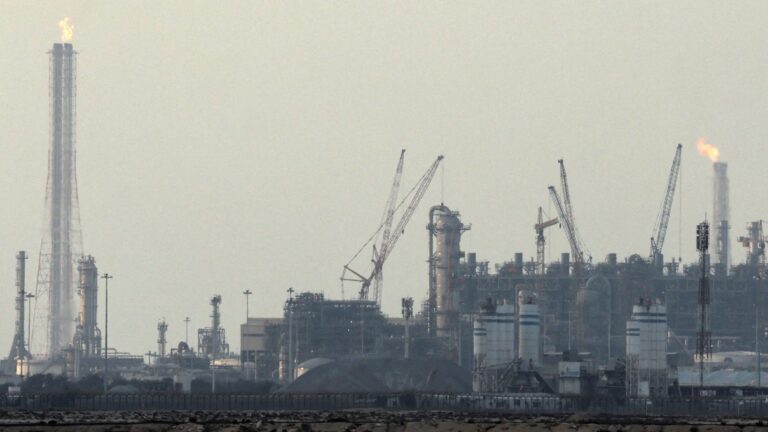
The economic implications of this legal battle extend far beyond the borders of Caracas and Washington. The global energy market remains sensitive to the status of Petróleos de Venezuela, S.A. (PDVSA), the state-owned oil giant. U.S. sanctions, which are reinforced by the criminal charges against the country’s leadership, have historically crippled PDVSA’s ability to export crude and import the diluents necessary for processing its heavy oil. However, the global energy crisis sparked by the conflict in Ukraine has forced a pragmatic recalibration. The U.S. Treasury Department has, at various intervals, issued limited licenses to companies like Chevron, allowing them to resume some operations in Venezuela. This creates a paradoxical situation where the U.S. is simultaneously pursuing Maduro as a "narco-terrorist" while facilitating transactions that provide his government with essential hard currency.
Market analysts suggest that the legal cloud over Maduro creates a "risk premium" for any international investor considering the Venezuelan market. The lack of legal certainty and the threat of secondary sanctions have driven away traditional Western capital, leaving a vacuum that has been filled by geopolitical rivals. China, Russia, and Iran have stepped in, providing credit lines and technical assistance in exchange for long-term access to Venezuelan resources. This shift has significant geopolitical consequences, as it integrates Venezuela into an alternative economic bloc that is increasingly insulated from the influence of the U.S. dollar and the SWIFT banking system.
The case also draws comparisons to the 1989 indictment and subsequent capture of Panamanian leader Manuel Noriega. Like Maduro, Noriega was accused of drug trafficking and was eventually unseated following a U.S. military intervention. However, the geopolitical environment of the 21st century is vastly different. Maduro maintains a robust domestic security apparatus and the support of key international allies, making a Noriega-style resolution unlikely. Instead, the U.S. has utilized the legal system to freeze billions of dollars in Venezuelan assets held abroad, including gold reserves in the Bank of England and the proceeds from CITGO, the U.S.-based refining arm of PDVSA. The legal battle over who controls these assets—the Maduro administration or the political opposition—has become a proxy for the legitimacy of the government itself.
The 2024 Venezuelan presidential election has added a new layer of urgency to the legal proceedings. With the U.S. government and various international bodies raising concerns over the fairness of the electoral process and the disqualification of opposition candidates, the DOJ’s case serves as a constant reminder of the stakes. For Maduro, maintaining power is not just a matter of political survival but a necessity for legal protection. Without the title of "President," his claim to head-of-state immunity vanishes, leaving him vulnerable to extradition and trial in a U.S. federal court. This "all-or-nothing" dynamic arguably discourages a peaceful transition of power, as the personal costs of stepping down are perceived to be too high.
Furthermore, the role of the International Criminal Court (ICC) cannot be ignored. While the U.S. case focuses on narcotics and financial crimes, the ICC is investigating allegations of crimes against humanity committed by Venezuelan security forces. The synchronization—or lack thereof—between domestic U.S. prosecutions and international human rights tribunals highlights the fragmented nature of global justice. While the U.S. uses the "stick" of criminal indictments, European and Latin American partners often advocate for a "carrot" approach involving negotiated settlements and the lifting of sanctions in exchange for democratic reforms.
As the case progresses through the American judicial system, it will likely force a definitive ruling on the scope of the "Commercial Activity Exception" to sovereign immunity. If a leader uses the machinery of the state to engage in commercial crime, does the state itself lose its protected status? The answer to this question will define the future of international law and the ability of powerful nations to police the conduct of foreign sovereigns. It also challenges the concept of "universal jurisdiction," where certain crimes are deemed so heinous that they can be prosecuted by any state, regardless of where they were committed.
In the final analysis, the U.S. legal campaign against Nicolás Maduro is a high-stakes experiment in the application of law to power. It represents a shift away from traditional diplomacy toward "lawfare"—the use of legal systems to achieve a strategic military or political objective. While the economic impact on Venezuela has been devastating, the broader economic impact on the world lies in the precedent of uncertainty. If the legal protections of a head of state are contingent upon their relationship with the United States, the traditional norms of international sovereignty may be permanently altered. For global markets, this signals a future where political risk is inextricably tied to the specific legal interpretations of the U.S. Department of Justice, making the courtroom a primary theater of international conflict.