

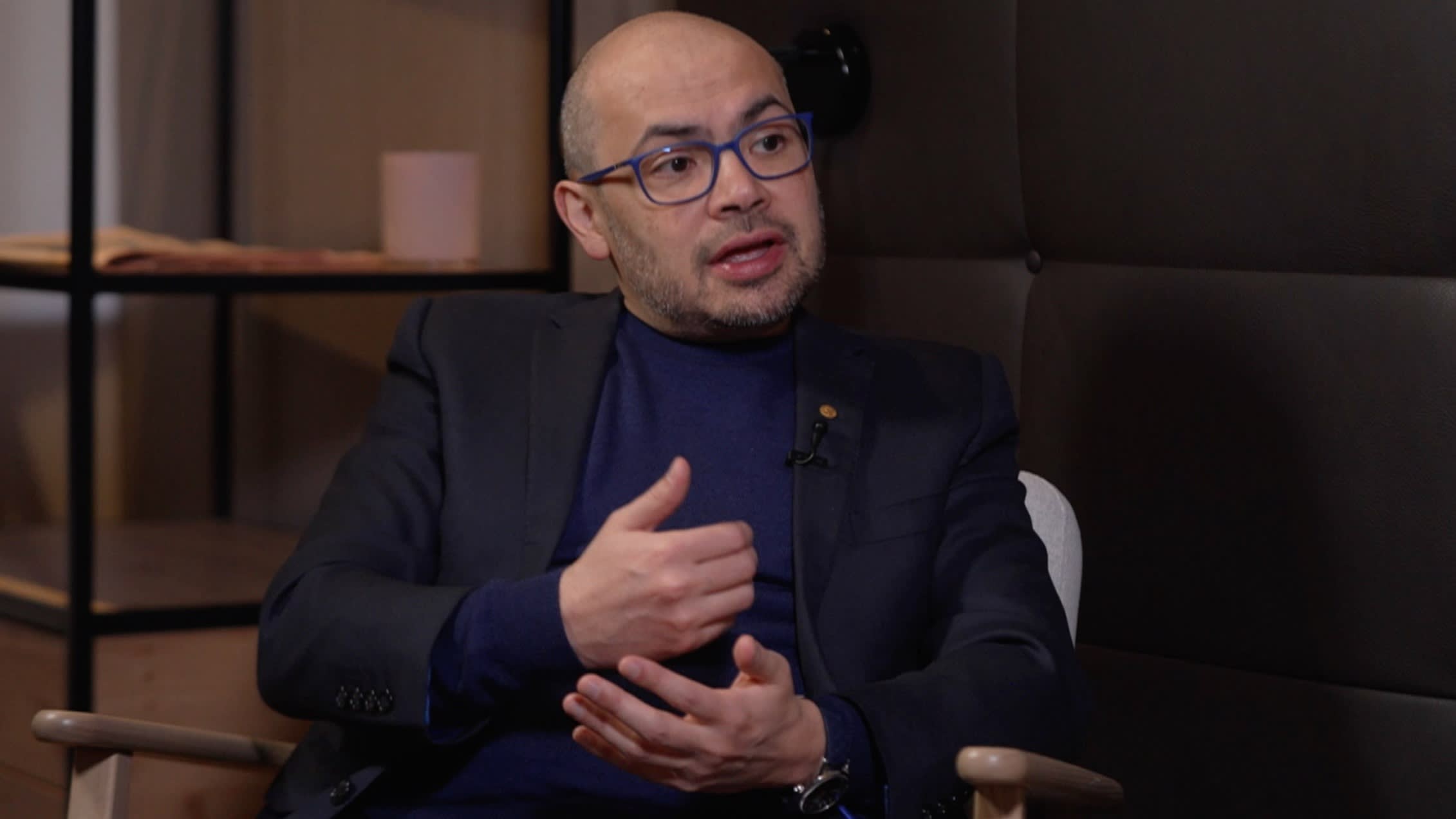
The rapid ascent of generative artificial intelligence has fundamentally reshaped the global financial landscape, driving equity markets to record highs and sparking a gold rush reminiscent of the early days of the internet. However, as capital pours into any company with an "AI" suffix, a prominent voice from within the industry is sounding a clarion call of caution. Demis Hassabis, the co-founder and CEO of Google DeepMind, has warned that the current level of investment in artificial intelligence has taken on "bubble-like" characteristics, suggesting that the sheer volume of hype may be obscuring the actual scientific progress and long-term utility of the technology.
Hassabis, a polymath who has spent decades at the vanguard of neural network research, argues that while the transformative potential of AI is undeniable, the market has entered a phase of irrational exuberance. This phenomenon is characterized by a massive influx of venture capital and retail investment into projects that often lack a sustainable moat or a clear path to profitability. For Hassabis, the concern is not that AI is a fad, but rather that the "grifter" element—individuals and firms looking to capitalize on the buzz without contributing to the underlying science—is beginning to drown out the serious work required to achieve Artificial General Intelligence (AGI).
To understand the gravity of this warning, one must look at the sheer scale of the financial commitment currently being directed toward the sector. In 2023 alone, global investment in AI startups reached nearly $50 billion, according to market data from Crunchbase. This figure does not include the internal capital expenditures of "Big Tech" giants like Microsoft, Alphabet, Meta, and Amazon, who are collectively spending tens of billions of dollars annually on the specialized hardware—primarily Nvidia’s H100 GPUs—necessary to train large language models (LLMs). The valuation of Nvidia itself, which briefly touched the $2 trillion mark, serves as a primary indicator of this fever pitch, as the company’s revenue growth is almost entirely tethered to the belief that the AI boom will continue unabated.
The parallels to the dot-com bubble of the late 1990s are becoming increasingly difficult to ignore. During that era, the fundamental promise of the internet—that it would revolutionize commerce and communication—was entirely correct. However, the timeline for that revolution was overestimated by investors, leading to a massive misallocation of capital into companies that had "dot-com" in their names but no viable business models. Hassabis suggests that AI is currently navigating a similar "Gartner Hype Cycle," where the "Peak of Inflated Expectations" is currently being fueled by a fear of missing out (FOMO) among institutional investors.
This speculative environment creates a unique set of risks for the scientific community. When a bubble bursts, it often leads to an "AI Winter"—a period where funding dries up and public interest wanes, potentially stalling legitimate research for years. Hassabis’s perspective is rooted in the philosophy of "long-termism." At DeepMind, the focus has historically been on solving complex scientific problems, such as protein folding with AlphaFold, which has revolutionized the field of biology. These breakthroughs provide tangible, measurable value to humanity, yet they often lack the immediate "viral" appeal of consumer-facing chatbots that can write poems or generate photorealistic images.
The economic impact of a potential AI correction would be felt far beyond Silicon Valley. In the current macroeconomic climate, characterized by fluctuating interest rates and geopolitical instability, AI has been the primary engine of growth for the S&P 500. A significant cooling of the AI sector could trigger a broader market downturn, affecting pension funds and individual portfolios globally. Furthermore, the concentration of AI development within a handful of hyper-scaled corporations creates a "winner-takes-all" dynamic that may be unsustainable. If the massive capital expenditures of these firms do not translate into significant productivity gains for their enterprise customers within the next 24 to 36 months, the pressure from shareholders to scale back could be immense.
Expert insights suggest that the "utility gap" is the most significant vulnerability in the current market. While LLMs are impressive in their ability to process and generate text, many enterprises are finding it difficult to integrate these tools into their core workflows in a way that justifies the high cost of implementation and token usage. Issues surrounding data privacy, "hallucinations" (where the AI confidently asserts false information), and the high energy consumption of data centers remain significant hurdles. Hassabis’s warning reflects a concern that the market is pricing in the "solution" to these problems long before the engineering reality has caught up.
Moreover, the global competition for AI supremacy has added a layer of geopolitical complexity to the investment landscape. The United States and China are locked in a high-stakes race to dominate the field, leading to state-subsidized investments and export controls on critical semiconductors. This "AI arms race" encourages speed over safety and substance, often rewarding companies that can ship products the fastest rather than those that have rigorously tested their systems for reliability and ethical alignment. By labeling the investment climate as "bubble-like," Hassabis is also making a subtle plea for a return to a more methodical, safety-conscious approach to development.
Despite the warning, it is important to distinguish between a financial bubble and a technological failure. Even the most skeptical economists agree that artificial intelligence will likely be the defining technology of the 21st century. The concern is the "valuation-to-value" ratio. In a healthy market, valuations are a reflection of future cash flows; in a bubble, they are a reflection of what the next investor is willing to pay. When the latter becomes the dominant driver, the risk of a systemic correction increases.
For the broader economy, the "bursting" of an AI bubble might actually serve as a necessary corrective. It would likely lead to a consolidation phase, where "zombie" startups—those kept alive only by easy venture capital—are weeded out, allowing talent and resources to flow back toward companies with genuine intellectual property and sustainable use cases. This transition from the "hype phase" to the "deployment phase" is where the real economic value is typically created. Just as the collapse of the dot-com bubble paved the way for the eventual dominance of Google, Amazon, and Netflix, a correction in the AI space could reveal the true long-term winners.
In the interim, the industry must grapple with the "signal-to-noise" problem that Hassabis highlighted. For every breakthrough in drug discovery or weather forecasting, there are hundreds of derivative applications that offer little more than a thin interface over existing models. Distinguishing between the two requires a level of technical due diligence that many investors, currently blinded by the promise of exponential returns, may be neglecting.
As the chief of one of the world’s most influential AI labs, Hassabis occupies a unique position. His warnings are not those of an outsider looking in, but of an architect who understands the structural integrity of the building. His call for a more tempered approach to investment is a reminder that the path to AGI is a marathon, not a sprint. While the financial markets may thrive on volatility and short-term narratives, the scientific progress that will ultimately define the AI era requires patience, capital efficiency, and a focus on solving the world’s most difficult problems rather than simply chasing the latest trend.
The coming years will likely determine whether the current AI boom is a sustainable industrial revolution or a transient speculative mania. If the industry heeds the warnings of pioneers like Hassabis, it may be able to navigate a "soft landing," where the hype is gradually replaced by proven utility. If not, the "Silicon Mirage" may eventually dissipate, leaving behind a trail of overvalued assets and missed opportunities. Regardless of the outcome, the fundamental reality remains: AI is a tool of immense power, and its true value will be measured not by the height of its stock charts, but by the depth of its impact on the human condition.