The geopolitical landscape of the Western Hemisphere has been thrust into a state of heightened volatility following Donald Trump’s recent assertions that a future administration would move to direct sanctioned Venezuelan oil into American ports. This policy proposal represents a dramatic escalation of the "maximum pressure" campaign that defined his previous term, signaling a shift from diplomatic isolation toward a more assertive, and potentially confrontational, resource-based foreign policy. By suggesting that the United States should physically secure or divert Venezuelan petroleum assets, the former president has reopened a complex debate regarding energy security, international law, and the precarious balance of the global oil market.
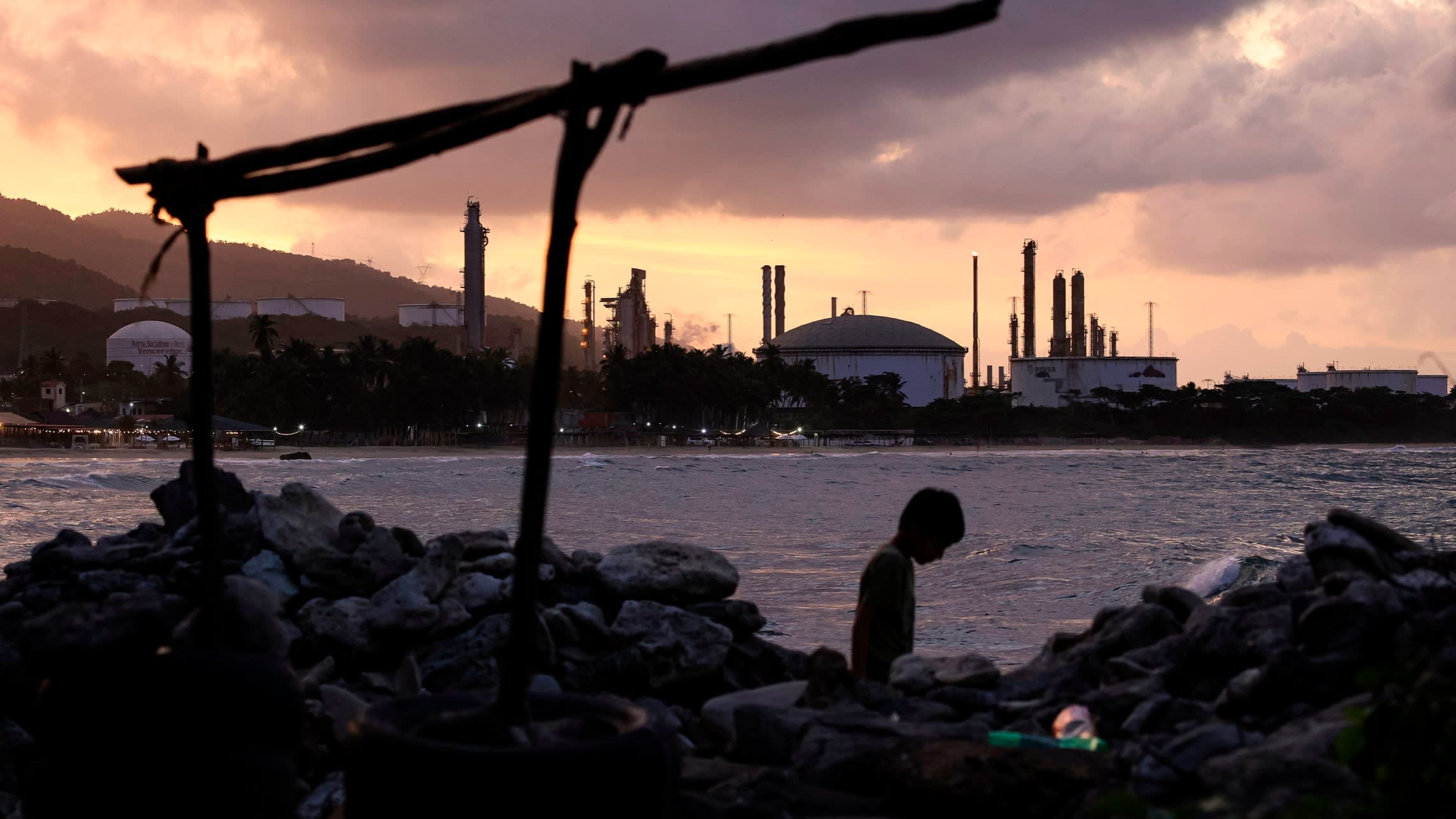
For decades, Venezuela sat at the center of the global energy stage, boasting the world’s largest proven oil reserves—estimated at more than 300 billion barrels. However, the nation’s oil industry, managed by the state-owned Petróleos de Venezuela, S.A. (PDVSA), has undergone a catastrophic decline. Production, which peaked at approximately 3.5 million barrels per day (bpd) in the late 1990s, plummeted to historical lows of around 300,000 bpd in 2020 due to systemic corruption, lack of infrastructure investment, and the weight of U.S. sanctions. While production has seen a modest recovery to roughly 800,000 to 900,000 bpd in recent months, the industry remains a shadow of its former self, crippled by the inability to access Western technology and capital.
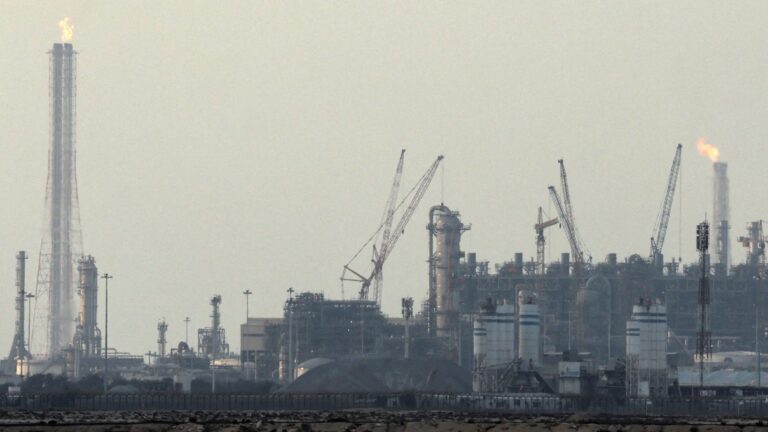
The proposal to "take" or divert Venezuelan oil to U.S. refineries addresses a specific technical need within the American energy sector. Despite the shale revolution, which made the United States a net exporter of light, sweet crude, many refineries along the Gulf Coast are specifically calibrated to process "heavy, sour" crude. Historically, Venezuela was the primary provider of this specific grade of oil. When sanctions were tightened in 2019, U.S. refiners were forced to scramble for alternatives, often turning to more expensive Canadian heavy oil or, until the invasion of Ukraine, Russian vacuum gas oil. By reclaiming access to Venezuelan heavy crude, these refineries could potentially lower their input costs and improve margins, though the legal and logistical hurdles to doing so under the current Caracas regime are immense.
From an economic perspective, the seizure or forced redirection of sanctioned oil would be an unprecedented move that challenges the foundational principles of sovereign immunity and international trade. Under the Biden administration, the U.S. Treasury Department’s Office of Foreign Assets Control (OFAC) has utilized a system of "General Licenses"—most notably General License 41, which allowed Chevron to resume limited extraction and exports—to maintain a trickle of Venezuelan oil into the U.S. market. This approach was designed as a "carrot" to incentivize democratic reforms from the Nicolás Maduro government. Trump’s proposed strategy discards this incrementalism in favor of a "stick" that could involve the direct confiscation of cargoes or the forced liquidation of Venezuelan assets to satisfy U.S. creditors and national interests.
The global oil market is currently navigating a period of intense uncertainty, characterized by OPEC+ production cuts and the ongoing transition toward renewable energy. In this context, Venezuelan oil represents one of the few remaining "spare capacities" that could significantly alter global supply dynamics if fully unlocked. However, the "Maximum Pressure 2.0" strategy risks driving Venezuela even further into the orbits of China, Russia, and Iran. Currently, the vast majority of sanctioned Venezuelan oil is sold through a "ghost fleet" of aging tankers, often using ship-to-ship transfers in the South China Sea to bypass Western monitoring. These cargoes are typically sold to independent "teapot" refineries in China at steep discounts. A more aggressive U.S. posture could accelerate the development of a bifurcated global energy market, where sanctioned regimes and their patrons operate entirely outside the dollar-based financial system.
Industry analysts suggest that any attempt to physically take Venezuelan oil would require a significant naval presence and a robust legal framework. The U.S. has previously seized Iranian fuel shipments destined for Venezuela, citing anti-terrorism laws, but the wholesale redirection of a nation’s primary export to U.S. ports would likely be met with fierce legal challenges in international courts. Furthermore, the state of Venezuela’s infrastructure cannot be ignored. Much of the country’s oil is currently produced using dilapidated equipment that poses significant environmental risks. For the U.S. to truly benefit from Venezuelan crude, billions of dollars in "brownfield" investment would be required to stabilize production and ensure the safety of the supply chain—investments that private companies are unlikely to make without ironclad legal guarantees and political stability.
The domestic political implications in the United States are equally significant. Energy prices remain a top-tier issue for American voters, and the promise of cheaper, domestically refined fuel is a powerful campaign narrative. By framing Venezuelan oil as a resource that the U.S. is "entitled" to or should control as a matter of national security, the rhetoric taps into a long history of American energy exceptionalism. However, critics argue that such a policy could lead to higher volatility. If the U.S. moves to aggressively seize cargoes, the "geopolitical risk premium" on a barrel of oil could spike, potentially offsetting any gains made by increasing the supply of heavy crude to Gulf Coast refineries.
Furthermore, the fate of Citgo Petroleum Corporation, the U.S.-based refining arm of PDVSA, hangs in the balance. Citgo is currently at the center of a complex legal battle in a Delaware court, where creditors are seeking to auction the company to satisfy billions of dollars in debts owed by the Venezuelan state. The U.S. government has historically protected Citgo from seizure to maintain leverage over the Caracas government. If a future administration chooses to use Citgo as a conduit for "taking" Venezuelan oil, it could complicate these legal proceedings and trigger a wave of litigation from international bondholders and companies whose assets were nationalized by Hugo Chávez and Nicolás Maduro.
On the international stage, the reaction to a more aggressive U.S. stance on Venezuelan oil would likely be polarized. European allies, many of whom are still reeling from the energy crisis precipitated by the war in Ukraine, might welcome the additional supply but remain wary of the unilateral nature of such actions. Conversely, the "BRICS+" bloc would likely view the move as an act of economic imperialism, potentially fueling the drive for "de-dollarization" as nations seek to protect their own commodity exports from similar U.S. actions. The weaponization of energy supplies, while a potent tool of statecraft, often invites unintended consequences that can take decades to resolve.
The environmental impact of Venezuelan oil production also warrants scrutiny. Venezuelan crude is among the most carbon-intensive in the world to extract and refine. In an era where global investors are increasingly focused on Environmental, Social, and Governance (ESG) criteria, the re-integration of high-carbon Venezuelan oil into the U.S. energy mix could face pushback from climate-conscious shareholders and advocacy groups. While the immediate economic priority might be lowering gasoline prices, the long-term trend toward decarbonization creates a fundamental tension with the revival of heavy oil production.
Ultimately, the proposal to bring sanctioned Venezuelan oil to American ports is more than just a trade policy; it is a statement of intent regarding the role of American power in the 21st century. It suggests a return to a "realpolitik" approach where resource security takes precedence over diplomatic norms. As the global energy map continues to be redrawn by conflict and technological change, the struggle for control over Venezuela’s vast underground wealth remains one of the most consequential narratives in modern economics. Whether this strategy results in a resurgence of American energy dominance or a deepening of regional instability will depend on the delicate interplay of market forces, legal precedents, and the shifting tides of global diplomacy. For now, the mere mention of such a policy has sent ripples through the commodity markets, reminding the world that in the realm of oil, the line between economics and warfare is often razor-thin.