

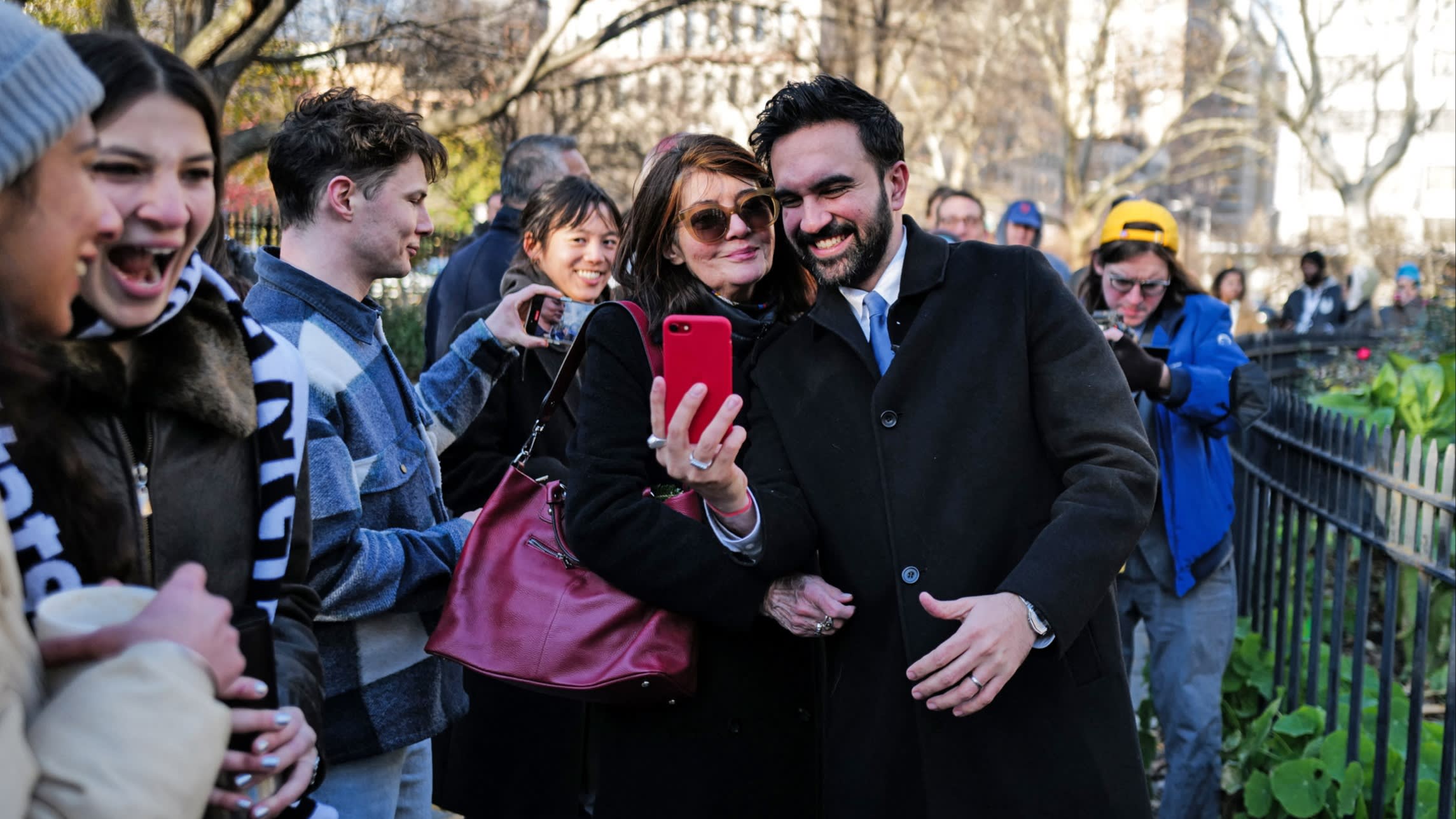
As the 2025 New York City mayoral race begins to take shape, the ideological battle lines are being drawn not over incremental policy shifts, but over the very fundamental nature of the city’s social contract. At the center of this burgeoning debate is Zohran Mamdani, a New York State Assemblyman and a prominent member of the Democratic Socialists of America (DSA), who has signaled a relentless commitment to a fiscal platform centered on aggressive tax increases for the city’s wealthiest residents. Mamdani’s strategy represents a direct challenge to the centrist governance of incumbent Mayor Eric Adams, proposing a radical redistribution of wealth as the primary mechanism for revitalizing the five boroughs’ aging infrastructure and strained social services.
The core of Mamdani’s economic philosophy rests on the belief that New York City’s status as a global financial hub has created a bifurcated reality: a city of unprecedented private opulence existing alongside a public sector in a state of managed decline. To bridge this gap, Mamdani is championing a suite of legislative measures often referred to under the "Tax the Rich" banner. These proposals aim to increase the personal income tax rates for New York’s highest earners, particularly those in the top 1% and 0.1% of income brackets, as well as implementing higher taxes on corporate profits and multi-million dollar real estate transactions.
The fiscal implications of such a move are significant. New York City already possesses one of the highest combined state and local tax burdens in the United States. For residents earning over $25 million annually, the combined top marginal rate can reach approximately 14.8%. Mamdani’s supporters argue that despite these figures, the concentration of wealth in Manhattan has reached levels where further extraction is not only morally justifiable but economically necessary. They point to the city’s $112 billion budget, which is currently grappling with the dual pressures of a sunsetting federal pandemic relief fund and the ongoing costs associated with the migrant crisis, which have been estimated to exceed $4 billion annually.
However, the proposal to further tax the city’s millionaires and billionaires is met with fierce resistance from the business community and fiscal conservatives. The Partnership for New York City, a pro-business advocacy group, has frequently cautioned that New York’s tax base is dangerously concentrated. Statistics from the New York City Independent Budget Office (IBO) consistently show that the top 1% of taxpayers account for roughly 40% of the city’s total personal income tax revenue. Critics argue that in a post-pandemic world where remote work has decoupled employment from geography, the "wealth flight" phenomenon is no longer a theoretical threat but a tangible risk. If even a small percentage of high-net-worth individuals relocate to lower-tax jurisdictions like Florida or Texas, the resulting "tax hole" could devastate the city’s ability to fund essential services.
Mamdani’s platform rejects this "flight of capital" narrative as a form of political blackmail. His campaign emphasizes that the value of New York City is not merely its tax code but its density, culture, and transit networks—assets that require massive public investment to maintain. A central pillar of his vision is the "Fix the MTA" plan. Mamdani has been a vocal advocate for making the city’s bus system entirely free of charge and increasing the frequency of subway service. He argues that by taxing the "leisure class," the city can provide a "social wage" in the form of free transit, which would effectively put money back into the pockets of the working class and stimulate local economic activity.
The economic debate also touches upon the concept of tax elasticity—the measure of how much a change in tax rates affects the behavior of taxpayers. Progressive economists often cite the "millionaire tax" studies from states like New Jersey and California, which suggest that while some migration occurs, it is rarely enough to offset the net revenue gains from higher rates. Conversely, opponents point to the recent exodus of major financial firms and their executives to the "Wall Street South" in Miami, suggesting that the tipping point for New York’s competitiveness may have already been reached.
Mamdani’s push for higher taxes is not happening in a vacuum; it is part of a broader national and global conversation regarding income inequality. In cities like London and Paris, similar debates are raging over wealth taxes and the funding of public infrastructure. In the United States, Mamdani’s proposals mirror the national discourse led by figures such as Senator Bernie Sanders and Representative Alexandria Ocasio-Cortez. By bringing this debate to the forefront of the New York City mayoral race, Mamdani is forcing a referendum on whether the "New York miracle" can continue under a model of high-tax, high-service social democracy, or whether the city must lean into a more market-oriented, business-friendly approach to survive.
From a legislative perspective, Mamdani faces a formidable uphill battle. The power to set income tax rates for New York City largely resides in Albany, the state capital. This means that even if Mamdani were to win the mayoralty, he would need to navigate the complex politics of the New York State Legislature and secure the approval of the Governor. Governor Kathy Hochul has historically been cautious regarding broad-based tax increases, fearing their impact on the state’s economic recovery. This creates a friction point between the city’s progressive wing and the state’s more moderate Democratic leadership, a dynamic that has defined New York politics for decades.
Furthermore, the impact of such taxes on the real estate market—the bedrock of New York City’s economy—cannot be overlooked. The city’s property tax system is already under fire for its inequities, and additional levies on high-end transactions could cool a luxury market that is a significant driver of construction jobs and ancillary economic spending. Mamdani, however, views the cooling of the luxury market as a potential benefit, arguing that the city’s real estate sector has become a "global safe-deposit box" for the ultra-wealthy, driving up housing costs for everyone else. His plan includes redirecting tax revenue into the creation of social housing, moving away from a reliance on private developers to solve the city’s affordability crisis.
As the campaign progresses, the data will be scrutinized heavily. Proponents will highlight the growing gap between CEO pay and worker wages, while opponents will highlight the declining share of New York’s contribution to the national GDP compared to burgeoning sunbelt hubs. The debate is as much about psychology as it is about mathematics. It asks whether the wealthy feel a sense of civic obligation to the city that facilitated their fortunes, or whether they view themselves as mobile global citizens with no fixed allegiance to a specific municipality.
Mamdani’s candidacy represents a litmus test for the Democratic Party’s direction. If his message resonates, it could signal a shift toward a more confrontational style of politics that seeks to dismantle the neoliberal consensus that has governed New York since the fiscal crisis of the 1970s. That crisis, which nearly saw the city declare bankruptcy, led to a period of fiscal austerity and the empowerment of "emergency" boards that prioritized debt repayment and business incentives. Mamdani is essentially arguing that the "emergency" today is not one of creditworthiness, but of human dignity and crumbling public goods.
In the coming months, the specifics of Mamdani’s tax brackets and revenue projections will be subject to intense auditing. The business community will likely mobilize a well-funded opposition, emphasizing the importance of keeping the "engines of capitalism" running within the five boroughs. Yet, for a significant portion of the electorate struggling with rising rents, unreliable transit, and a high cost of living, the promise of a city funded by those at the very top remains a compelling narrative.
Ultimately, Zohran Mamdani’s insistence on pressing ahead with tax rises for millionaires ensures that the upcoming election will be more than a personality contest. It will be a rigorous examination of the city’s economic engine and a debate over who should pay for the future of New York. Whether his proposals lead to a more equitable urban utopia or a cautionary tale of fiscal overreach remains the central question facing the voters of the world’s most famous metropolis. As the global economy remains volatile, New York’s choice will serve as a bellwether for metropolitan governance worldwide, testing the limits of local taxation in an era of unprecedented global wealth mobility.