


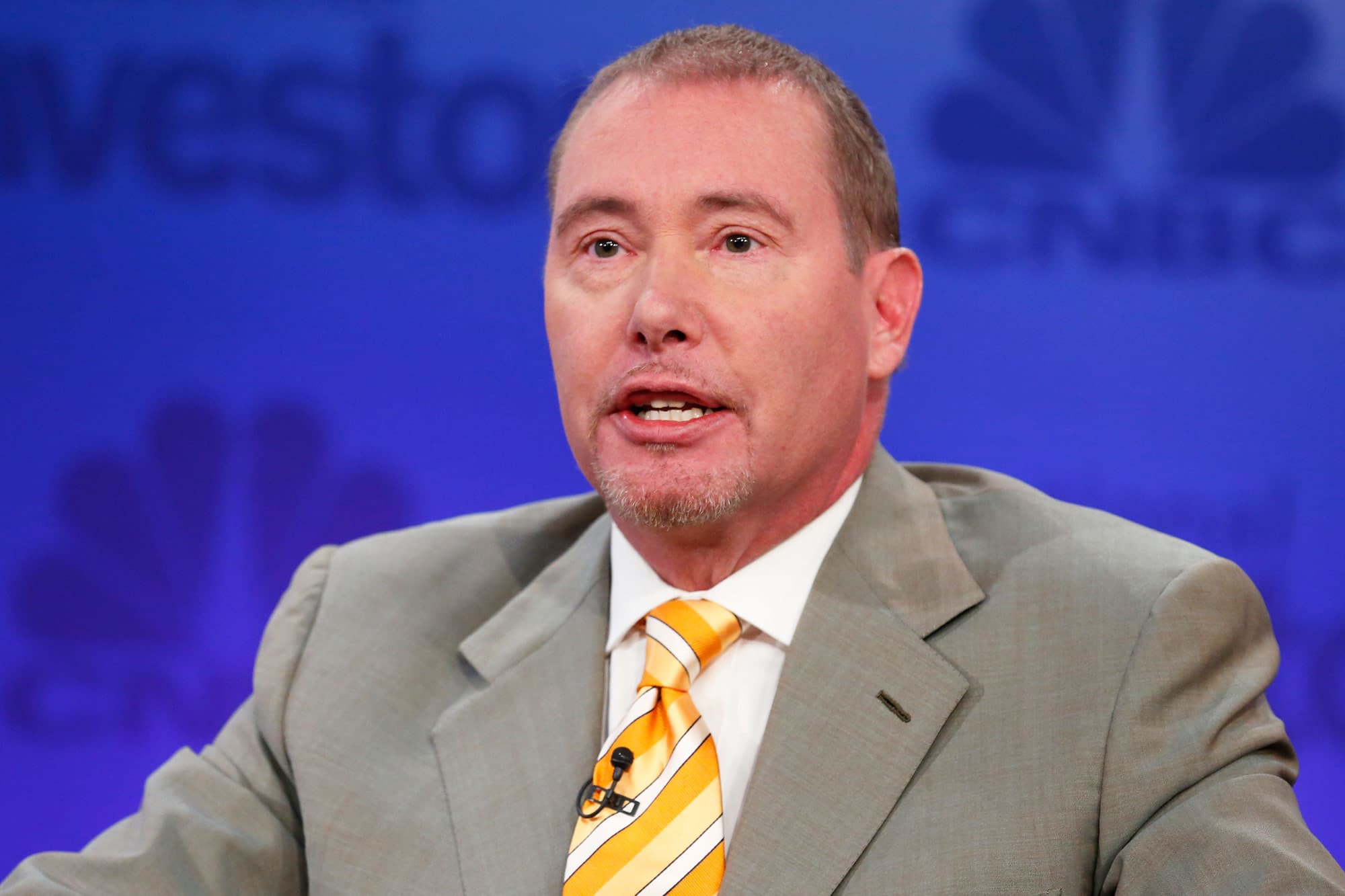
As the Federal Reserve navigates the complex final months of Jerome Powell’s tenure, the prevailing market narrative of continued monetary easing is facing a significant challenge from one of the fixed-income world’s most prominent voices. Jeffrey Gundlach, the Chief Executive Officer of DoubleLine Capital, has issued a bold projection that the central bank’s cycle of interest rate reductions has reached a premature conclusion under its current leadership. This assessment, delivered following the Federal Open Market Committee’s (FOMC) decision to maintain the benchmark federal funds rate at a range of 3.5% to 3.75% in January, suggests a fundamental shift in the American macroeconomic landscape—one where the "higher for longer" mantra may be replaced by a period of strategic equilibrium.
Gundlach’s thesis hinges on the observation that the Federal Reserve has successfully steered the economy toward a state of relative balance, effectively neutralizing the immediate pressures that previously necessitated aggressive policy intervention. By characterizing the current policy stance as one that is no longer "significantly restrictive," Powell himself has signaled a departure from the urgent dovishness that characterized the latter half of 2024. For Gundlach, this rhetoric serves as a definitive boundary. He posits that with only two policy meetings remaining in Powell’s term—scheduled for March and April—the window for further accommodation has effectively slammed shut.
The rationale behind this projected pause is rooted in the "dual mandate" of the Federal Reserve: achieving price stability while maintaining maximum sustainable employment. Throughout the post-pandemic recovery, these two goals were frequently in conflict, as the central bank struggled to cool a red-hot labor market to suppress runaway inflation. However, the data emerging in early 2026 suggests a rare alignment. Inflation, while still hovering slightly above the Fed’s long-term 2% target, has shed the volatility that sparked fears of a 1970s-style resurgence. Simultaneously, the unemployment rate, which had shown signs of a concerning upward drift in previous quarters, appears to have found a stable floor.
In Gundlach’s view, Powell is intentionally emphasizing this lack of tension between inflation and employment to set the stage for his successor. By holding rates steady, the outgoing Chair avoids the risk of reigniting inflationary pressures through unnecessary cuts, while also avoiding a recessionary shock that could follow further tightening. This "neutral" stance provides a clean slate for the incoming leadership, who is expected to take the helm in June following the Senate confirmation process.
The divergence between Gundlach’s outlook and broader market expectations highlights the current uncertainty within the financial sector. According to the CME FedWatch Tool, which aggregates federal funds futures prices, many traders are still pricing in at least two additional quarter-percentage-point cuts by the end of 2026. This disconnect suggests that the market may be overestimating the Fed’s willingness to provide a "safety net" for asset prices in the absence of a clear economic downturn. Gundlach’s skepticism serves as a warning that the "Fed Put"—the idea that the central bank will always intervene to support markets—may be less reliable in an era of persistent, if manageable, inflation.
A critical component of this economic recalibration is the debate over the "neutral rate" of interest, often referred to by economists as r-star. This is the theoretical interest rate that neither stimulates nor restrains economic growth. For much of the decade following the 2008 financial crisis, the neutral rate was widely believed to be near zero. However, the resilience of the U.S. economy in the face of the current 3.5% to 3.75% range suggests that the neutral rate has shifted higher. If the current policy is not "significantly restrictive," as Powell noted during his January press conference, then the argument for cutting rates to prevent an economic slowdown loses its primary justification.

This macroeconomic backdrop is forcing a total rethink of global investment strategies. Gundlach, often referred to as the "Bond King," is pivoting away from the traditional dominance of U.S. equities and fixed income. He is currently advocating for a substantial reallocation of capital toward international markets, suggesting that investors should consider placing 30% to 40% of their portfolios in unhedged international equities. This recommendation is based on a "secularly weak" outlook for the U.S. dollar, which he believes is overvalued relative to its global peers.
The logic of an unhedged international position is twofold. First, it allows investors to capture the potential growth of companies in Europe, Asia, and emerging markets, many of which are trading at significantly lower valuations than their American counterparts. Second, and perhaps more importantly, it offers a play on currency appreciation. If the U.S. dollar weakens as a result of mounting fiscal deficits and a stabilizing global interest rate environment, the returns for U.S.-based investors in foreign stocks will be amplified when those foreign currencies are converted back into dollars.
The fiscal situation in the United States adds another layer of complexity to the Fed’s decision-making process. With a national debt exceeding $34 trillion and persistent budget deficits, the Treasury’s borrowing needs remain immense. High interest rates increase the cost of servicing this debt, putting pressure on the federal budget. However, if the Fed were to cut rates prematurely to ease the government’s interest burden, it would risk losing its hard-won credibility as an independent inflation fighter. Gundlach’s prediction of a hold under Powell suggests a belief that the Fed will prioritize its institutional mandate over political or fiscal pressures during this transition period.
From a global perspective, the Federal Reserve’s move toward a steady hand contrasts with the varied paths of other major central banks. The European Central Bank (ECB) and the Bank of England have faced more stagnant growth profiles, occasionally leading to more aggressive discussions about easing. Meanwhile, the Bank of Japan has only recently begun to emerge from its era of negative interest rates. If the U.S. remains an outlier with higher, stable rates, it could continue to attract global capital, potentially complicating Gundlach’s thesis of a weakening dollar in the short term. However, over a secular horizon, the narrowing of interest rate differentials as other nations stabilize could eventually trigger the dollar depreciation he anticipates.
The implications for the American consumer and the housing market are equally profound. A pause in rate cuts means that mortgage rates, which are closely tied to the yield on the 10-year Treasury note, are unlikely to see the significant declines that many prospective homebuyers had anticipated. This could maintain the "lock-in effect," where homeowners with low-rate mortgages are reluctant to sell, keeping housing inventory tight and prices elevated. For the broader economy, a static Fed policy means that the cost of capital for businesses will remain at its highest level in nearly two decades, favoring companies with strong balance sheets and high cash flows over those reliant on cheap debt for expansion.
As the financial world looks toward the March and April FOMC meetings, the focus will likely shift from the "dot plot" of projected rates to the nuances of Powell’s departing rhetoric. If Gundlach is correct, these meetings will be characterized by a "steady as she goes" approach, emphasizing the successful navigation of the post-inflationary shock. The transition to a new Chair in June will then mark the beginning of a new chapter, one that will have to grapple with the long-term consequences of the Powell era’s final stand.
Ultimately, Jeffrey Gundlach’s outlook serves as a sobering reminder that the era of easy money is not returning anytime soon. By projecting a ceiling on rate cuts, he is signaling that the U.S. economy has entered a new phase of maturity where growth must be driven by productivity and innovation rather than monetary stimulus. For Jerome Powell, a final act of restraint may be the ultimate legacy—leaving the central bank in a position of strength, even if it means denying the markets the further liquidity they so deeply desire. The "hawkish hold" of January may not just be a temporary pause, but the definitive end of a cycle.