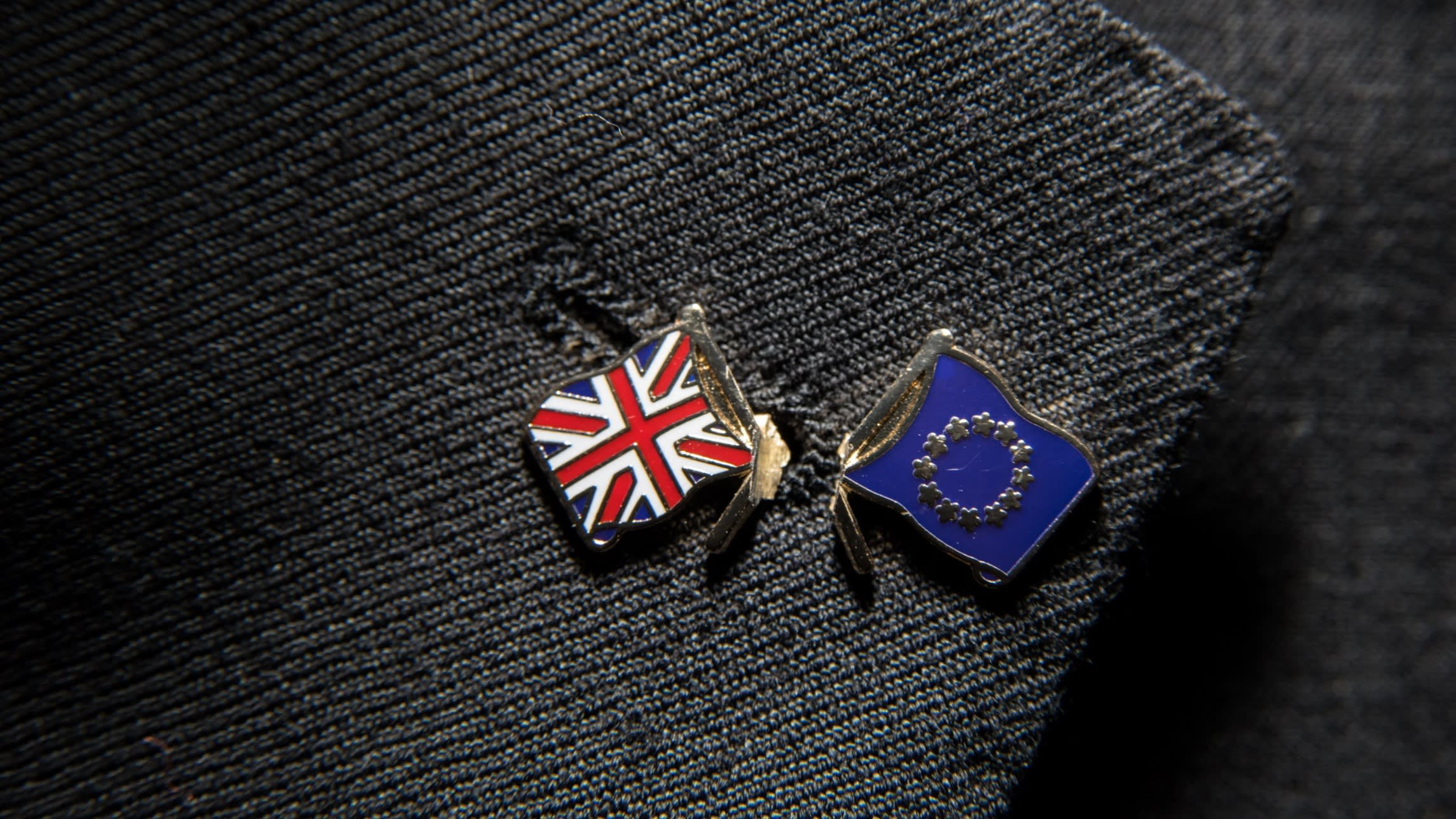
For decades, the project of European integration was the exclusive domain of the liberal center and the technocratic elite, while the political right stood as the sentinel of national borders and local currencies. From the UK’s dramatic exit from the European Union to the "Frexit" rhetoric once championed in France, the narrative of the right was one of dismantling Brussels, not empowering it. However, a profound tectonic shift is occurring beneath the surface of European geopolitics. As the world transitions into an era of aggressive "great power competition," the European right is increasingly recognizing that the only way to preserve the traditional values and economic relevance of their individual nations is through the construction of a formidable, unified European superpower. This emerging "sovereigntist" vision for a United States of Europe is not born of federalist idealism, but of cold, hard-nosed realism and a desire for continental survival in a world dominated by the United States and China.
The evolution of this ideological stance is most visible in the transformation of parties that once advocated for the total collapse of the Eurozone. Today, figures like Italy’s Giorgia Meloni and France’s Marine Le Pen have largely abandoned the rhetoric of withdrawal. Instead, they are focused on a "takeover" strategy—reforming the European Union from within to reflect a more conservative, protectionist, and securitized agenda. This shift is driven by the realization that in an age of $20 trillion economies, a mid-sized European nation acting alone lacks the leverage to negotiate trade deals, secure supply chains, or deter external aggression. The "United States of Europe" envisioned by the right is not a "United States of America" clone focused on social liberalism; it is a "Fortress Europe" defined by its external borders, its industrial self-sufficiency, and its military independence.
Economic necessity is perhaps the most potent catalyst for this pivot. The recent report by former European Central Bank President Mario Draghi highlighted a grim reality: Europe is facing an "existential challenge" due to its slowing productivity and lack of technological innovation. The continent is caught in a pincer movement between a highly subsidized American tech sector and a state-backed Chinese industrial machine. For the European right, which has traditionally been skeptical of "more Europe," the data is becoming impossible to ignore. The U.S. Inflation Reduction Act (IRA), with its $369 billion in green subsidies, has threatened to de-industrialize Europe by luring its manufacturing base across the Atlantic. To counter this, even the most nationalistic leaders are beginning to entertain the idea of a centralized European industrial policy and common investment funds, provided they are used to protect "European" rather than "globalist" interests.
The shift toward a unified European stance is also a response to the volatility of American foreign policy. The prospect of a "transactional" approach to NATO—whereby U.S. protection is no longer a given—has sent shockwaves through the European defense establishment. While the left often views defense through the lens of international cooperation, the right views it through the lens of "strategic autonomy." If the United States pivots its attention toward the Indo-Pacific, the European right recognizes that the continent must become a military superpower in its own right to manage its own "near abroad," particularly regarding Russia and the Mediterranean. This would require a level of military integration and procurement standardization that essentially mimics the structures of a federal state. We are seeing the nascent stages of a European military-industrial complex that seeks to reduce reliance on American defense contractors, a move that would require massive, centralized capital outlays.
Furthermore, the issue of migration has become the primary "glue" for a new brand of European federalism on the right. While they oppose the internal redistribution of migrants, right-wing movements are increasingly vocal about the need for a unified, militarized external border. They envision a European Border and Coast Guard Agency (Frontex) that functions not as a rescue service, but as a continental wall. By shifting the focus from "national borders" to "civilizational borders," the right is creating a rationale for a powerful central authority that can enforce strict immigration controls across the entire Schengen Area. In this framework, the surrender of some national autonomy to a central European authority is seen as a necessary trade-off for the preservation of the continent’s cultural identity.
From a market perspective, this shift has significant implications for the future of the Euro and European sovereign debt. Historically, markets viewed right-wing surges as "tail risks" that could lead to the breakup of the single currency. However, as these parties move toward a model of "sovereigntist integration," that risk profile is changing. Investors are beginning to see a path where a right-leaning Europe might actually move toward fiscal integration—not out of a desire for solidarity, but to fund the massive defense and energy projects required for survival. The issuance of common European debt, once a taboo for the frugal right, is being re-evaluated as a tool for "European Greatness." If the right-wing bloc can agree on a "Defense Bond" or an "Energy Independence Bond," it could lead to a deeper integration of European capital markets than anything the technocrats have achieved in the last decade.
The global context further reinforces this trend. The rise of the BRICS+ bloc and the increasing assertiveness of the Global South have left individual European nations feeling increasingly isolated. In the 1960s, European countries represented a significant portion of global GDP; today, that share is shrinking rapidly. Economists predict that by 2050, no single European country will be among the world’s top seven economies. This demographic and economic eclipse is a powerful motivator for the right. They understand that for France, Germany, or Italy to have a seat at the table with the likes of India or a resurgent United States, they must speak as a single, unified bloc. The "United States of Europe" thus becomes a vehicle for projecting national power by proxy.
However, this transition is not without its internal contradictions. The primary challenge remains the tension between national sovereignty and the centralizing requirements of a superpower. How does a coalition of nationalists agree on who leads? How do they reconcile the different economic needs of the industrial north and the agrarian south? The right’s version of a unified Europe would likely be a "Europe of Nations" that paradoxically acts like a single state in the realms of trade, defense, and border control, while maintaining strict national control over social and cultural policies. It is a vision of a "decentralized superstate"—an oxymoron that the current generation of European leaders is currently trying to define.
Expert insights suggest that the next five years will be a "make or break" period for this new ideological alignment. As elections across the continent continue to favor right-leaning populists, the burden of governance will shift from protest to policy. The European Parliament is already seeing a consolidation of right-wing factions that are moving away from obstructionism and toward a constructive, albeit radical, reform agenda. If these groups can successfully pivot the EU’s focus toward "economic security" and "civilizational defense," they may inadvertently become the architects of the very "United States of Europe" they once claimed to despise.
Ultimately, the right’s embrace of a unified Europe is a testament to the brutal realities of 21st-century geopolitics. In a world of giants, the small have no choice but to huddle together. The irony of the coming decade may be that the most fervent nationalists become the most effective federalists, driven by the belief that the only way to save the nation is to merge it into a continental powerhouse. This "United States of Europe" would be a stark departure from the liberal, open-border dream of the post-Cold War era; it would be a hard-edged, protectionist, and heavily armed entity, designed to project European power in a fragmented and volatile world. For global markets and international partners, the challenge will be navigating this new, assertive Europe—one that is more unified than ever, but on terms that few would have predicted just a decade ago.