


As the global economy navigates the complex aftermath of the post-pandemic inflationary surge, a new and formidable variable has entered the Federal Reserve’s econometric models: generative artificial intelligence. For decades, central bankers have grappled with the "productivity paradox"—the observation that while digital technology seemed to be everywhere, it rarely manifested in significant leaps in national productivity statistics. However, the rapid proliferation of large language models and machine learning applications is forcing a fundamental reassessment of the American economic engine. Members of the Federal Open Market Committee (FOMC) are now explicitly factoring accelerated labor productivity into their long-term forecasts, signaling a shift that could redefine interest rate trajectories and the very nature of the U.S. labor market.
Federal Reserve Chair Jerome Powell has maintained a stance of "watchful optimism" regarding this technological frontier. During recent communications, Powell noted that while historical technological waves—from the steam engine to the internet—initially sparked fears of mass displacement, they ultimately resulted in higher incomes, expanded work opportunities, and enhanced output. The central question facing the Fed today is whether AI represents a standard incremental improvement or a structural break from the past. If AI can indeed decouple economic growth from labor-intensive inputs, the Fed may find itself presiding over an economy that can grow faster and longer without triggering the inflationary pressures that typically necessitate aggressive monetary tightening.
The mechanics of this shift are rooted in the unique nature of generative AI. Unlike previous automation cycles that primarily targeted repetitive manual tasks, the current wave of innovation is aimed at cognitive augmentation. Research published by the National Bureau of Economic Research (NBER) suggests that these tools possess a recursive quality: they learn from human interaction, and humans, in turn, refine their workflows to better utilize the machine’s capabilities. This feedback loop creates a compounding effect on efficiency. Economists specializing in technological unemployment, such as Ping Wang of Washington University in St. Louis, suggest that the resulting productivity gains could be transformative. In models exploring "unbounded growth" scenarios, where AI is fully integrated across the enterprise landscape over several decades, labor productivity could theoretically surge by three to four times its current baseline.
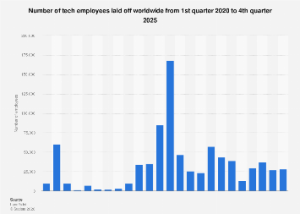
In a more immediate, "intermediate-run" scenario spanning the next decade, some projections suggest that labor productivity could increase by as much as 7% annually. To put this in perspective, U.S. labor productivity has averaged roughly 2.1% since the end of World War II, and frequently dipped below 1.5% in the decade following the 2008 financial crisis. A sustained 7% growth rate would represent an economic miracle, effectively doubling the size of the economy in a fraction of the time traditionally required. However, such a leap is not without profound friction. The same models that predict soaring output also warn of a "technological unemployment" shock, where as much as 23% of the current workforce could see their roles rendered obsolete or fundamentally diminished.
This tension sits at the heart of the Federal Reserve’s dual mandate: maintaining price stability while fostering maximum employment. If AI leads to significant job losses, the Fed might be forced into a more accommodative stance to support a transitioning workforce. Conversely, if AI-driven productivity lowers the cost of goods and services, it acts as a powerful disinflationary force. This "supply-side tailwind" would allow the central bank to maintain lower interest rates even during periods of robust economic expansion. Current projections from the FOMC suggest a long-run federal funds rate settling near 3%. Yet, many economists argue this may be overly conservative. If the "neutral" interest rate—the rate at which the economy neither accelerates nor decelerates—is pushed higher by an investment boom in AI infrastructure, the Fed may have to keep rates structurally higher than the historical norms of the 2010s to prevent overheating.
The current climate draws inevitable comparisons to the mid-to-late 1990s, a period defined by the "New Economy" boom. During that era, massive capital expenditures on fiber-optic networks and early internet infrastructure led to a surge in productivity that allowed then-Chair Alan Greenspan to keep interest rates lower than traditional models suggested. Today, a similar capital expenditure (capex) race is underway, centered on the construction of massive data centers and the procurement of advanced semiconductors. The scale of this investment is staggering, with "Hyperscalers"—the world’s largest cloud computing and technology firms—committing hundreds of billions of dollars toward AI hardware.
However, market participants remain wary of the "valuation gap." While the 1990s proved the transformative power of the internet, it also resulted in a speculative bubble that eventually burst when earnings failed to keep pace with astronomical stock prices. Investment officers at major wealth management firms have noted that while the productivity potential is real, the current run-up in asset valuations necessitates caution. There is a risk that the "AI premium" baked into the equity markets assumes a seamless transition to high-productivity growth, ignoring the regulatory hurdles, energy constraints, and implementation lags that often slow the adoption of general-purpose technologies.
The energy constraint, in particular, is a variable that central banks are beginning to monitor more closely. The electricity demand of AI-driven data centers is projected to grow exponentially, potentially creating localized inflationary pressures in energy markets and requiring massive secondary investments in the power grid. These "bottleneck" costs could offset some of the disinflationary gains provided by AI software, creating a more volatile inflation profile for the Fed to manage.
Furthermore, the global dimension of the AI race adds another layer of complexity to monetary policy. As the United States leads in AI development, it attracts significant global capital inflows, strengthening the dollar and influencing international trade balances. Other central banks, such as the European Central Bank and the Bank of Japan, are watching the Fed’s response closely. If the U.S. successfully integrates AI and experiences a productivity boom, it could lead to a widening economic divergence between the U.S. and other developed nations, complicating global efforts to coordinate monetary policy and maintain currency stability.
The labor market impact remains the most unpredictable element of the Fed’s outlook. While the "unbounded growth" scenario predicts high displacement, many labor economists argue that "task-shifting" is a more likely outcome than total job loss. In this view, AI handles the data-heavy and routine cognitive tasks, while humans focus on high-level strategy, emotional intelligence, and complex problem-solving. If this transition is managed effectively, it could lead to "wage-push" growth that is actually sustainable because it is backed by real increases in output per hour worked. For the Fed, this would be the "Goldilocks" scenario: high growth, low inflation, and a robust, albeit transformed, labor market.
Ultimately, the Federal Reserve finds itself in a period of profound uncertainty. The traditional "Phillips Curve"—which posits a trade-off between unemployment and inflation—may become increasingly obsolete in an AI-dominated economy. If a machine can do the work of five people, the traditional relationship between a "tight" labor market and rising prices breaks down. As the Fed moves forward, its policy decisions will likely rely less on historical precedents and more on real-time data regarding technology adoption rates and capital efficiency. The coming decade will determine whether AI is a fleeting market trend or the fundamental catalyst for a new era of global economic prosperity, and the Federal Reserve’s ability to calibrate its policy to this "Intelligence Multiplier" will be the defining challenge for the next generation of central bankers.