
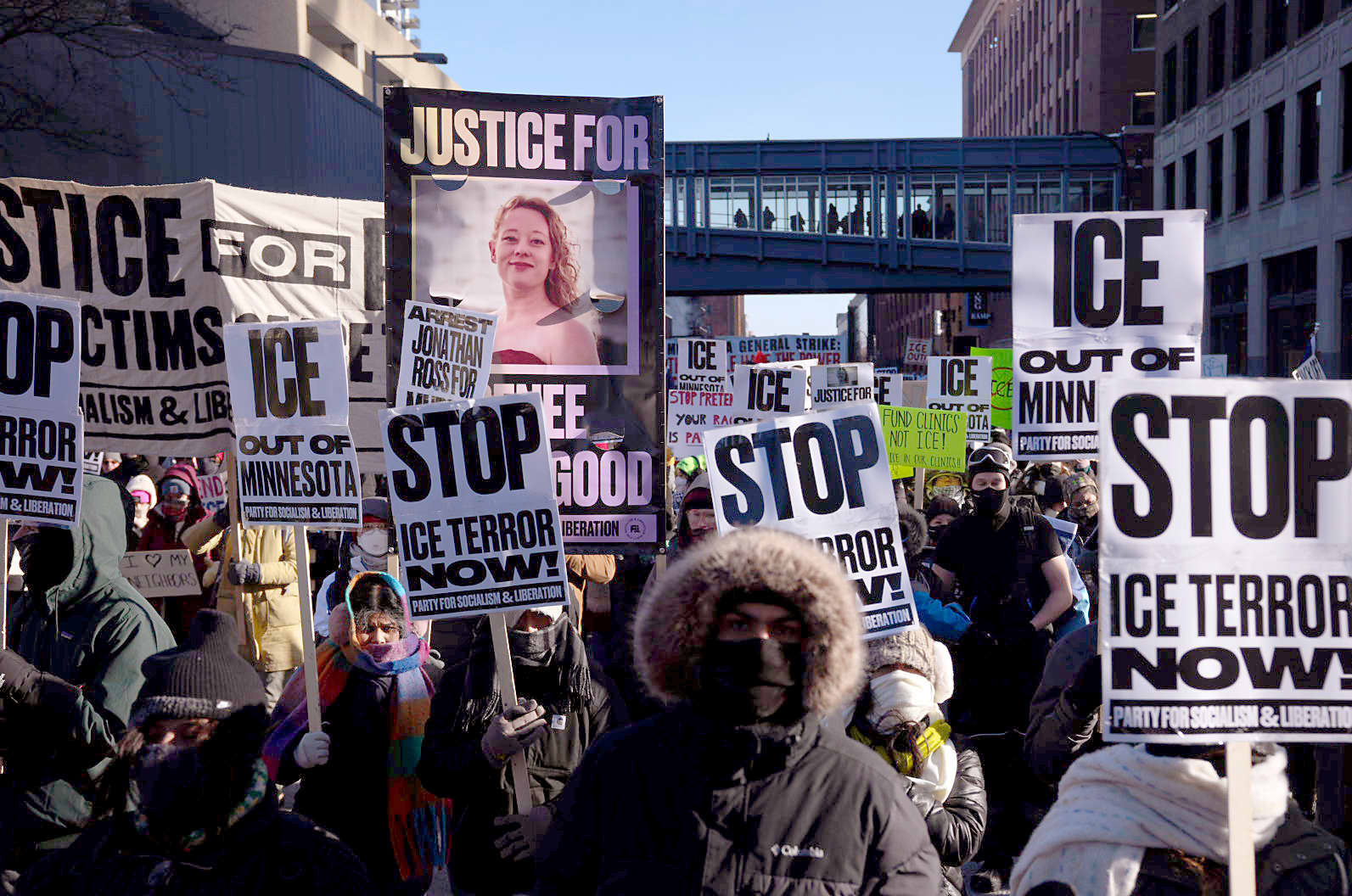
The frozen streets of Minneapolis have become the unlikely epicenter of a high-stakes standoff between the American corporate establishment and the federal government, marking a pivotal moment in the evolution of business-state relations. Following the fatal shooting of Alex Pretti, an intensive care unit nurse and U.S. citizen, at the hands of federal immigration agents, the silence that had largely defined the C-suite’s relationship with the current administration has begun to fracture. This escalation, part of a broader federal initiative known as Operation Metro Surge, has forced a reckoning for Minnesota’s Fortune 500 giants, including Target, UnitedHealth, and 3M, as they weigh the moral imperatives of community safety against the very real threat of executive retribution and regulatory warfare.
For much of the past year, the American business community has operated under a doctrine of strategic quietude. As the Department of Homeland Security (DHS) ramped up its presence in metropolitan hubs, deploying thousands of Immigration and Customs Enforcement (ICE) and Border Patrol agents into local jurisdictions, executives largely avoided public friction with the White House. This reluctance was not born of indifference but of a calculated assessment of risk. In an era where the executive branch has demonstrated a willingness to utilize every available lever of power—from the cancellation of government contracts to the initiation of multi-billion dollar lawsuits—the cost of dissent has never been higher.
The death of Pretti on January 24 served as a breaking point. It was the second such fatality involving a U.S. citizen in Minnesota in a matter of weeks, following the death of Renee Good. The resulting public outcry and the viral spread of footage showing federal agents in violent confrontations with residents forced corporate leaders to step out of the shadows. However, the initial response was telling in its caution. A collective letter signed by dozens of Minnesota-based executives called for an "immediate de-escalation" but notably omitted the names of the victims, the president, or specific policy critiques. This "safety in numbers" approach highlights a burgeoning "climate of fear," a sentiment echoed by international observers and domestic policy experts alike.
The mechanism of this fear is rooted in the administration’s aggressive use of retaliatory measures. Jeffrey Sonnenfeld, a professor at the Yale School of Management, suggests that the current environment is defined by coercion and intimidation. When corporate leaders speak out individually, they face the prospect of being "shaken down." This is not a theoretical concern. Shortly after JPMorgan Chase CEO Jamie Dimon criticized the internal "anger" surrounding immigration policy during an interview at the World Economic Forum in Davos, the administration filed a $5 billion lawsuit against the bank. While the legal action was ostensibly related to the closure of accounts following the January 6 Capitol riots, the timing sent a clear message to the financial sector: public criticism carries a specific, quantifiable price tag.

The economic implications of this tension extend beyond individual lawsuits. Market analysts are increasingly concerned about "sovereign risk" within the United States—a concept usually reserved for emerging markets where political instability can overnight devalue assets. If the federal government is perceived to be weaponizing regulatory bodies and the justice system against specific firms based on the political leanings of their leadership, the predictability required for long-term capital investment begins to erode. Tad DeHaven, a policy analyst at the Cato Institute, notes that the administration has effectively "weaponized every conceivable lever of power," a move that can tank a company’s stock price through a single social media post or a sudden investigation by federal agencies.
Despite these risks, the tech sector has begun to offer a more pointed critique. OpenAI CEO Sam Altman and Apple CEO Tim Cook have both broken ranks to express concern over the DHS’s conduct in Minnesota. Altman’s internal communications to staff framed the pushback against federal overreach as an "American duty," while Cook reportedly engaged in private discussions with the White House to advocate for a withdrawal of federal agents. These actions represent a different strategy: the use of "soft power" and internal employee engagement to signal dissent without necessarily inviting a direct public brawl.
The crisis in Minnesota also intersects with a looming fiscal cliff in Washington. The violence in Minneapolis has become a central point of contention in budget negotiations, with congressional leaders threatening a partial government shutdown over DHS funding. This creates a secondary layer of economic risk for the business community. A shutdown would disrupt everything from federal subsidies to the processing of trade and travel, adding further pressure on CEOs to mediate a resolution to the Minnesota standoff.
The shift in corporate behavior is perhaps most visible in the evolution of Target Corporation, headquartered in the heart of Minneapolis. In 2020, following the death of George Floyd, Target was a vocal leader in the movement for social justice, with CEO Brian Cornell issuing emotional calls for systemic change. In 2026, the company’s response to ICE violence has been markedly more clinical. Internal memos focused on "safety and emotions" rather than systemic critique. This retreat into neutrality reflects the "post-woke" backlash that has seen consumer-facing brands targeted by boycotts from both the left and the right. In a hyper-polarized environment, any statement is a liability, yet silence is increasingly viewed by local community and religious leaders as a form of complicity.
Data from recent corporate sentiment polls underscore this dilemma. A survey of corporate leaders conducted in the wake of the Pretti shooting found that 56% of respondents believe it is significantly more challenging to speak out on social or political issues today than it was four years ago. While 15% of businesses reported that their own employees had been directly impacted by ICE enforcement actions, only a fraction felt empowered to address the issue publicly. The primary deterrents cited were not lack of concern, but fear of administrative backlash and the potential for a "fierce" reaction from a divided consumer base.

The public itself is deeply fragmented on the role of the corporation in these crises. According to data from Morning Consult, only 28% of Americans believe CEOs should speak out publicly when they disagree with the president’s policies. Interestingly, the public is almost perfectly split on whether companies should cooperate with or resist federal immigration enforcement, with roughly 23% supporting full cooperation and 22% advocating for active resistance. For a CEO, these numbers represent a "no-win" scenario where any decisive action alienates a massive segment of the market.
However, there is precedent for corporate influence successfully altering federal policy. Earlier enforcement surges planned for San Francisco were reportedly scaled back after direct interventions from Silicon Valley leaders like Salesforce’s Marc Benioff and Nvidia’s Jensen Huang. This suggests that while public dissent is dangerous, private diplomacy backed by economic weight remains a viable, albeit quiet, tool for shaping administration policy.
As the situation in Minnesota remains fluid, the broader business community is watching to see if the administration’s recent "softening" of rhetoric—mirroring the "de-escalation" language used in the CEOs’ collective letter—signals a genuine shift or merely a tactical pause. The presence of federal agents continues to disrupt local commerce and fuel civil unrest, creating a volatile environment for some of the world’s largest companies.
Ultimately, the events in Minneapolis have revealed the limits of corporate neutrality. When federal policy manifests as violence in a company’s backyard, the "business of business" can no longer be decoupled from the political landscape. The challenge for the modern CEO is no longer just managing a balance sheet, but navigating a minefield of state power, where the cost of a conscience must be weighed against the survival of the enterprise. The "climate of fear" currently pervading the American boardroom may eventually give way to a new form of organized executive advocacy, but for now, the price of speaking out remains a risk that few are willing to bear alone.