The intersection of American foreign policy and global energy markets has long been defined by a tension between democratic ideals and the pragmatic necessity of resource security, yet few topics have ignited as much debate as Donald Trump’s prospective approach to Venezuela’s oil sector. As the former president seeks a return to the White House, his rhetoric regarding Caracas has shifted from the "maximum pressure" campaign of his first term toward a more overtly transactional vision centered on the "tremendous wealth" buried beneath Venezuelan soil. This potential pivot signals a significant departure from traditional diplomatic norms, suggesting a future where U.S. foreign policy in the Western Hemisphere is driven less by the promotion of institutional democracy and more by the strategic acquisition and management of the world’s largest proven oil reserves.
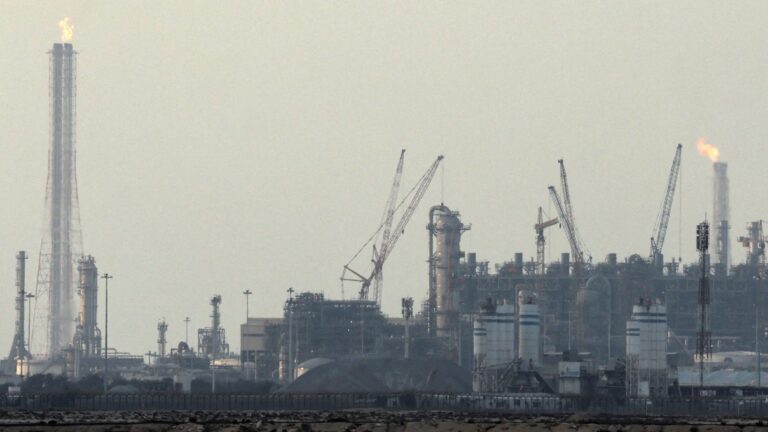
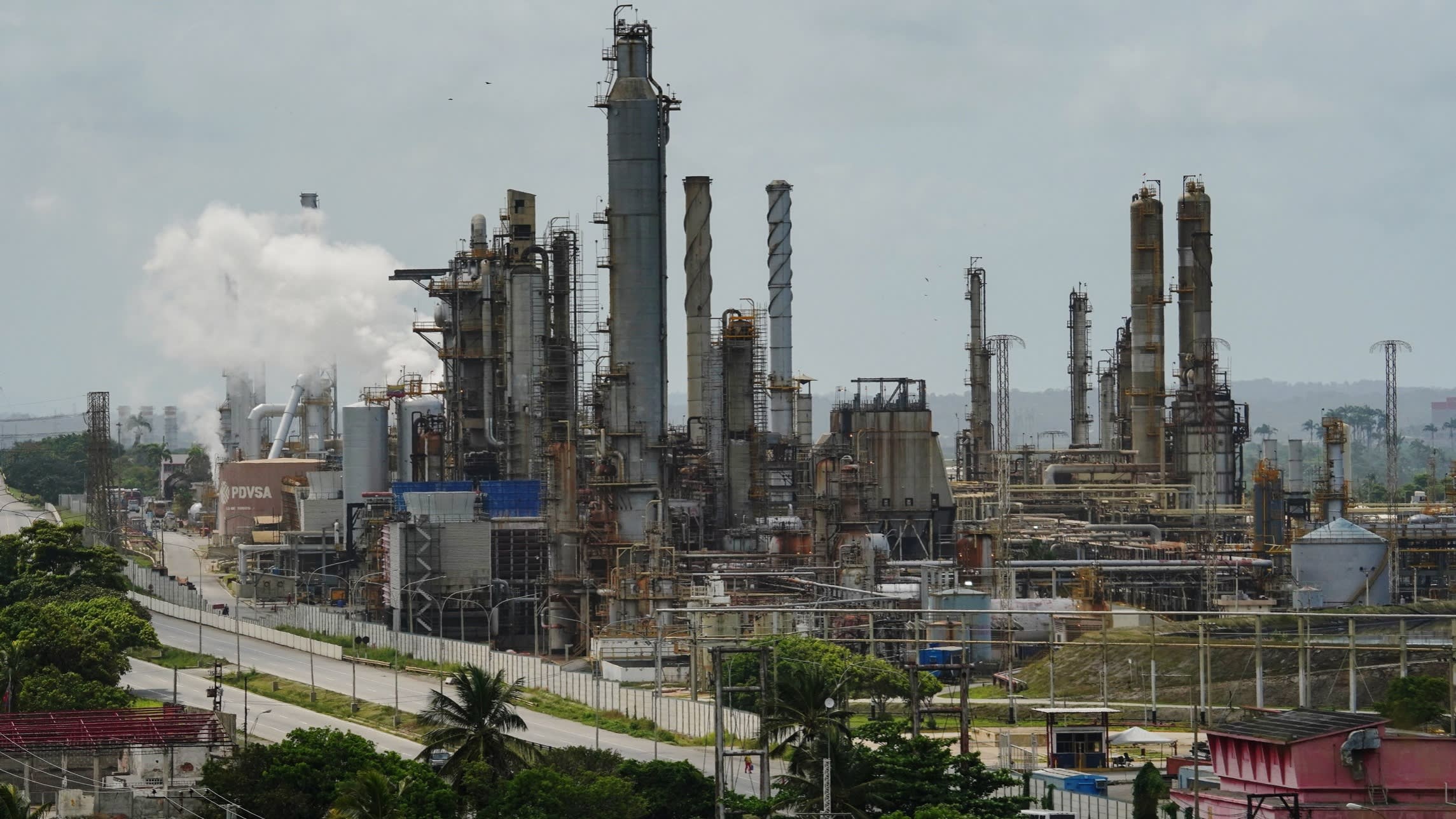
To understand the economic gravity of this stance, one must look at the sheer scale of Venezuela’s untapped potential. According to data from the Organization of the Petroleum Exporting Countries (OPEC), Venezuela holds more than 300 billion barrels of proven crude oil reserves, surpassing even Saudi Arabia. However, due to decades of systemic mismanagement, chronic underinvestment, and the biting impact of international sanctions, the country’s production has cratered from a peak of nearly 3.5 million barrels per day in the late 1990s to approximately 800,000 to 900,000 barrels per day in recent months. This gap between geological reality and industrial output represents what Trump characterizes as a lost opportunity—a "tremendous" pool of wealth that remains inaccessible to global markets and, more importantly, to American interests.
The "America First" energy doctrine, which defined much of the Trump administration’s previous tenure, prioritized domestic production and energy dominance. Yet, a second term would likely grapple with the realization that true energy security requires control over global supply chains. Trump has frequently lamented that the United States did not "take the oil" following historical interventions, a sentiment he has specifically applied to Venezuela. In a professional economic context, "taking the oil" is less likely to manifest as a literal seizure of territory and more as a forced restructuring of the Venezuelan energy sector to favor U.S. corporations and debt holders. This would involve a radical overhaul of the legal framework governing Petróleos de Venezuela, S.A. (PDVSA), the state-owned oil giant that has been the backbone of the Chavismo movement for a quarter-century.
From a market perspective, the return of Venezuelan heavy crude to U.S. shores carries significant logistical advantages. The complex refinery clusters along the U.S. Gulf Coast, particularly in Texas and Louisiana, were specifically engineered to process the "heavy, sour" crude that characterizes the Orinoco Belt. When sanctions were tightened in 2019, these refineries were forced to seek more expensive alternatives from the Middle East or less optimal grades from Canada and Mexico. By facilitating a return to Venezuelan supply, a Trump administration could theoretically lower input costs for American refiners, potentially exerting downward pressure on domestic gasoline prices—a key metric of political success for any U.S. president.
However, the path to unlocking this wealth is fraught with astronomical costs and geopolitical hurdles. Industry analysts estimate that restoring Venezuela’s production to even 2 million barrels per day would require an investment of at least $10 billion to $20 billion annually for a decade. The country’s infrastructure is in a state of advanced decay; pipelines are corroded, power grids are unstable, and the specialized workforce has largely fled the country in a massive brain drain that has seen over 7 million Venezuelans emigrate. For American "tremendous wealth" to be realized, the U.S. would need to provide not just a political framework, but the massive capital injections and technical expertise that only Western oil majors like Chevron, ConocoPhillips, and Halliburton can offer.
The role of Chevron serves as a critical case study for how a future Trump administration might operate. Despite the "maximum pressure" campaign, Chevron was granted a specific license to continue limited operations in Venezuela, a move that the Biden administration later expanded. This suggests a bipartisan recognition that maintaining a U.S. "footprint" in the Orinoco Belt is a matter of national security. Trump could potentially use these existing corporate footholds as the vanguard of a broader "re-Americanization" of the Venezuelan oil fields, effectively pushing out Chinese and Russian interests that have filled the vacuum left by previous sanctions.
The geopolitical dimension cannot be overstated. Currently, Venezuela owes billions to China through oil-for-debt swaps and maintains a deep military and intelligence partnership with Russia. For Trump, tapping Venezuelan wealth is as much about denying resources to adversaries as it is about securing them for the United States. A strategy of "extractive diplomacy" might involve offering the Maduro regime—or a successor government—a deal: the lifting of all primary and secondary sanctions in exchange for the total privatization of oil assets and the expulsion of Sino-Russian influence. This would be a high-stakes gamble, essentially betting that the lure of oil wealth can overcome decades of ideological entrenchment.
Furthermore, the economic impact analysis of such a move must account for the migration crisis. Trump has frequently linked the collapse of the Venezuelan economy to the surge of migrants at the U.S. southern border. By reviving the oil sector, he may argue that he is creating an economic "gravity" that encourages Venezuelans to stay home or return, thereby addressing a domestic political liability through foreign economic policy. This holistic view—linking energy, migration, and national security—is central to the transactional style of governance Trump favors.
There are, however, significant legal and ethical risks to this approach. International law regarding the sovereignty of natural resources is stringent, and any move perceived as a forced takeover of a sovereign nation’s assets would face intense scrutiny at the United Nations and among regional partners in the Americas. Moreover, the environmental cost of reviving the Orinoco Belt is substantial. Venezuelan crude is among the most carbon-intensive in the world to extract and refine. In an era where global capital is increasingly sensitive to Environmental, Social, and Governance (ESG) criteria, securing the necessary private investment for a massive Venezuelan oil revival might prove more difficult than the political maneuvering itself.
Market volatility also presents a challenge. The global transition toward renewable energy and the increasing efficiency of U.S. shale production mean that the world’s thirst for heavy crude may not be as permanent as it once was. If a Trump administration successfully floods the market with Venezuelan oil, they risk a price collapse that could harm domestic U.S. shale producers—a core constituency of the Republican party. Balancing the interests of "Big Oil" in the Permian Basin with the desire to dominate Venezuelan reserves would require a delicate calibration of trade quotas and tariffs.
Ultimately, Donald Trump’s vision for Venezuela represents a return to a more mercantilist era of international relations. It posits that the world is a zero-sum game where the primary duty of a leader is to secure tangible assets for their nation. Whether this "tremendous wealth" can actually be harnessed depends on more than just executive orders; it requires a stable political environment in Caracas, a massive infusion of private capital, and a global oil market that remains hungry for the heavy crude of the Orinoco. As the 2024 election approaches, the prospect of a "Petro-Trumpism" policy in South America stands as one of the most consequential potential shifts in the global economic order, promising to redraw the energy map of the Western Hemisphere in ways that would resonate for generations. Without a doubt, the transformation of Venezuela from a sanctioned pariah to a primary energy partner would be the ultimate "art of the deal," though the costs of such a transformation remain as vast and uncertain as the oil fields themselves.