

The unprecedented announcement of a criminal investigation into Federal Reserve Chair Jerome Powell has sent shockwaves through the upper echelons of the global financial community, prompting a sharp rebuke from former Treasury Secretary and Fed Chair Janet Yellen. Labeling the development "extremely chilling," Yellen warned that the move represents a direct assault on the independence of the world’s most powerful central bank. The probe, which centers on allegations of perjury related to a multi-million-dollar renovation project at the Federal Reserve’s headquarters, has ignited a firestorm of debate over the politicization of monetary policy and the potential long-term damage to the credibility of the United States’ financial institutions.
The controversy stems from an inquiry led by the U.S. Attorney’s Office in Washington, D.C., currently headed by Jeanine Pirro, a prominent ally of President Donald Trump. Investigators are reportedly scrutinizing testimony provided by Powell to Congress in June 2023 regarding the costs and management of the Eccles Building renovation. While the Justice Department has not formally confirmed the charges, the prospect of a sitting Fed Chair facing criminal prosecution for administrative testimony is a scenario without modern precedent in American history. To Yellen and a growing chorus of economic experts, the legal justification for the probe appears secondary to a broader political objective: the removal of a central bank leader who has frequently clashed with the executive branch over interest rate policy.
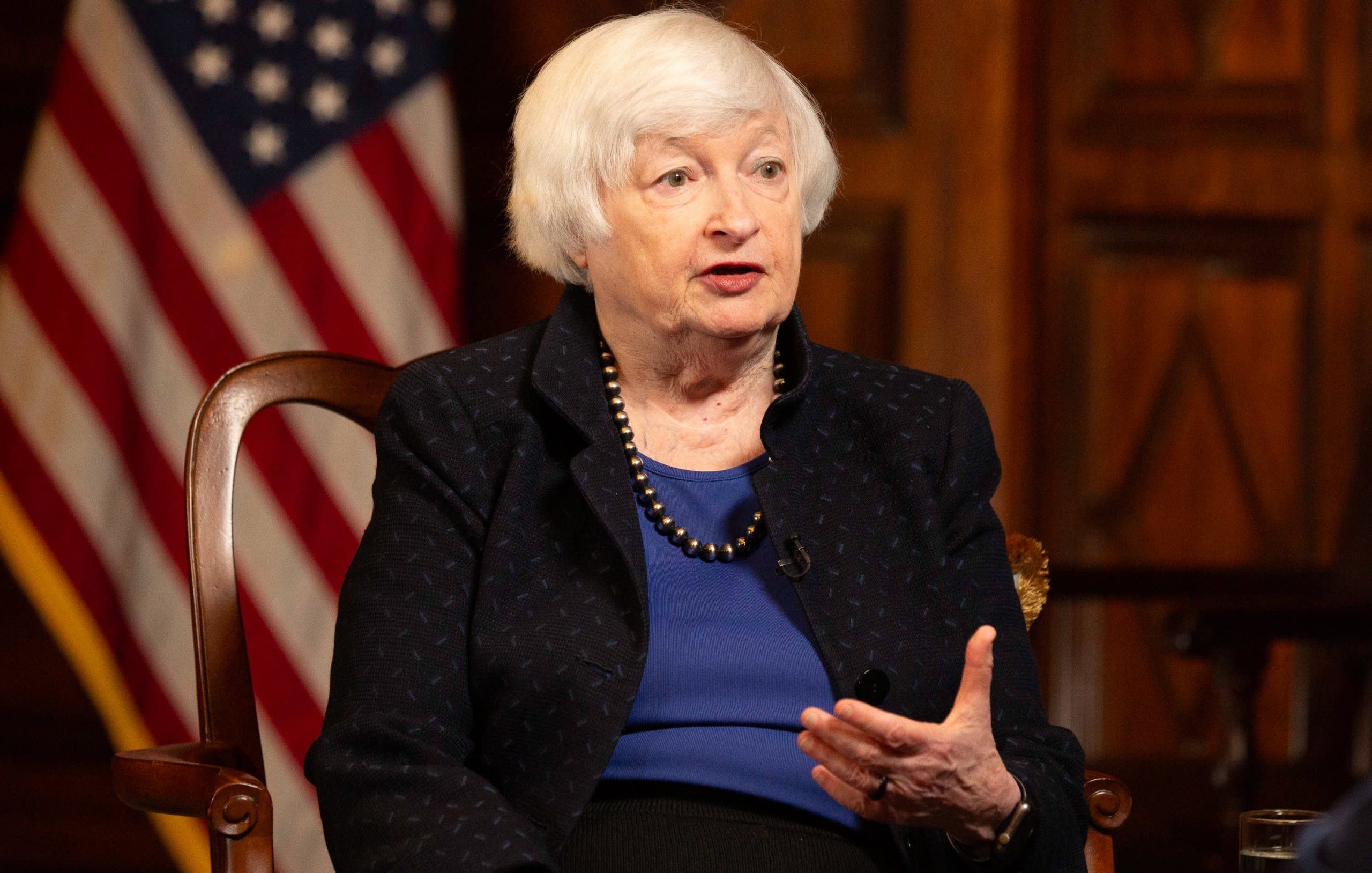
Yellen, who holds the unique distinction of having led both the Federal Reserve and the Treasury Department, expressed profound skepticism regarding the validity of the allegations. Having worked closely with Powell for years, she characterized the likelihood of him intentionally misleading Congress as "zero," suggesting instead that the investigation is a calculated maneuver to vacate the chair’s seat. This sentiment was echoed in a rare joint statement released by a bipartisan group of former financial heavyweights, including former Fed Chairs Ben Bernanke and Alan Greenspan, as well as former Treasury Secretaries Timothy Geithner and Henry Paulson. Their collective warning was stark: using prosecutorial power to undermine the Federal Reserve is a hallmark of "banana republics" and emerging markets with weak institutional safeguards, not a global economic superpower built on the rule of law.
The stakes for the financial markets are difficult to overstate. For decades, the independence of the Federal Reserve has served as the bedrock of global investor confidence in the U.S. dollar and the Treasury market. Central bank independence (CBI) is predicated on the idea that monetary policy decisions—specifically the setting of interest rates—must be insulated from short-term political pressures. When a government can coerce a central bank into lowering rates to fuel temporary economic growth or to reduce the cost of servicing sovereign debt, the result is almost invariably long-term inflation and a loss of currency value. Yellen’s surprise at the relatively muted market reaction suggests that investors may not yet have fully priced in the "regime risk" associated with a compromised Fed.
At the heart of the current friction is the ballooning U.S. national debt, which currently stands at a staggering $38.4 trillion. President Trump has frequently and publicly criticized the Fed for maintaining restrictive interest rates, arguing that lower borrowing costs are essential to ease the federal government’s interest payment burden. However, Yellen and other economists argue that using monetary policy to manage fiscal debt is a recipe for economic catastrophe. Such a shift toward "fiscal dominance"—where the central bank’s primary mission shifts from price stability to ensuring government solvency—would likely trigger a massive sell-off in the bond market. If global investors begin to fear that the Fed is being steered by the White House rather than economic data, they will demand significantly higher yields to compensate for the risk of future inflation, ironically making the debt even more expensive to service.

The historical context of this struggle reveals how rare such direct confrontations have been. Since the Treasury-Fed Accord of 1951, which formally established the central bank’s autonomy, most presidents have maintained at least a veneer of respect for the Fed’s "quiet period" and its decision-making process. Even during the stagflation of the late 1970s and early 1980s, when Paul Volcker pushed the prime rate to 20% to break the back of inflation, the political pressure he faced did not involve the threat of criminal prosecution. The current move to use the Department of Justice as a tool for administrative removal represents a fundamental shift in the American governance model, moving away from institutional norms and toward a system where the executive branch exerts total control over all levers of economic power.
The technical focus of the probe—the renovation of the Fed’s headquarters—serves as an unlikely catalyst for a constitutional crisis. The project, intended to modernize the aging Eccles Building and its surrounding campus, has seen its budget swell significantly over the years. Critics in Congress have pointed to these costs as evidence of a lack of transparency or fiscal mismanagement within the Fed. However, legal experts note that perjury charges are notoriously difficult to prove, requiring clear evidence of "willful intent" to deceive on a material fact. In the context of complex government infrastructure projects, discrepancies in cost estimates or timelines are common, making a criminal referral for a top official highly unusual unless there is overwhelming evidence of a deliberate cover-up.
From a global perspective, the undermining of the Federal Reserve has profound implications for the U.S. dollar’s role as the world’s reserve currency. The "exorbitant privilege" enjoyed by the United States—the ability to borrow cheaply and trade in its own currency—is built on the world’s trust in the Fed’s commitment to a 2% inflation target and its political neutrality. If the Fed becomes an arm of the presidency, international central banks and sovereign wealth funds may begin to diversify away from Treasuries, seeking stability in the Euro, the Yen, or alternative assets. A decline in the demand for dollars would lead to a weaker exchange rate, higher import costs for American consumers, and a permanent increase in the cost of capital for U.S. businesses.
Furthermore, the precedent set by this investigation could haunt future administrations regardless of party affiliation. If the head of the central bank can be sidelined by a politically appointed prosecutor, every future Fed Chair will operate under a shadow of legal intimidation. This "chilling effect" could lead to a more timid Federal Reserve, one that hesitates to take the necessary, often painful, steps to cool an overheating economy or stabilize a banking crisis for fear of political retribution. The result would be a more volatile economic cycle and a higher probability of policy errors that could lead to deep recessions or runaway inflation.
In their joint statement, the former Treasury and Fed officials emphasized that the rule of law is the foundation of American economic success. They argued that the United States has historically been the destination of choice for global capital because of its predictable regulatory environment and the independence of its judiciary and monetary authorities. By introducing criminal litigation into the realm of monetary policy, the government risks dismantling the very structures that have allowed the U.S. to weather past financial storms, from the 2008 global financial crisis to the inflationary shocks of the post-pandemic era.
As the investigation into Jerome Powell continues to unfold, the eyes of the global financial world remain fixed on Washington. The immediate concern is whether the Fed Chair will be forced to resign or if the Board of Governors will be pressured into a more dovish stance. However, the deeper concern, as articulated by Janet Yellen, is the potential permanent scarring of the American institutional landscape. If the boundary between law enforcement and economic policy continues to blur, the "extremely chilling" environment she describes may become the new, unstable normal for the American economy, with consequences that will be felt by every participant in the global financial system.