


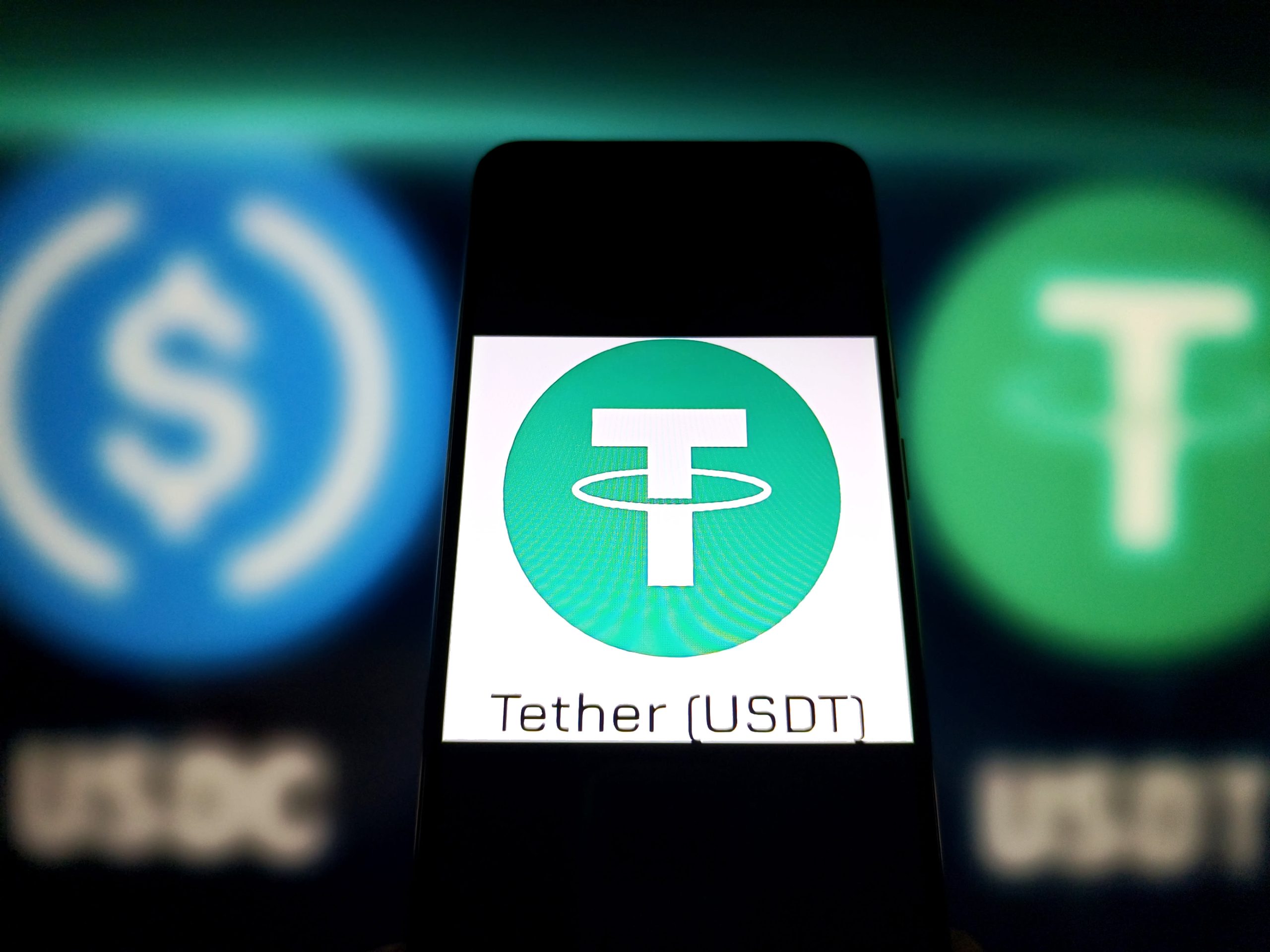
In the wake of recent U.S. military intervention in Venezuela, the streets of Caracas witnessed a phenomenon that has become a hallmark of 21st-century geopolitical instability: a massive, decentralized flight toward digital safety. As the Venezuelan bolívar’s value plummeted under the weight of political uncertainty and the threat of prolonged conflict, citizens did not merely scramble for physical greenbacks. Instead, they flooded peer-to-peer digital marketplaces to convert their evaporating local wealth into Tether (USDT), a dollar-pegged stablecoin that has evolved into the world’s most significant "shadow" currency.
The urgency of this shift was reflected in a dramatic and violent repricing of the asset. While USDT is engineered to maintain a strict 1:1 parity with the U.S. dollar, the sheer volume of demand in Venezuela saw the token trade at a premium of up to 40% on local exchanges. In some instances, desperate savers were paying the equivalent of $1.40 in bolívares to secure a single digital USDT. This anomaly highlights a growing trend in emerging markets: when traditional financial systems fracture and physical dollars become scarce or dangerous to hold, stablecoins serve as an emergency escape valve, regardless of the cost.
This surge in adoption is not an isolated Venezuelan event but rather a blueprint for how populations in the Middle East, Eastern Europe, and Latin America are responding to the erosion of state authority. From the sanctions-heavy environments of Russia and Iran to the hyper-inflationary landscapes of Argentina and Turkey, USDT has transitioned from a speculative tool for crypto-traders into a fundamental instrument of economic survival.
The mechanics of this adoption are rooted in necessity. In many of these jurisdictions, the official banking system is either dysfunctional, heavily surveilled, or subject to strict capital controls that prevent citizens from legally acquiring foreign currency. Stablecoins, however, "bust through the door" of these limitations. Because they operate on public blockchain rails, they bypass the intermediaries—local banks and central regulators—that regimes use to trap capital within their borders.
Mauricio Di Bartolomeo, co-founder of the digital asset lender Ledn, observes that the primary driver for stablecoin acquisition in these regions is self-preservation. In his view, stablecoins represent a "better dollar" for the modern age—one that is portable, divisible, and resistant to the physical seizure or bureaucratic freezes that plague traditional cash and bank accounts. This sentiment is echoed across the global south, where the "dollarization" of the economy is increasingly happening on a smartphone screen rather than through the black-market exchange of physical bills.
The geopolitical implications of this trend are profound, particularly as U.S. foreign policy enters a more assertive phase. With the Trump administration signaling potential interventions or heightened economic pressure on nations like Colombia and Iran, the "survival strategy" of holding USDT is expected to gain even deeper traction. For an Iranian merchant facing the collapse of the rial or a Colombian saver wary of regional spillover from the Venezuelan crisis, Tether provides a way to decouple their personal net worth from the fate of their national government.
However, the Venezuelan "premium" serves as a stark reminder that digital assets are not immune to the laws of supply and demand. Haonan Li, CEO of Codex, notes that the spike to $1.40 was not driven by speculative greed but by a "fear-based repricing." When a population perceives that their local fiat currency is about to become "virtually worthless" overnight, they are willing to pay an exorbitant entry fee to move into a dollar-denominated asset. This highlights a critical liquidity gap in the crypto-infrastructure of emerging markets; while the technology allows for the movement of money, the "on-ramps" and "off-ramps" can become bottlenecked during times of extreme stress.
From a macroeconomic perspective, the mass migration to stablecoins creates a double-edged sword for the host nation. On one hand, it provides a "safety rail" that prevents total individual ruin, allowing remittances to flow and small businesses to continue transacting even when the national currency fails. On the other hand, it accelerates the very collapse citizens are trying to avoid.
Austin Campbell, CEO of Zero Knowledge Consulting and an adjunct professor at NYU, points out that high volumes of capital outflow into dollar-pegged tokens inevitably exacerbate the depreciation of the local currency. By providing an easy way for citizens to exit the local monetary system, stablecoins strip the state of its ability to fund itself through the "inflation tax." While this can be viewed as a destructive force, Campbell suggests it may also be a "feature, not a bug" of the technology. It places direct economic pressure on repressive or incompetent regimes by removing their captive audience. When a government fails to provide a stable medium of exchange, the market finds a substitute, effectively "voting with its feet" in the digital realm.
The dominance of Tether in this space is particularly noteworthy. Despite long-standing questions regarding the transparency of its reserves and its relationship with global regulators, USDT remains the undisputed leader in liquidity. In the high-stakes environment of a failing state, users prioritize liquidity and ease of exchange over regulatory purity. Tether’s deep integration into the global P2P network means that a Venezuelan refugee in Cúcuta or a Russian expatriate in Dubai can find a buyer or seller for USDT almost instantly, a feat that more "compliant" or transparent stablecoins have yet to match in the informal economy.
This growing reliance on Tether also creates a complex relationship with U.S. hegemony. While the U.S. government has historically used the dollar’s status as the global reserve currency to enforce sanctions and project power, the rise of USDT creates a "shadow dollar" system that is harder to control. People in "enemy" states are using a digital version of the U.S. dollar to protect themselves from the very economic hardships that U.S. sanctions might be intended to create. It is a paradox where the dollar’s influence is expanded through the very technology that seeks to bypass the American banking system.
The human element of this shift cannot be overstated. For many in Venezuela, the ability to convert a week’s wages into a fraction of a USDT token is the difference between being able to afford imported medicine or watching their savings disappear by lunchtime. As the traditional financial architecture cracks under the pressure of war, sanctions, and mismanagement, the "escape valve" provided by digital assets becomes more than just a financial trend—it becomes a necessity of life.
Looking forward, the precedent set in Venezuela suggests that the future of global conflict will be inextricably linked to the flow of digital assets. As more nations face the prospect of political instability, the demand for "uncensorable" dollars will only grow. While the volatility in P2P prices and the risks of capital flight present significant challenges for regulators and economists, for the individual on the ground, the calculation remains simple. When the choice is between a government-mandated currency that is losing its value by the hour and a digital token that offers a link to the global economy, the digital option—no matter the premium—is the only rational path forward. The age of the sovereign monopoly on money is yielding to a decentralized era where the code of a stablecoin provides more security than the promises of a central bank.