
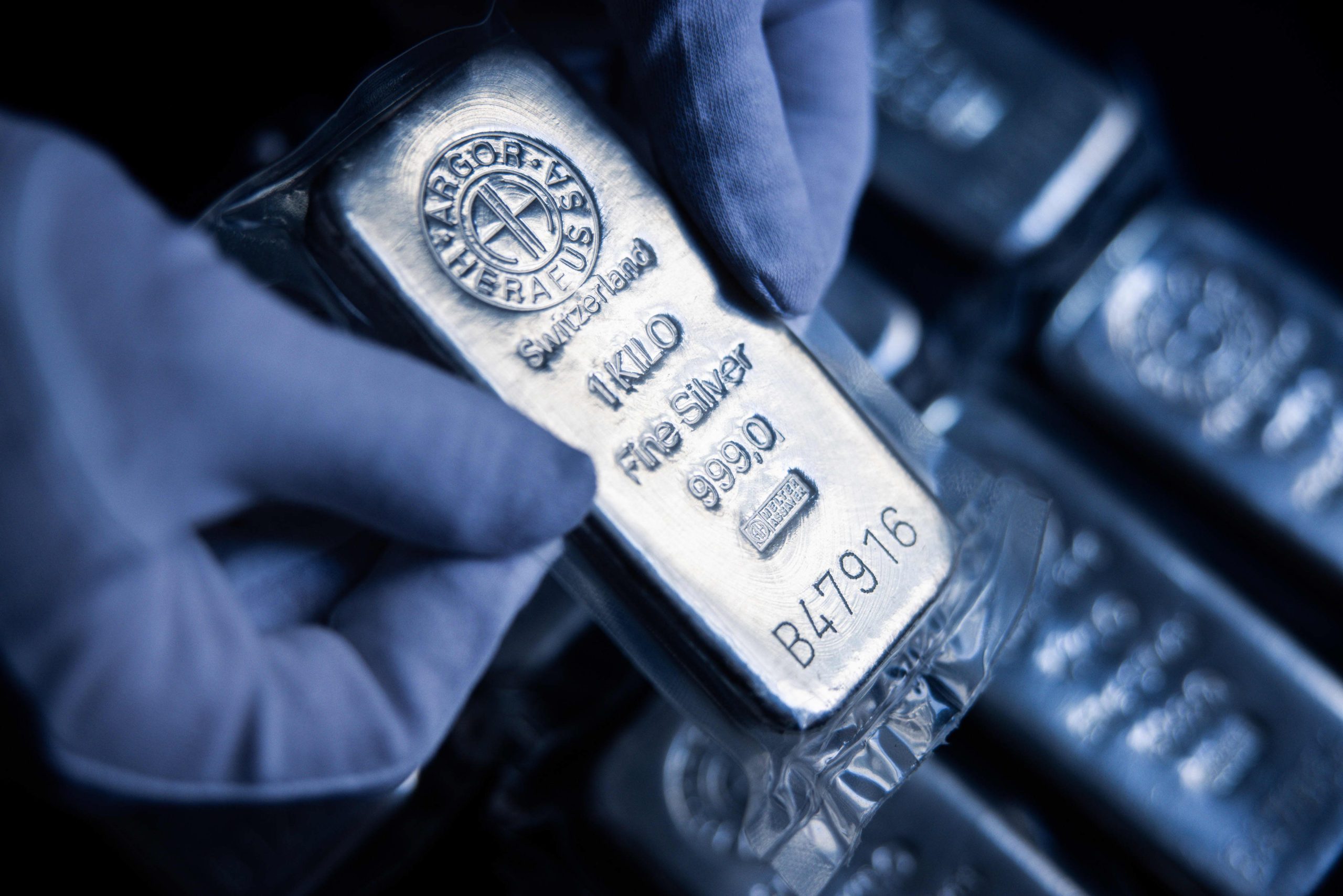
The meteoric rise of silver, which has defined the commodities market throughout 2025, faced its most significant hurdle this week as prices underwent a violent correction. After breaching the psychological and historic threshold of $80 per ounce in overnight trading, silver futures collapsed, recording an 8.7% decline in a single session. This move represents the sharpest one-day percentage drop since February 2021, signaling a potential shift in momentum for a metal that has outperformed nearly every other major asset class this year. The reversal was even more pronounced on an intraday basis; from its peak to its trough, the metal experienced a staggering 15% swing, the most dramatic high-to-low volatility seen since the pandemic-induced fluctuations of August 2020.
Market participants watched with a mix of awe and trepidation as the March silver futures contract settled at $70.46 an ounce. For much of the year, silver has been the "darling" of the trading floor, beginning 2025 at a modest $20 per ounce before embarking on a vertical trajectory that saw its value quadruple. Despite the recent carnage, the metal remains up by more than 140% year-to-date, a figure that dwarfs the performance of the S&P 500 and even its more prestigious cousin, gold. However, the sheer velocity of the recent decline serves as a reminder of silver’s reputation as the "devil’s metal"—an asset known for its extreme volatility and its tendency to punish latecomers to the rally.
Analysts and institutional observers have been quick to dissect the catalysts behind this sudden liquidation. The prevailing consensus suggests a "perfect storm" of technical and seasonal factors. Given the massive year-to-date gains, the market was ripe for profit-taking. As the calendar year draws to a close, institutional fund managers are frequently under pressure to lock in gains and engage in tax-loss harvesting to optimize their portfolios. When a commodity has moved 140% in less than twelve months, the temptation to exit positions becomes overwhelming, particularly when prices hit a round-number milestone like $80. This selling pressure likely triggered a cascade of stop-loss orders, accelerating the downward spiral in a thin liquidity environment.
The broader precious metals complex was not immune to the selling pressure, though it fared better than silver. Gold futures for February delivery, which recently scaled all-time highs above $4,550 per ounce, retreated by approximately 4.6% to settle at $4,343.60. While gold’s 60% year-to-date gain is impressive by any historical standard, it pales in comparison to silver’s speculative fervor. The widening gap between the two metals—often tracked via the gold-to-silver ratio—had reached levels that many technical analysts considered unsustainable, suggesting that silver had become overextended relative to the rest of the sector.
The fundamental drivers that propelled silver to these heights, however, remain largely intact. Investors have flocked to precious metals as a dual-purpose hedge. On one hand, silver serves as a traditional safe haven against a backdrop of escalating geopolitical instability and the persistent expansion of the U.S. federal deficit. As concerns over sovereign debt levels and the potential for long-term currency debasement grow, "hard assets" like silver and gold provide a store of value that cannot be printed or devalued by central bank policy. On the other hand, silver acts as a hedge against a weakening U.S. dollar. Because the metal is priced in greenbacks globally, a softer dollar makes silver more affordable for international buyers, stimulating demand from emerging markets and industrial hubs in Asia and Europe.
Beyond its role as a monetary asset, silver’s recent rally has been underpinned by a structural transformation in industrial demand. Unlike gold, which is primarily held for investment or jewelry, more than 50% of annual silver supply is consumed by industrial applications. The global transition toward renewable energy has placed silver at the center of the green economy. It is a critical component in the production of photovoltaic cells for solar panels, where its high electrical conductivity is unmatched by cheaper base metals. As nations accelerate their decarbonization efforts, the demand for solar infrastructure has surged, creating a persistent bid for silver bullion.
The technology sector has further strained the silver supply chain. The explosion of interest in artificial intelligence (AI) and the subsequent expansion of global data centers have increased the need for high-end electronics and specialized circuitry, much of which relies on silver. Furthermore, the automotive industry’s shift toward electric vehicles (EVs) has significantly increased the silver content per vehicle. While a traditional internal combustion engine car uses a relatively small amount of the metal, an EV requires substantially more for its battery management systems, power electronics, and charging infrastructure. This convergence of "green" and "high-tech" demand has created a scenario where industrial consumption is consistently outstripping new mine supply.
Supply-side constraints have only exacerbated this imbalance. Silver is rarely mined as a primary product; instead, it is often a byproduct of lead, zinc, and copper mining. This means that silver supply is relatively inelastic; it cannot be easily increased simply because the price of silver rises. If the demand for base metals remains stagnant or if mining projects face regulatory hurdles and rising operational costs, the secondary output of silver remains capped. Industry data has pointed to a multi-year structural deficit in the silver market, where total demand—including investment and industrial use—exceeds annual mine production and recycling combined.
Despite the severity of the recent price drop, many market veterans view the move as a necessary "reset" rather than the end of the bull market. The rapid ascent to $80 had left the market technically overbought, and a cooling-off period was widely anticipated by those watching the Relative Strength Index (RSI) and other momentum indicators. From a macro perspective, the fundamental case for silver—characterized by a massive supply-demand gap and a favorable tailwind from industrial innovation—remains one of the most compelling stories in the commodities space.
Looking ahead to 2026, some analysts remain remarkably bullish, suggesting that the current correction may provide an attractive entry point for investors who missed the initial surge. Predictions of silver reaching $90 or even the triple-digit milestone of $100 per ounce are no longer dismissed as fringe theories. To reach $100, silver would need to appreciate by roughly 40% from its current levels—a feat that seems plausible given that it has already gained 140% this year. The trajectory of the U.S. dollar, the pace of interest rate adjustments by the Federal Reserve, and the continued appetite for solar energy will be the primary determinants of whether silver can reclaim its lost ground.
The global economic implications of sustained high silver prices are also beginning to manifest. For manufacturers in the solar and electronics sectors, the rising cost of silver represents a significant headwind for profit margins. If silver prices stabilize at these elevated levels or continue their climb toward $100, it may force industrial users to seek "thrifting" technologies—methods to reduce the amount of silver used in components—or to explore alternative materials like copper, though such transitions are often technically difficult and time-consuming.
Ultimately, the historic volatility witnessed this week underscores the dual nature of silver as both an industrial commodity and a speculative financial asset. While the 15% intraday swing caused significant pain for leveraged traders, it has also cleared much of the "froth" from the market. As the dust settles on this historic reversal, the focus will return to the underlying reality: a world that is increasingly hungry for silver, even as the earth’s ability to provide it at current rates remains under pressure. The path to $100 may be fraught with similar corrections, but for now, the silver story remains one of the most influential narratives in the global economy.