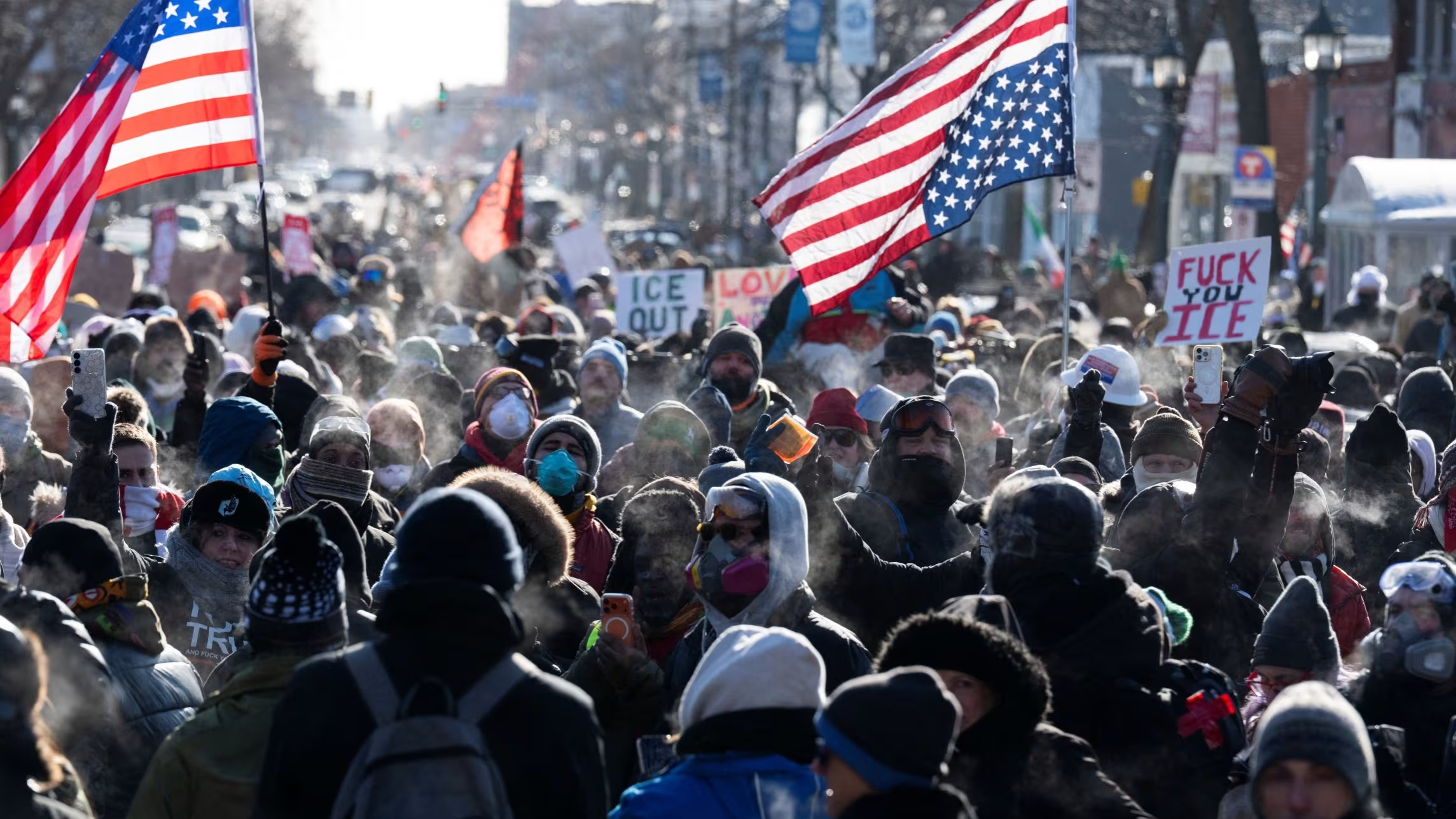
The streets of Minneapolis have once again become a flashpoint for the American debate over immigration policy, as a fatal shooting involving law enforcement during an enforcement operation has ignited a wave of protests and renewed calls for a moratorium on federal crackdowns. The incident, which occurred during a period of heightened surveillance and targeted deportations, has transcended local grievances to become a symbol of the widening chasm between federal enforcement mandates and the socio-economic fabric of urban centers. For investors, policymakers, and community leaders, the escalation in Minneapolis serves as a stark reminder that immigration is not merely a border issue, but a complex economic driver that influences labor markets, consumer confidence, and municipal stability.
The shooting, which took place in a neighborhood known for its diverse demographic makeup, triggered an immediate and visceral reaction from local advocacy groups and residents. Protesters have gathered to demand transparency and an immediate halt to what they describe as an "indiscriminate crackdown" on undocumented residents. This unrest comes at a time when the federal government has signaled a more aggressive stance on internal enforcement, shifting resources from border security to interior cities. The fallout from this shift is being felt acutely in Minneapolis, a city that has historically relied on immigrant labor to sustain its manufacturing, service, and healthcare sectors.
From an economic perspective, the implications of a sustained immigration crackdown are profound. According to data from the American Immigration Council, undocumented immigrants in Minnesota contribute hundreds of millions of dollars in state and local taxes annually. Beyond direct fiscal contributions, the immigrant population serves as a vital pillar for the Twin Cities’ labor participation rate. In industries such as construction and hospitality, where labor shortages have remained a persistent post-pandemic challenge, the threat of mass deportations or increased enforcement creates a climate of uncertainty that can stifle business investment and disrupt local supply chains.
Economists often point to the "multiplier effect" of immigrant spending in local economies. When enforcement actions lead to a climate of fear, consumption patterns shift. Families in affected communities often withdraw from public life, reducing spending on non-essential goods and services, which in turn impacts local retail and small businesses. In Minneapolis, where the Somali and Latino communities have established thriving entrepreneurial ecosystems, the psychological and economic impact of a crackdown is particularly visible. The current protests are not just a demand for justice for the shooting victim; they are a defense of an economic status quo that many believe is being dismantled by federal intervention.
The friction between federal enforcement agencies and "sanctuary" jurisdictions has also reached a boiling point. Minneapolis, like several other major U.S. cities, has policies in place that limit local law enforcement’s cooperation with federal immigration authorities. Proponents of these policies argue they are essential for maintaining public trust; if immigrant communities fear that any interaction with the police could lead to deportation, they are less likely to report crimes or cooperate in investigations. The recent shooting has shattered that trust, with protesters arguing that federal mandates are infringing upon the city’s ability to govern itself and protect its residents.
On a national scale, the events in Minneapolis are a microcosm of a larger fiscal debate. The cost of mass deportation and aggressive interior enforcement is astronomical. Estimates suggest that a large-scale effort to deport millions of undocumented individuals could cost the U.S. government billions in direct logistical expenses, while simultaneously shaving percentage points off the national GDP. The non-partisan Peterson Institute for International Economics has warned that such policies could exacerbate inflationary pressures by creating sudden and severe labor vacuums in key sectors. For the Minneapolis business community, these are not abstract warnings but looming operational risks.
The global context further complicates the narrative. As the United States grapples with its internal migration policies, other developed nations are watching closely. In Europe, countries like Germany and Italy have faced similar tensions between the need for migrant labor to offset aging demographics and the political pressure to tighten borders. The American approach, characterized by sudden shifts in enforcement intensity, often lacks the long-term stability that markets crave. International observers note that while border security is a sovereign right, the methods of interior enforcement can have lasting repercussions on a nation’s "soft power" and its reputation as a destination for global talent.
Market analysts have noted that the volatility resulting from civil unrest can impact municipal bond ratings and the attractiveness of a city for corporate relocations. Companies headquartered in the Twin Cities, including several Fortune 500 entities, are increasingly sensitive to the social climate of their home base. A city perceived as being in a state of perpetual conflict between its residents and federal authorities is a less attractive environment for recruiting top-tier talent. Diversity and inclusion are no longer just corporate buzzwords; they are integrated into the ESG (Environmental, Social, and Governance) frameworks that many institutional investors use to evaluate risk.
Expert insights suggest that the path forward requires a more nuanced approach than the current "all-or-nothing" enforcement strategy. Dr. Elena Rodriguez, a senior fellow at a leading economic think tank, argues that the disconnect between labor needs and immigration laws is the root cause of the current tension. "We have an economic system that demands labor and a legal system that restricts it," she notes. "When you fill that gap with aggressive enforcement without reform, you get the kind of social explosion we are seeing in Minneapolis." This sentiment is echoed by local business leaders who have called for a "work-first" approach that would allow undocumented residents to regularize their status and continue contributing to the economy.
The legal fallout from the Minneapolis shooting is also expected to be significant. Civil rights attorneys are already preparing challenges to the federal government’s enforcement tactics, citing potential violations of due process and excessive use of force. These legal battles can drag on for years, creating a protracted period of uncertainty for the city. Furthermore, the cost of policing the protests and the potential for property damage add an additional layer of fiscal strain on a city budget that is already stretched thin.
As the sun sets over the protest lines in Minneapolis, the broader question remains: can a modern economy function with a migration policy that relies heavily on enforcement rather than integration? The data suggests that the economic costs of a crackdown—ranging from lost tax revenue to disrupted labor markets—may far outweigh the perceived security benefits. For the residents of Minneapolis, the immediate concern is justice and safety, but for the rest of the country, the events are a clarion call for a sustainable, economically grounded immigration strategy.
The situation remains fluid, with community leaders calling for a federal investigation into the shooting and a re-evaluation of enforcement protocols. In the meantime, the economic pulse of the city remains uneven. Small business owners in the affected districts report a significant drop in foot traffic, and community centers have become hubs for legal aid rather than social gatherings. The "chilling effect" of the crackdown is real, and its long-term impact on the Minneapolis economy will be measured not just in dollars, but in the erosion of the social capital that has long defined the region.
Ultimately, the Minneapolis protests are a signal to Washington that immigration policy cannot be conducted in a vacuum. It is an issue that touches every aspect of American life, from the price of groceries to the stability of our streets. Until a balance is found between the rule of law and the realities of the 21st-century labor market, the cycle of enforcement, tragedy, and unrest is likely to continue, with Minneapolis serving as a sobering example of the costs of failure.