


The era of effortless expansion for China’s electric vehicle (EV) sector is rapidly transitioning into a period of Darwinian consolidation. After a decade defined by breakneck growth, lavish state subsidies, and a proliferation of new entrants, the landscape heading into 2026 is becoming a high-stakes survival test. The domestic market, once an insatiable engine of demand, is showing signs of structural exhaustion, forcing a dramatic pivot in strategy for both homegrown champions and global legacy automakers. As the "boom" phase concludes, the industry is entering a "soft landing" characterized by intensifying price wars, a narrowing field of dominant players, and a desperate rush to secure market share in overseas territories.
The closing months of 2025 have provided a sobering preview of this new reality. Data from the China Passenger Car Association (CPCA) reveals a rare and significant cooling among the market’s heavyweights. Tesla, long the benchmark for EV success in China, saw its sales contract by 7.4% year-over-year in the first eleven months of 2025. Even BYD, the vertically integrated titan that has dominated the global sales charts, reported a 5.1% decline in the same period. More telling was BYD’s performance in November alone, where passenger car sales plummeted by 26.5% compared to the previous year. These figures suggest that even the most established players are not immune to a maturing market where the low-hanging fruit has already been harvested.
This slowdown is occurring against a backdrop of extreme market saturation. New Energy Vehicles (NEVs)—a category encompassing both battery-electric vehicles (BEVs) and plug-in hybrids (PHEVs)—accounted for nearly 60% of all new passenger cars sold in China by late 2025. When a technology achieves this level of penetration, the growth curve naturally flattens. The challenge for manufacturers is no longer just converting internal combustion engine (ICE) drivers to electric; it is now a zero-sum game of stealing customers from direct competitors in a crowded field.
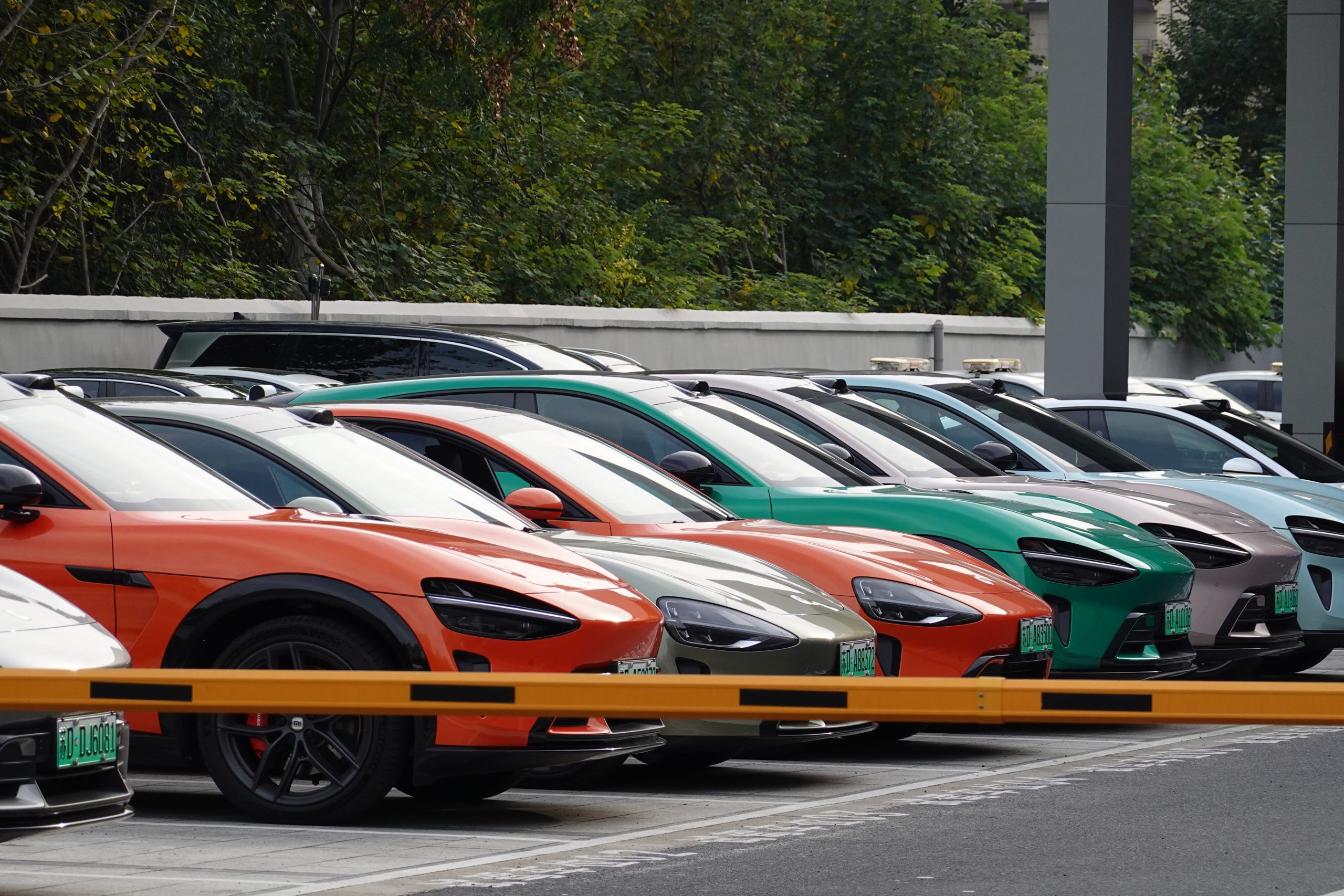
While the "Old Guard" of the EV revolution faces headwinds, a new breed of competitors is emerging from the technology sector, fundamentally altering the value proposition of the automobile. Companies like Xiaomi and those utilizing Huawei’s sophisticated software stacks are recording growth rates exceeding 90%. This shift highlights a critical evolution in consumer preference: the car is increasingly viewed as a mobile smart device rather than a mere mode of transportation. For many younger Chinese buyers, the quality of the autonomous driving software and the integration of the digital cockpit are now more important than traditional automotive metrics like horsepower or handling.

This tech-driven disruption has left the original trio of U.S.-listed Chinese startups—Nio, Xpeng, and Li Auto—in a precarious position. Despite showing improvements in their monthly delivery volumes, these "founding" startups failed to break into the top ten sellers list toward the end of 2025. Their struggle underscores a broader trend of market concentration. Analysts at Citic CLSA note that the top ten manufacturers now control approximately 95% of the NEV market, a staggering increase from the 60% to 70% share they held just three years ago. In this environment, brand recognition and massive scale are the only true shields against obsolescence. Consumers are increasingly wary of purchasing vehicles from smaller players who may not exist in five years to provide software updates or spare parts.
The primary weapon in this battle for relevance remains the price tag. The price war that began in early 2023 has not only persisted but has deepened into a permanent feature of the Chinese market. The scale of discounting is unprecedented, cutting across all price segments. Premium European brands, once the symbols of aspirational wealth, have been forced into defensive pricing strategies. Online sales platforms in China now routinely list "clearance-style" discounts, such as a 432,000 yuan ($61,660) reduction on the Mercedes-Benz EQS or a 147,000 yuan drop for Volvo models.
These price cuts are eroding margins across the board, creating a "race to the bottom" that favors only those with the deepest pockets or the most efficient supply chains. UBS analysts predict that this deflationary environment will persist for years, exacerbated by shifts in government policy. Beijing is preparing to re-impose purchase taxes that were previously waived to stimulate the market, while simultaneously scaling back the aggressive trade-in subsidies that bolstered sales throughout 2024 and 2025. Consequently, the growth rate for China’s EV sales is expected to halve in 2026, dropping from the 20% range to roughly 10% or less.
With the domestic market nearing a ceiling, Chinese automakers are viewing global expansion not as an option, but as a biological necessity. The logic is simple: profit margins on vehicles sold in Europe, Southeast Asia, or the Middle East are often significantly higher than those achieved in the hyper-competitive Chinese market. Geely, for instance, has demonstrated the power of this "outbound" strategy. In the first half of 2025, its electric car exports quadrupled, contributing to an overall export volume of 184,000 vehicles across 90 countries.
However, the nature of this expansion is changing. In response to rising trade barriers—including the European Union’s anti-subsidy duties and potential tariffs in North America—Chinese firms are shifting from a "made-in-China" export model to a "localized production" model. BYD is leading this charge with a massive manufacturing hub in Hungary scheduled to begin operations in 2026. This facility will allow BYD to bypass import tariffs and market itself as a European manufacturer. Similarly, Geely and other major players are establishing footprints in Egypt, Indonesia, and Thailand, effectively creating a "Fortress China" supply chain that spans the globe.

This global surge brings Chinese competition directly to the doorsteps of Western giants. While the U.S. market remains largely shielded by protectionist policies, the battle for Europe and emerging markets will be fierce. Industry consultants suggest that the next two years will see Chinese battery companies and automakers firmly stake their claims in the heart of Europe, challenging the dominance of legacy marques on their home turf.
Despite the onslaught of domestic competition, foreign automakers are refusing to cede the Chinese market. China remains the world’s largest automotive laboratory, and success there is often a prerequisite for global relevance. Volkswagen has adopted a "In China, For China" strategy, establishing its largest research and development center outside of Germany in Hefei. By localizing the entire vehicle development and approval process, VW aims to slash its time-to-market and compete with the rapid product cycles of Chinese tech firms. While VW’s deliveries in China dipped by 4% in 2025, the company is betting on a wave of new, locally-designed models arriving in 2026 to recapture momentum.
American giants like General Motors also maintain a significant, if embattled, presence. Delivering nearly 2 million cars annually in China, GM is leveraging its massive manufacturing capacity to use China as an export hub while simultaneously trying to pivot its domestic offerings toward more competitive NEV designs. The consensus among analysts is that while the "easy money" era has ended, the Chinese market is far from lost for foreign players—provided they can match the agility and software prowess of their local rivals.
As 2026 approaches, the Chinese electric vehicle industry stands at a crossroads. The transition from a subsidized boom to a market-driven survival test will likely result in a leaner, more efficient, but much more aggressive set of "national champions." For consumers, this means better technology at lower prices. For the global automotive industry, it means the arrival of a permanent and formidable competitor that has been forged in the world’s most demanding competitive furnace. In this environment, being on top one month is no guarantee of safety; the only certainty is that the "survival of the fittest" has only just begun.