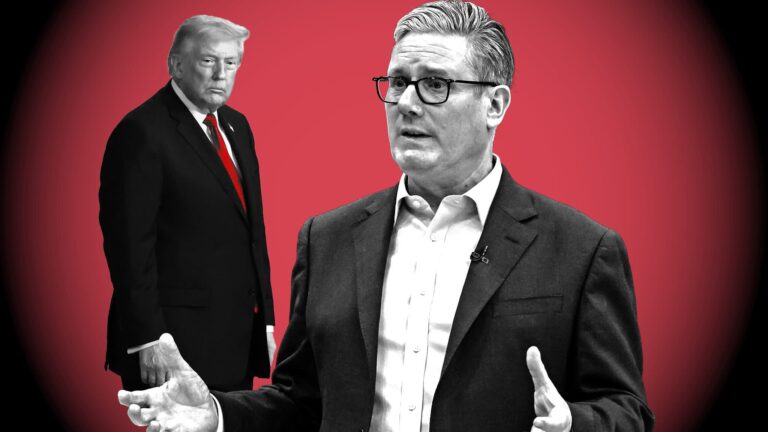
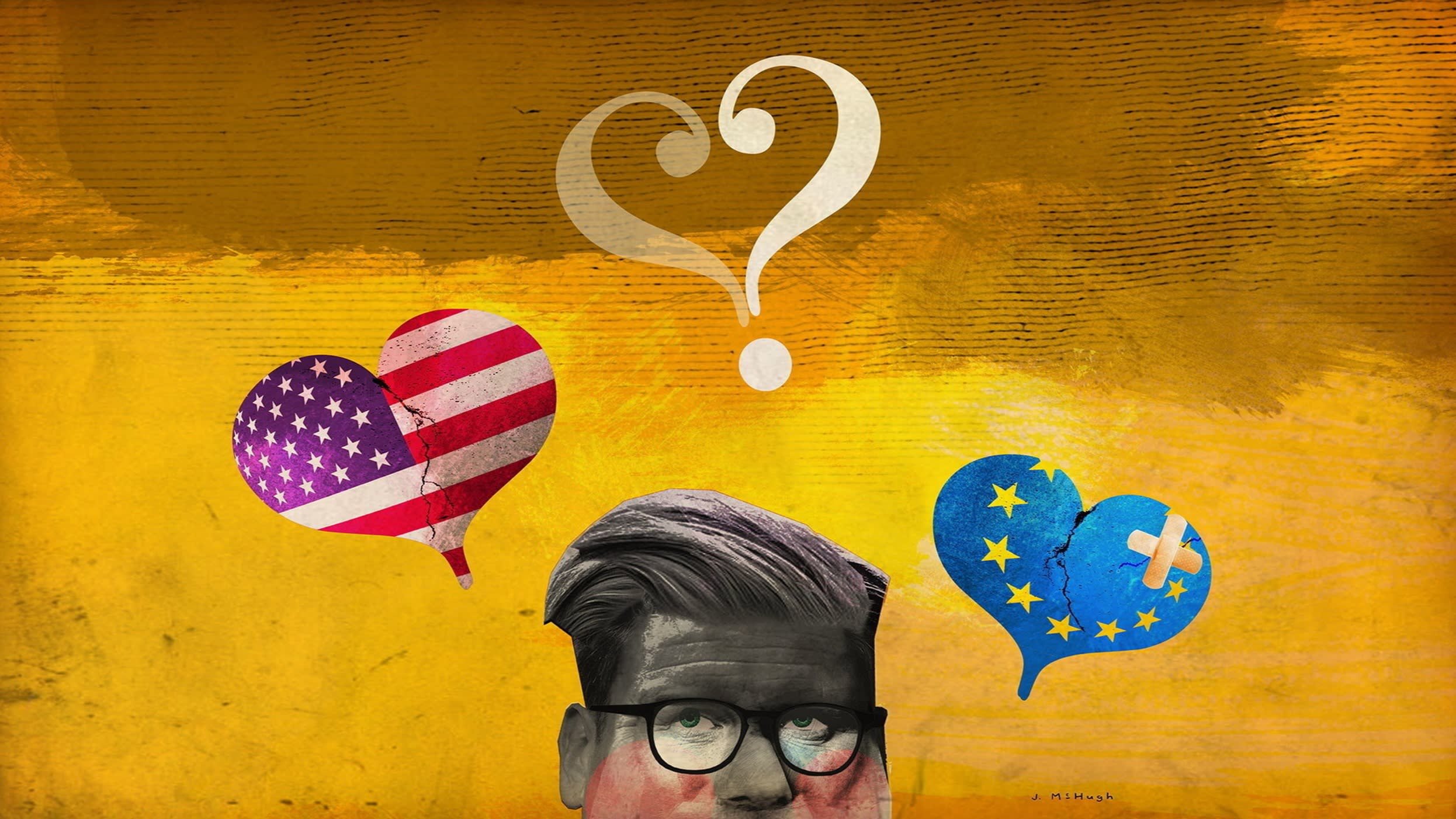
In the hallowed corridors of 10 Downing Street, the ghost of Britain’s "Special Relationship" with the United States and its complicated proximity to the European Union are converging into a singular, defining challenge for Prime Minister Keir Starmer. Since the Labour Party’s landslide victory, the central pillar of the new administration’s platform has been "national renewal," a promise predicated almost entirely on the restoration of robust economic growth. However, in a world increasingly defined by protectionist trade blocs and intensifying geopolitical rivalries, Starmer finds himself at a precarious crossroads. He must choose between deepening ties with a volatile, inward-looking United States or repairing the fractured bridges with a European Union that remains wary of British exceptionalism. This is no longer a mere diplomatic preference; it is a fundamental economic calculation that will determine the UK’s trajectory for the next decade.
The economic landscape Starmer inherited is one of stagnant productivity and high debt, exacerbated by the long-tail effects of Brexit. According to the Office for Budget Responsibility (OBR), the UK’s departure from the European Union has resulted in a long-term reduction in potential GDP of approximately 4%. For a government that has ruled out a return to the Single Market or the Customs Union, the "reset" with Brussels is a delicate dance. Starmer’s strategy hinges on achieving "regulatory synchronicity" in specific sectors—such as chemicals, professional services, and agri-foods—to reduce the friction that has plagued British exporters since 2021. Yet, every step toward Brussels risks alienating the "Global Britain" advocates who see the United Kingdom’s future tied to the high-growth markets of the Indo-Pacific and the technological hegemony of the United States.
Across the Atlantic, the siren call of the American market remains powerful but increasingly complicated. The United States is the UK’s largest single-country trading partner, with bilateral trade in goods and services exceeding £300 billion annually. However, the era of the comprehensive free trade agreement (FTA) appears to have passed. Both the current Biden-Harris administration and the potential return of a Trump presidency have signaled a move away from traditional neoliberal trade deals in favor of "friend-shoring" and industrial protectionism. The U.S. Inflation Reduction Act (IRA), with its massive subsidies for green energy, has created a magnetic pull for global capital, threatening to hollow out the UK’s nascent renewable energy sector. Starmer’s dilemma is whether to attempt a mimicry of American industrial policy—risking a subsidy war the UK cannot win—or to align with the EU’s regulatory response, the Green Deal Industrial Plan.
The stakes of this balancing act are magnified by the upcoming U.S. presidential election. A second Trump term would likely bring a resurgence of "America First" policies, including proposed universal baseline tariffs of 10% to 20% on all imports. Such a move would be catastrophic for British manufacturers, particularly in the automotive and aerospace sectors. Conversely, if Starmer leans too heavily into the European orbit to insulate the UK from American volatility, he faces the "vassal state" critique: the prospect of the UK becoming a "rule-taker" without a seat at the table in Brussels. This tension is particularly acute in the realm of financial services. The City of London, long the crown jewel of the UK economy, has lost significant market share to Paris and Frankfurt since Brexit. While the Labour government seeks a "mutual recognition" agreement for financial regulations, the EU has shown little appetite for granting the UK special access without significant concessions on the movement of people and adherence to European Court of Justice rulings.
Security and defense provide a rare area of overlap, yet even here, the pull of Washington and Brussels creates friction. The AUKUS submarine pact—linking the UK, the US, and Australia—is a testament to Britain’s continued reliance on American military technology and strategic alignment. At the same time, the war in Ukraine has underscored the necessity of a "European pillar" within NATO. Starmer has championed a new UK-EU security pact, aiming to formalize cooperation on everything from defense procurement to cybersecurity. However, European leaders, led by France’s Emmanuel Macron, have often emphasized "strategic autonomy," a concept that envisions a Europe less dependent on the American security umbrella. If the UK is seen as too much of an American proxy, its influence in European security architecture may be curtailed; if it distances itself from Washington, it risks losing its status as the primary bridge between the two continents.
The data suggests that the "Middle Way" is becoming increasingly narrow. UK business investment has been largely flat since the 2016 referendum, and the lack of a clear long-term trade strategy is cited by the Confederation of British Industry (CBI) as a primary deterrent for Foreign Direct Investment (FDI). Investors are looking for stability and a clear indication of which regulatory orbit the UK intends to inhabit. The "Singapore-on-Thames" vision of a low-regulation, high-innovation hub has largely failed to materialize, leaving the UK in a state of "regulatory limbo." Starmer’s task is to provide a definitive answer. Does the UK align with the EU’s "Precautionary Principle," focusing on high standards and consumer protection, or does it follow the US model of "Permissionless Innovation," particularly in emerging fields like Artificial Intelligence and biotechnology?
Expert insights suggest that the government may pursue a "sector-by-sector" approach. In digital trade and AI, the UK is currently attempting to position itself as a global regulator, hosting international summits and bridging the gap between the EU’s stringent AI Act and the US’s more industry-led approach. This "bridge" strategy is ambitious, but it requires immense diplomatic capital. In the words of one former Treasury official, "The UK is trying to be the best friend of two people who are increasingly arguing with each other." As the US and EU diverge on issues like data privacy, carbon border taxes, and relations with China, the UK’s ability to remain neutral becomes more difficult.
The "China factor" further complicates this triangular relationship. Washington has adopted a more hawkish stance, pressuring allies to "de-risk" or even "de-couple" from the Chinese economy. The EU, while also moving toward de-risking, maintains a more nuanced trade relationship with Beijing, particularly regarding Germany’s automotive interests. Starmer must navigate these waters carefully. Too close an alignment with the US on China could jeopardize the UK’s own trade interests and its desire for a stable global economic order; too soft a stance could see the UK sidelined from critical US-led technology sharing agreements.
Ultimately, the resolution of Starmer’s dilemma will likely be found in the pragmatic pursuit of "security-based economics." This philosophy, gaining traction within the Labour Party, suggests that economic policy should be viewed through the lens of national resilience. This means diversifying supply chains (a move toward the EU) while maintaining a cutting-edge technological edge (a move toward the US). It involves the "Windsor Framework" as a starting point for better relations with Brussels, but not a final destination.
As the Prime Minister prepares for a series of high-level summits in the coming year, the pressure to choose will only intensify. The UK cannot afford to be an island of isolation in a world of integrated blocs. Whether Starmer can successfully weave a path that captures the benefits of the European market and American innovation, without succumbing to the political costs of either, will be the ultimate test of his premiership. The economic future of the United Kingdom hangs in the balance, waiting to see if its leader can turn a geographic and historical dilemma into a strategic advantage. The cost of failure is a continued slide into global irrelevance, while the prize for success is a revitalized British economy that finally finds its post-Brexit purpose in a fractured world.