
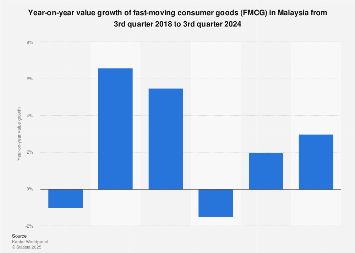
Malaysia’s Fast-Moving Consumer Goods (FMCG) market is anticipated to experience a modest expansion in value terms throughout 2024, reflecting a complex interplay of evolving consumer behaviors, economic undercurrents, and sector-specific dynamics. While precise growth figures remain proprietary, industry analyses point towards a period of sustained, albeit measured, development for this vital segment of the Malaysian economy. The FMCG sector, characterized by its high sales volume and relatively low margins, encompasses a broad spectrum of everyday necessities and impulse purchases, ranging from food and beverages to personal care items and household cleaning products. Its performance is often seen as a bellwether for broader consumer confidence and economic health.
The projected growth in 2024 is underpinned by several key drivers. Firstly, Malaysia’s demographic profile, with a young and growing population, continues to fuel demand for essential consumer goods. Urbanization trends also play a significant role, concentrating purchasing power and increasing accessibility to a wider array of products through modern retail channels. Furthermore, a recovering tourism sector and increased domestic consumption, supported by government initiatives aimed at stimulating economic activity, are expected to contribute positively. However, the landscape is not without its challenges. Persistent inflation, particularly in food and energy prices, could temper consumer spending power, prompting a shift towards more value-oriented brands and private labels. Global supply chain disruptions, though easing, still pose a risk to inventory levels and cost management for manufacturers and retailers alike.
Delving deeper into the market segments, the food and non-alcoholic beverages categories are likely to remain the dominant contributors to overall FMCG value. Within these, demand for healthier options, plant-based alternatives, and convenience foods is on an upward trajectory. Consumers are increasingly health-conscious, seeking products with reduced sugar, salt, and artificial ingredients, a trend mirrored across Southeast Asia. This has spurred innovation among manufacturers, leading to the introduction of fortified products and specialized dietary lines. The beverage segment, beyond traditional staples, is seeing growth in functional drinks and premium water offerings.
The personal care and cosmetics segment is also a significant area of focus. While historically driven by established global brands, there is a discernible rise in the popularity of local Malaysian brands, often emphasizing natural ingredients and cultural relevance. E-commerce continues to reshape this segment, with online platforms becoming crucial for discovery, purchase, and brand engagement, particularly among younger demographics. The "clean beauty" movement and demand for sustainable packaging are increasingly influencing purchasing decisions, pushing brands to adopt more environmentally friendly practices.
The tobacco market, while facing regulatory headwinds and declining smoking rates globally, still represents a substantial segment of FMCG spending. However, its long-term growth prospects are constrained by public health campaigns and excise duties. Growth in this area is likely to be driven by product innovation within the existing legal framework, such as the introduction of newer, potentially less harmful, alternatives.
In the broader economic context, the FMCG sector’s performance is intrinsically linked to disposable income levels and consumer sentiment. Malaysia’s economic outlook for 2024, while generally positive, is subject to global economic uncertainties, including interest rate policies in major economies and geopolitical developments. A stable economic environment with controlled inflation would be conducive to stronger FMCG growth. Conversely, significant economic headwinds could lead to a more cautious consumer, prioritizing essential purchases over discretionary items.
Statistics from regional market research firms often highlight the increasing sophistication of Malaysian consumers. They are more informed, digitally savvy, and demand greater transparency from brands. This translates into a need for companies to invest in data analytics to understand consumer preferences at a granular level, personalize marketing efforts, and optimize distribution channels. The rise of quick commerce and online grocery platforms is further accelerating the pace of change, demanding agility from both manufacturers and retailers to meet evolving delivery expectations.
Comparing Malaysia to its regional peers, the FMCG market exhibits similar trends of digital adoption and a growing demand for healthier, more sustainable products. However, the pace of these shifts can vary. Countries with higher disposable incomes may see faster adoption of premium and niche products, while markets with a larger proportion of price-sensitive consumers might lean more towards value offerings and private labels. Malaysia, with its diverse economic strata, exhibits a blend of these dynamics.
The impact of foreign direct investment (FDI) and trade policies also plays a role in shaping the FMCG landscape. Malaysia’s open economy and strategic location in Southeast Asia attract international players, bringing with them new technologies, product innovations, and competitive pressures. This, in turn, can drive down prices and improve product quality for consumers. Trade agreements can also influence the cost of imported raw materials and finished goods, affecting manufacturers’ pricing strategies.
For businesses operating within the Malaysian FMCG sector, navigating this evolving environment requires a strategic approach. This includes investing in supply chain resilience to mitigate potential disruptions, embracing digital transformation to enhance customer engagement and operational efficiency, and fostering innovation to meet changing consumer demands, particularly in areas like health, sustainability, and convenience. Understanding the nuanced spending patterns across different income groups and geographical regions will be crucial for targeted marketing and product development. The year 2024 promises to be a period of continued adaptation and strategic maneuvering for Malaysia’s dynamic FMCG market.