


The vibrant tapestry of India’s cultural and political landscape frequently intertwines with its financial operations, manifesting in a dynamic calendar of bank holidays that reflects both deep-seated traditions and democratic imperatives. January 15, 2026, serves as a prime example, with financial institutions across several key states observing closures for a confluence of significant regional festivals and, notably, local elections. This intricate scheduling, managed meticulously by the Reserve Bank of India (RBI), underscores a delicate balance between honouring diverse societal customs and ensuring the continuous flow of economic activity, a balance increasingly facilitated by the nation’s robust digital payment infrastructure.
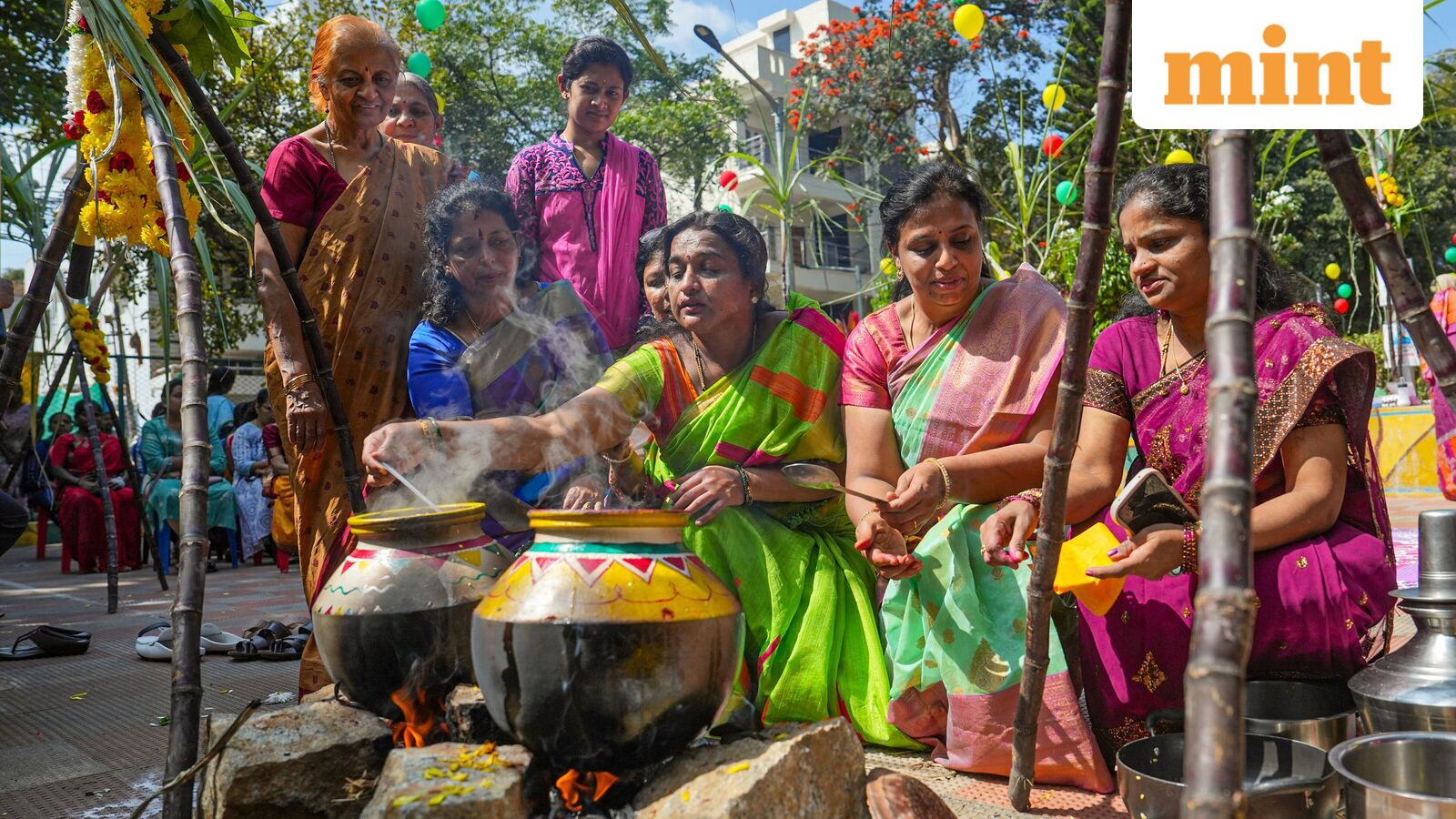
Central to the January 15 closures are harvest festivals celebrated under various names across different regions. Pongal, a four-day celebration of abundance and gratitude, holds immense cultural and economic significance in Tamil Nadu, a major southern state. Concurrently, Uttarayana Punyakala and Makara Sankranti are observed with fervour in states like Karnataka, Andhra Pradesh, Telangana, and Sikkim. While distinct in their regional expressions, these festivals share a common thread: marking the sun’s northward journey, signifying the end of winter, and celebrating the new harvest. For millions of agricultural households, these are periods of communal celebration, family gatherings, and often, significant consumption and investment in rural economies. The declaration of bank holidays during such times allows individuals to fully participate in these rituals, which are deeply embedded in the social fabric and agricultural cycles that underpin large segments of the Indian economy.
Beyond the agrarian festivities, the democratic process also directly impacts banking operations. In Maharashtra, India’s economic powerhouse, the elections to Municipal Corporations on January 15 led to a bank holiday across the state, including the financial capital, Mumbai. This measure ensures that citizens, including bank employees, can exercise their fundamental right to vote without impediment. While a temporary cessation of physical banking services in a major economic hub like Mumbai might seem disruptive, it highlights the state’s commitment to civic participation. Financial analysts often view such election-related closures as a necessary, albeit minor, pause in economic activity, ultimately contributing to political stability, which is a critical long-term factor for investor confidence and sustained growth.
The RBI’s holiday calendar, classified primarily under the Negotiable Instruments Act, categorizes these closures as regional. This classification is crucial for understanding the fragmented nature of banking holidays in India, where a bank branch in Chennai might be closed for Pongal, while its counterpart in Delhi remains fully operational. This state-specific approach contrasts with countries that often observe more uniform national holidays, posing unique logistical challenges and considerations for businesses operating across multiple Indian states. Corporations with pan-Indian operations must navigate this complex schedule, often relying on staggered transaction processing or the increased adoption of digital payment solutions to manage payroll, vendor payments, and supply chain financing.

The impact of these regional closures extends beyond a single day. Tamil Nadu, for instance, faces an extended period of financial service adjustments. Following Pongal on January 15, banks in the state, along with Andhra Pradesh, observe a holiday on January 16 for Thiruvalluvar Day and Kanuma respectively. Thiruvalluvar Day honours the revered Tamil poet and philosopher, while Kanuma is another harvest-related observance. January 17 sees banks in Tamil Nadu closed again for Uzhavar Thirunal, or Farmers’ Day, a continuation of the Pongal festivities dedicated to agricultural communities. This translates into three consecutive working days of closures for physical bank branches in Tamil Nadu, culminating in a fourth non-banking day on Sunday, January 18. Such extended breaks, particularly in a economically significant state, necessitate careful financial planning by businesses and individuals alike. Small and medium-sized enterprises (SMEs) reliant on daily cash transactions or immediate fund transfers for operations might experience temporary liquidity pressures. However, larger corporations typically plan for such contingencies, often pre-scheduling bulk payments or leveraging electronic fund transfer systems well in advance.
Further ahead in January, the holiday calendar continues to punctuate financial operations. January 23 marks a bank holiday in West Bengal and Odisha, commemorating Saraswati Puja, a festival honouring the goddess of knowledge and arts, and also the birth anniversary of Netaji Subhas Chandra Bose, a revered freedom fighter. These cultural and historical observances again underline the diverse reasons for state-specific closures. Finally, January 26 brings a nationwide cessation of physical banking services for Republic Day, a national holiday observed uniformly across all states and Union Territories, celebrating the adoption of the Indian Constitution. This universal closure underscores the collective national identity, temporarily pausing all non-essential financial activities to mark a pivotal moment in the nation’s history.
Despite the numerous closures of physical branches, the modern Indian financial ecosystem is remarkably resilient. The past decade has witnessed an unprecedented surge in digital payment adoption, significantly mitigating the impact of bank holidays. Services like Immediate Payment Service (IMPS), National Electronic Funds Transfer (NEFT) (which operates 24×7 now), Real-Time Gross Settlement (RTGS), and especially the Unified Payments Interface (UPI), ensure that financial transactions largely remain uninterrupted. UPI, in particular, has revolutionized retail payments, recording billions of transactions monthly, enabling instant, interoperable peer-to-peer and person-to-merchant payments. During bank holidays, the reliance on these digital channels typically sees a noticeable uptick. ATM networks also remain operational, providing access to cash for urgent needs. Data from the National Payments Corporation of India (NPCI) consistently demonstrates robust digital transaction volumes even on public holidays, indicating a successful pivot away from cash and physical branch dependency for routine financial activities.
Economically, the impact of these holidays is multifaceted. While some economists might point to a marginal dip in immediate economic output due to reduced working hours in the financial sector, others argue that the cultural and social benefits, including fostering community cohesion and allowing for participation in significant traditions, contribute to overall societal well-being and long-term stability. For certain sectors, such as retail and hospitality, holidays can even spur increased consumer spending, particularly if they coincide with long weekends. Conversely, businesses requiring physical banking services for large cash deposits, withdrawals, or specific document processing might face temporary delays. However, the pre-planning capabilities of modern businesses, coupled with the ubiquity of digital alternatives, have largely streamlined operations even during these periods.
The evolution of India’s banking holiday policy, influenced by both tradition and technological advancement, offers valuable lessons for other developing economies. It demonstrates how a nation can honour its diverse heritage without severely hampering economic momentum, primarily through strategic investments in digital infrastructure. As India continues its trajectory towards becoming a fully digitized economy, the role of physical bank branches may evolve further, potentially shifting from transactional hubs to advisory centres, making the impact of their closures on specific days less pronounced over time. The careful calibration of holiday schedules by the RBI, in conjunction with the nation’s embrace of digital finance, ensures that India’s economic engine continues to hum, even as its citizens pause to celebrate, reflect, and participate in the vibrant democratic and cultural life of the nation.