



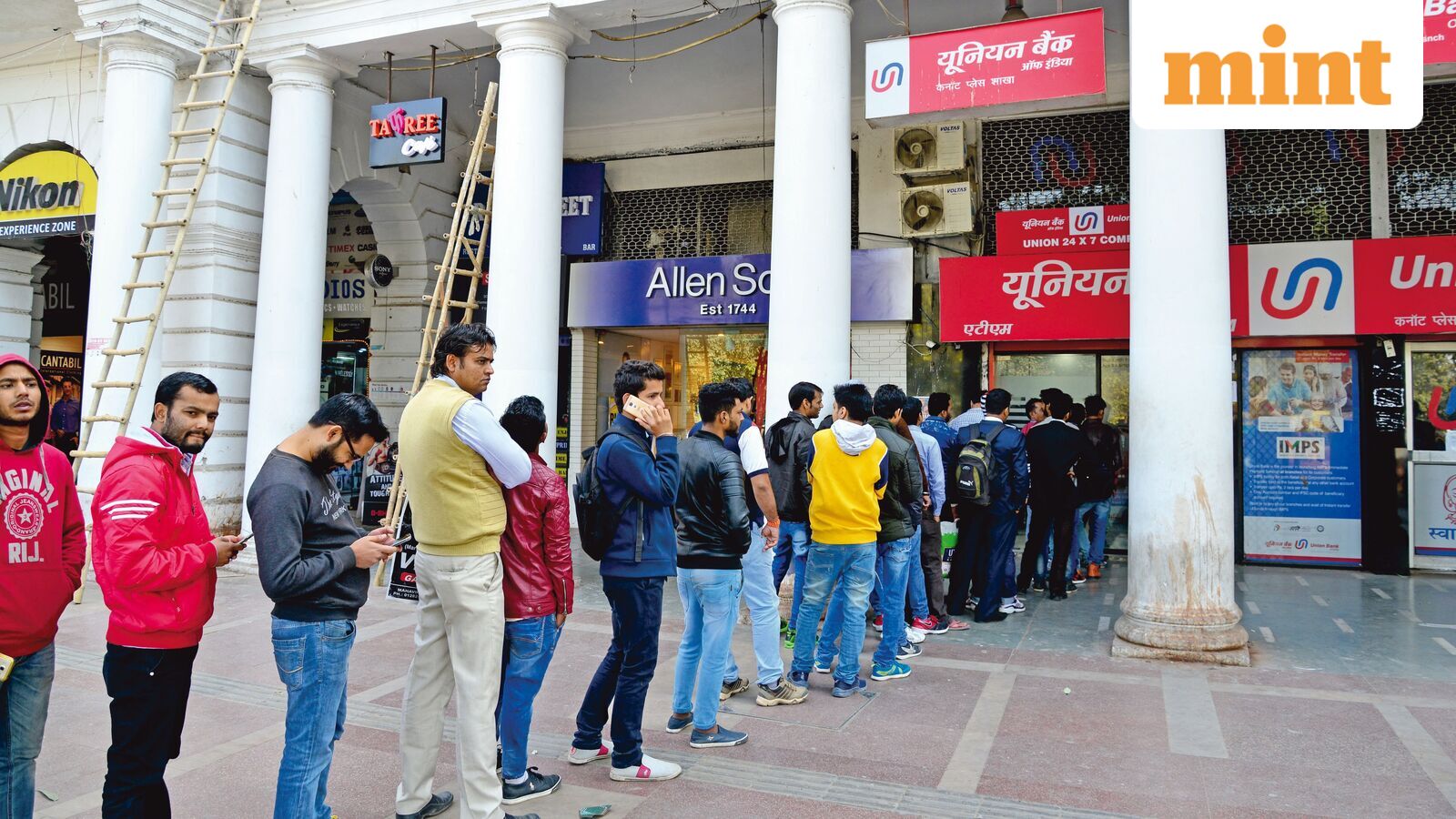
The intricate tapestry of India’s cultural and religious diversity frequently translates into a complex schedule of public holidays, profoundly influencing the nation’s banking sector and, by extension, its broader economy. As January unfolds, a period marked by numerous harvest festivals and commemorative days, the question of banking accessibility becomes particularly pertinent for businesses and individuals alike. This week, for instance, has seen several regional banking closures, culminating in a significant operational pause on January 16th in specific states. This regional variation, a hallmark of India’s federal structure and rich heritage, necessitates a deeper understanding of its economic implications, particularly in an era increasingly defined by digital finance.
The Reserve Bank of India (RBI), the nation’s central banking institution, meticulously outlines the annual calendar for bank holidays, exercising its authority under the Negotiable Instruments Act. These holidays are broadly categorised into three types: those declared under the Negotiable Instruments Act, those also affecting Real-Time Gross Settlement (RTGS) operations, and bank account closing holidays. While national holidays such as Republic Day, Independence Day, and Gandhi Jayanti mandate a nationwide cessation of banking operations, a substantial portion of the annual holiday roster comprises state-specific observances. These regional holidays, a testament to India’s diverse linguistic, religious, and cultural landscape, are designed to honour local traditions, historical figures, or agricultural cycles, leading to a fragmented operational schedule across the country.
A prime example of this regional divergence occurred on January 16th, when banking services in Tamil Nadu and Andhra Pradesh were suspended for Thiruvalluvar Day and Kanuma, respectively. Thiruvalluvar Day, celebrated primarily in Tamil Nadu, pays homage to the revered Tamil poet-saint Thiruvalluvar, whose seminal work, the ‘Thirukkural,’ remains a cornerstone of Tamil literature and ethical thought. Comprising 1,330 couplets, the Thirukkural offers profound insights into virtue (Dharma), wealth (Artha), and love (Kama), serving as a timeless guide for moral living and governance. The observance of this day, often coinciding with the broader Pongal festivities, underscores the state’s deep respect for its literary heritage and philosophical traditions. Similarly, Kanuma, a vital component of the four-day Sankranti festival in Andhra Pradesh and Telangana, is dedicated to honouring cattle, particularly bulls and cows, for their indispensable role in agriculture. This festival, marked by elaborate rituals, cattle decorations, and community gatherings, reflects the agrarian roots and deep reverence for livestock prevalent in these regions. The following day, January 17th, saw banks in Tamil Nadu again closed for Uzhavar Thirunal, or ‘Farmer’s Day,’ further reinforcing the agricultural significance of this period in the state. These closures, while culturally resonant, invariably impact the pace of traditional financial transactions in the affected regions.
The proliferation of bank holidays across India, which can total anywhere from 12 to 15 state-specific holidays annually, in addition to the three national holidays and approximately 76 weekend closures (52 Sundays and 24 second/fourth Saturdays), means that physical bank branches are often non-operational for over 90 days a year. From a macroeconomic perspective, such frequent closures, particularly in an economy heavily reliant on physical transactions and cash in certain segments, can lead to minor, albeit measurable, disruptions. Businesses, especially Micro, Small, and Medium Enterprises (MSMEs) and those in the informal sector, often face delays in cheque clearances, loan disbursements, and cash management, which can temporarily impede supply chain fluidity and daily operational efficiency. While large corporations and financial markets often leverage advanced digital platforms and pre-plan for holidays, smaller entities and individual consumers still grapple with the limitations of physical closures. Economists sometimes refer to a subtle "productivity cost" associated with these breaks, though the actual impact on aggregate GDP is typically marginal, as economic activity often shifts or accelerates in the days surrounding a holiday.

However, India’s remarkable strides in digital financial inclusion have substantially mitigated the adverse effects of physical branch closures. The nation’s robust digital payment infrastructure, spearheaded by the Unified Payments Interface (UPI), has revolutionized how financial transactions are conducted, making banking services accessible 24/7, irrespective of holidays. UPI transactions have witnessed exponential growth, with monthly volumes regularly exceeding 12 billion and values surpassing INR 18 trillion (approximately $215 billion) in recent months, testament to its widespread adoption. Alongside UPI, other digital channels such as Immediate Payment Service (IMPS), National Electronic Funds Transfer (NEFT), Real-Time Gross Settlement (RTGS) – though the latter can be affected by specific RBI holidays – internet banking, mobile banking applications, and an extensive network of Automated Teller Machines (ATMs) ensure continuous access to essential banking services. Consumers can withdraw cash, pay bills, transfer funds, and conduct e-commerce transactions seamlessly, bypassing the need for physical branch visits. This digital resilience has been a game-changer, particularly for urban populations and digitally-savvy individuals, minimizing the inconvenience traditionally associated with bank holidays.
Despite the digital leap, challenges persist. The digital divide, though narrowing, still means that significant portions of the rural population and older demographics remain reliant on traditional banking services. Access to stable internet, digital literacy, and smartphone penetration are not uniformly distributed, creating pockets where physical closures still pose substantial hurdles. Moreover, certain complex banking operations, such as foreign exchange transactions requiring documentation, high-value cash deposits, or specific advisory services, often necessitate in-person interactions that digital platforms cannot yet fully replicate. Thus, while the digital revolution has significantly cushioned the impact of bank holidays, it has not entirely eliminated the operational adjustments required, especially for businesses operating on tight cash flows or in regions with limited digital infrastructure.
In a global context, India’s approach to bank holidays, characterized by a multitude of regional observances, stands in contrast to many developed economies that typically have fewer, more standardized national holidays. Countries like the United States or the United Kingdom generally observe a smaller number of federal holidays, often allowing financial markets and core banking operations to function with greater predictability. However, India’s system reflects a conscious balance between economic efficiency and the preservation of its unparalleled cultural diversity. The emphasis on local festivals and historical figures is deeply ingrained in the social fabric, and these holidays serve not merely as breaks from work but as vital opportunities for community bonding, cultural transmission, and local economic activity driven by festive spending. The ongoing challenge for India’s financial regulators and policymakers is to continuously innovate in a way that honours these cultural imperatives while simultaneously fostering a robust, accessible, and uninterrupted financial system.
Looking ahead in January, the banking sector will navigate further regional closures, such as those on January 23rd in West Bengal, Odisha, and Tripura for events like Netaji Subhas Chandra Bose’s birthday or Saraswati Puja, followed by the nationwide closure on January 26th for Republic Day. These, coupled with the standard weekend holidays, underscore the dynamic nature of India’s banking calendar. As the nation continues its rapid economic expansion and deepens its digital infrastructure, the strategic management of bank holidays will remain a critical aspect of financial governance. The evolving landscape suggests a future where digital platforms increasingly absorb the transactional load during physical closures, allowing India to celebrate its vibrant heritage without significantly compromising the momentum of its burgeoning economy.