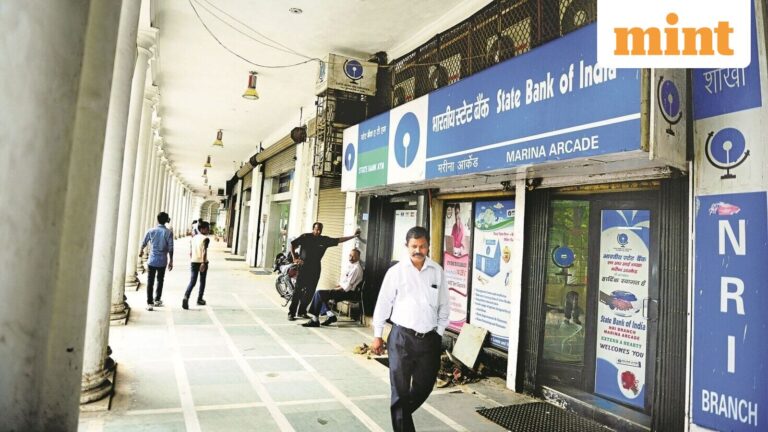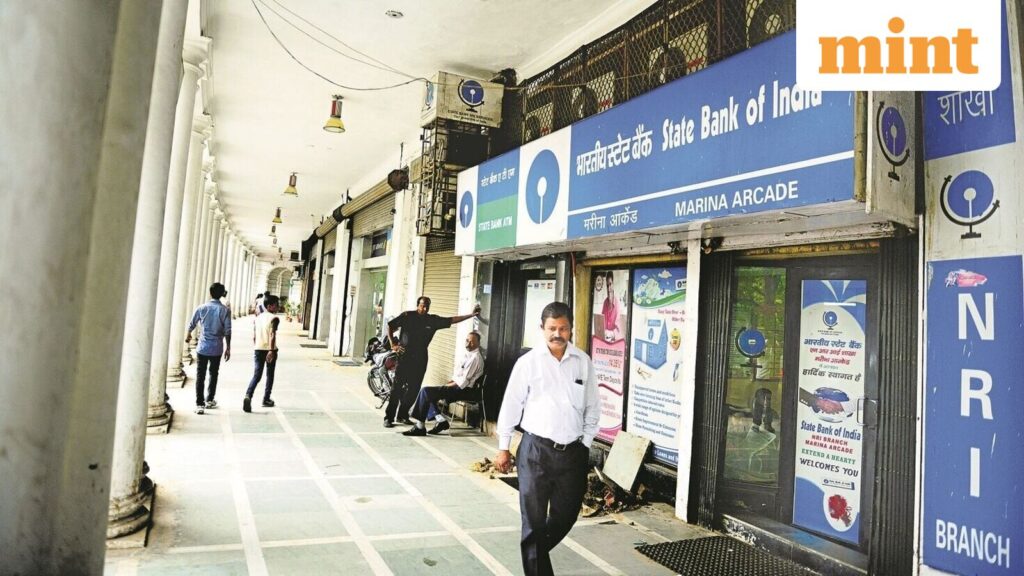


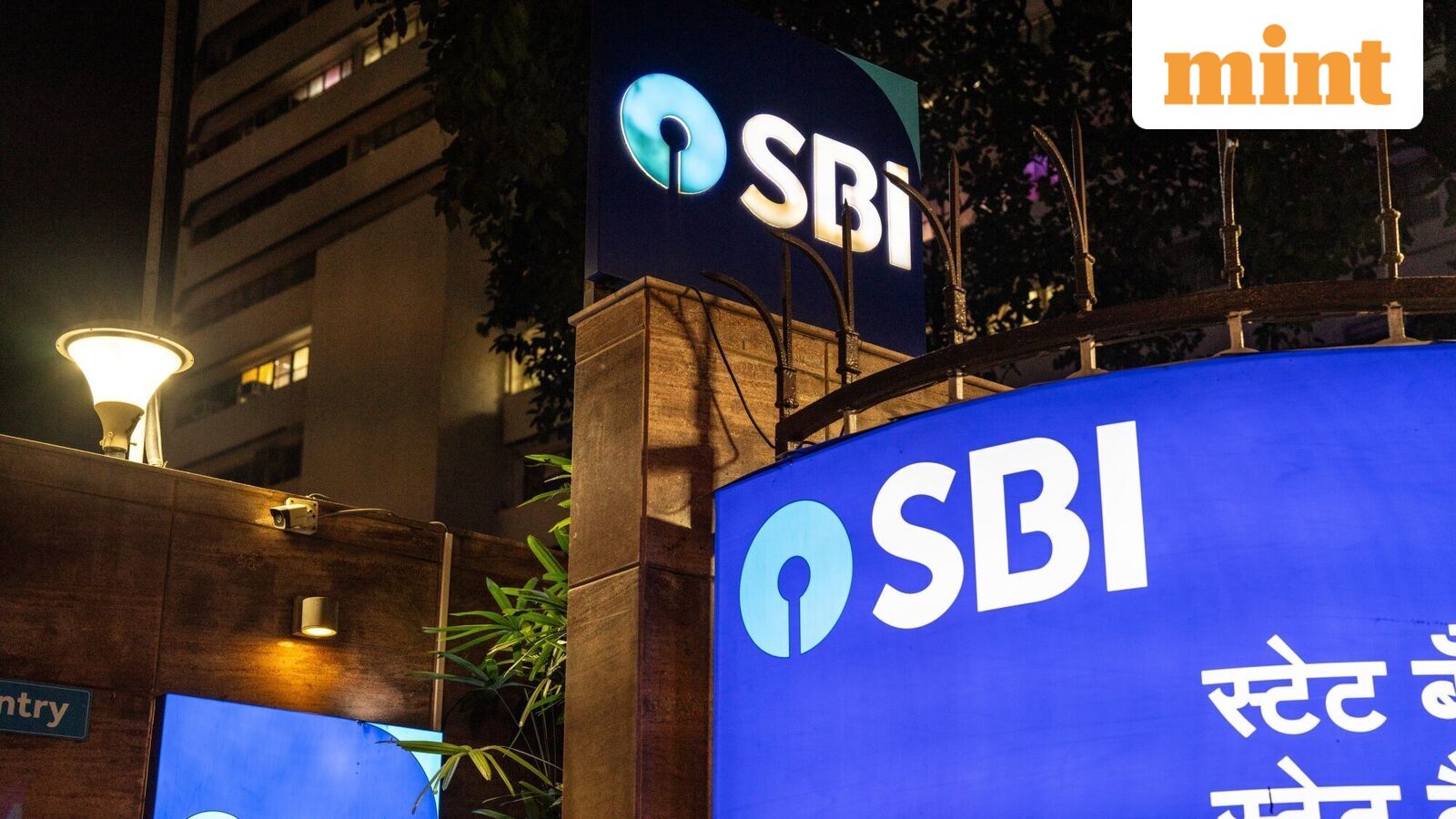
The State Bank of India (SBI), the nation’s largest lender, recently executed a rare maneuver, raising approximately ₹6,000 crore through three-month Certificates of Deposit (CDs) at a rate of 6%. This significant move, confirmed by fixed-income traders, underscores a tightening liquidity environment within India’s financial system and signals escalating pressure on banks to attract deposits, even as credit demand across various sectors remains robust. For a financial institution of SBI’s immense scale and market dominance, resorting to the short-term debt market in such a manner is widely interpreted by market observers as a clear indicator of structural challenges in funding growth, prompting wider scrutiny of the banking sector’s health.
This strategic funding decision by SBI is not an isolated event but rather a symptom of a broader trend impacting the Indian banking landscape. Several other financial entities have also sought recourse in the CD market. Union Bank of India, for instance, secured ₹200 crore via May-maturity paper at 6.45%, while the Small Industries Development Bank of India (SIDBI) raised a substantial ₹4,500 crore through one-year paper at 6.95%. These issuances collectively paint a picture of banks actively seeking diverse funding avenues beyond traditional deposit mobilization, highlighting the competitive and increasingly costly nature of securing capital in the current economic climate. Certificates of Deposit are essentially low-risk, fixed-income instruments where investors lend money to banks for a specified period at a fixed interest rate, typically offering a premium over standard savings accounts in exchange for liquidity restrictions until maturity.
The core of the challenge lies in the widening divergence between credit growth and deposit accretion. According to the latest data from the Reserve Bank of India (RBI), non-food credit growth surged by an impressive 12% year-on-year as of end-December. This expansion has been fueled by a buoyant post-pandemic economy, robust consumption demand, and increased capital expenditure in various industries. However, deposit growth has lagged significantly, registering just over 9% during the same period. This persistent imbalance creates a funding gap, compelling banks to seek alternative, often more expensive, sources of capital to meet their lending commitments. The 6% interest rate offered by SBI on its three-month CDs is notably about 90 basis points higher than the 5.1% it typically offers on bulk deposits for the general public (for maturities between 46-179 days), underscoring the premium banks are now willing to pay for short-term funds. For senior citizens, the corresponding bulk deposit rate is 5.6%, still significantly lower than the CD yield.
Market participants and analysts have expressed their observations on this shift. Killol Pandya, head of fixed income at JM Financial Asset Management, commented on the unusual nature of SBI’s presence in the CD market, emphasizing that it "underscores the point that supply is quite robust in the shorter end and credit off-take is well but deposits are a challenge." While the ₹6,000 crore sum may not be monumental relative to SBI’s gargantuan balance sheet, the very act of a banking titan tapping the short-term market is a telling indicator of the systemic pressure. This isn’t SBI’s first foray into this market recently; it had previously raised ₹1,650 crore via CDs in November 2024. Union Bank of India also accessed the market in December, raising ₹2,500 crore through three-month CDs at 6.03%.

Beyond these structural imbalances, the broader money market has also experienced significant pressure. Short-term debt market rates have been propelled upwards by a confluence of factors, including a systemic liquidity crunch, active selling by mutual funds, higher-than-expected cut-offs in Treasury bill auctions, and a robust supply of short-term instruments. Yields on CDs have consequently risen by 10-15 basis points, settling around 6.50%, while commercial paper (CP) yields have climbed 5-10 basis points to approximately 6.60%. This upward trajectory in short-term rates directly impacts banks’ cost of funds, potentially compressing their net interest margins (NIMs) if they cannot pass on these higher costs to borrowers.
The liquidity situation in the banking system, while technically in a marginal surplus, remains far from comfortable. A senior treasury official noted that the average daily liquidity stands at approximately ₹60,000 crore, which is considered "bare bones" compared to the ₹2.5-3 trillion surplus observed just a few weeks prior. Although RBI data indicated a surplus of ₹80,134 crore as of January 6, an improvement from ₹23,865 crore on January 1, the overall trend points to a tighter funding environment. This fluctuating liquidity is often influenced by seasonal factors such as advance tax payments, government spending patterns, and the central bank’s liquidity management operations. The RBI faces a delicate balancing act, aiming to control inflation while simultaneously supporting economic growth, which influences its stance on liquidity injection.
The surge in outstanding CD issuances further corroborates the increasing reliance on this funding avenue. RBI data reveals that outstanding CD issuances reached ₹5.7 trillion at the end of November, a notable increase from ₹4.9 trillion a year earlier, signifying a strong and consistent supply. Adding to the market pressure, aggressive selling by mutual funds was observed, partly triggered by substantial redemptions from a large corporate entity. This selling activity further tightened liquidity and pushed yields higher, demonstrating the interconnectedness of different segments of the financial market. On the commercial paper side, Godrej Industries was a notable borrower, raising ₹75 crore through three-month paper at 6.49%.
The implications of this funding squeeze extend beyond bank balance sheets, potentially impacting the broader economy. Higher funding costs for banks could translate into elevated lending rates for businesses and consumers, which might temper investment and consumption, thereby slowing economic growth. Sectors heavily reliant on bank credit, such as infrastructure and real estate, could feel the pinch most acutely. Globally, similar scenarios have played out in emerging markets where rapid credit expansion, often driven by government stimulus or post-crisis recovery, has outpaced the organic growth of deposits. In such instances, central banks and regulators have often had to intervene with a mix of liquidity injections, macro-prudential measures, or incentives for deposit mobilization to prevent systemic risks.
Looking ahead, market participants widely anticipate that pressure at the short end of the debt market will persist unless liquidity conditions improve materially. This could necessitate more proactive intervention from the Reserve Bank of India. Potential measures include conducting Open Market Operations (OMOs) to inject durable liquidity into the system, or a faster return of tax collections into the banking system. Banks, in turn, may need to intensify their deposit mobilization efforts, potentially by offering more attractive rates or introducing innovative deposit products, alongside exploring other wholesale funding options like long-term bonds or securitization. The unfolding dynamics between credit demand, deposit growth, and central bank policy will be crucial in shaping the trajectory of India’s financial sector and its broader economic outlook in the coming months.