
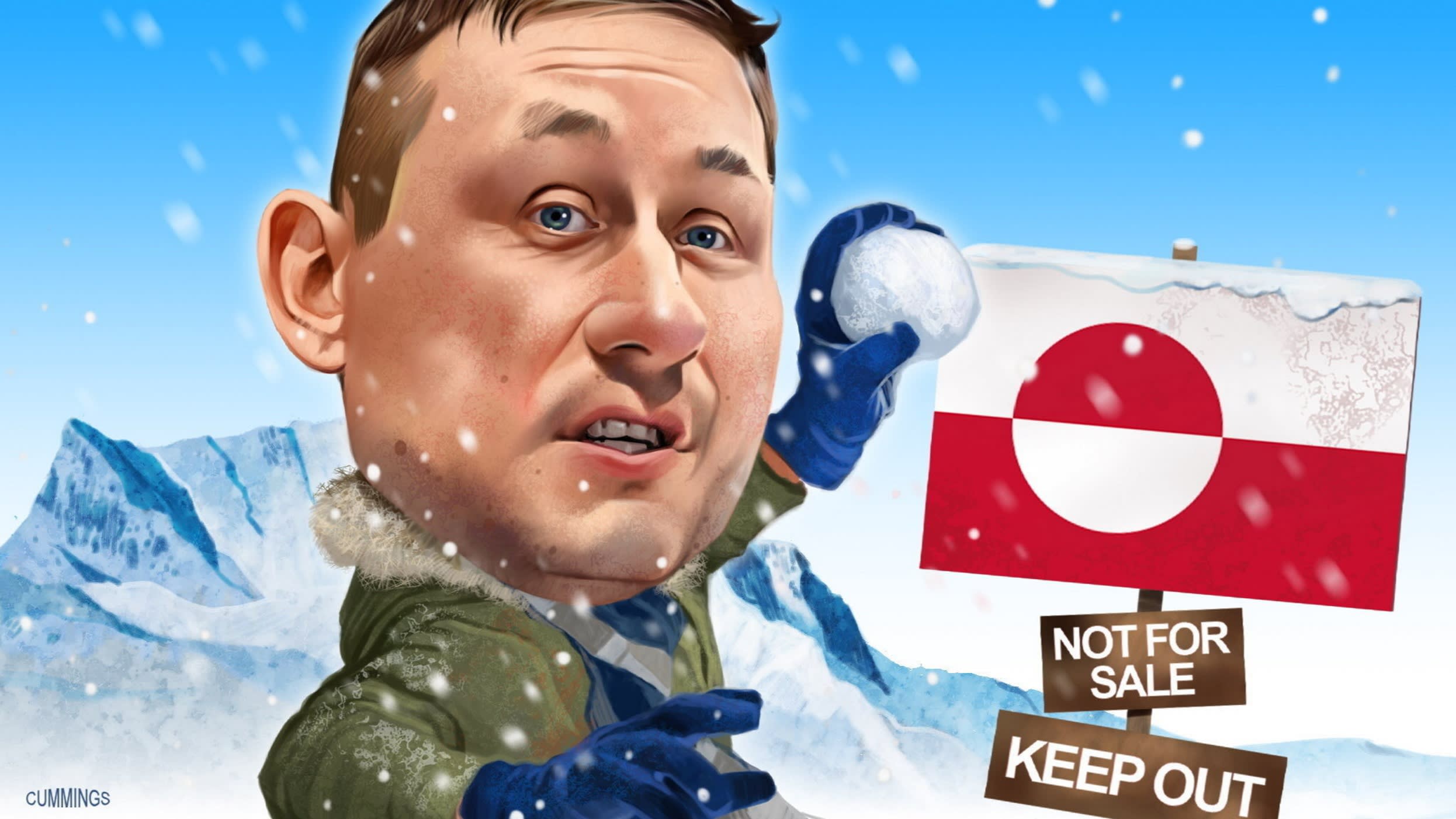
In the frost-rimmed corridors of the Inatsisartut, Greenland’s parliament in Nuuk, the atmosphere is increasingly defined by a singular, looming question: how can a nation of 56,000 people, scattered across the world’s largest island, translate its vast geological wealth into true political and economic independence? At the center of this storm is Jens-Frederik Nielsen, the leader of the Demokraatit (Democrats) party. Nielsen, a former Minister of Industry and Mineral Resources, finds himself under mounting pressure as he navigates a treacherous middle ground between the environmental caution of the current ruling coalition and the urgent, pro-market reforms he believes are necessary to sever the umbilical cord of Danish subsidies.
Greenland’s economic reality is a study in paradox. While the island sits atop some of the planet’s most coveted mineral deposits—including rare earth elements essential for the global green energy transition—it remains heavily dependent on an annual block grant from Denmark. This subsidy, totaling approximately 3.9 billion Danish kroner (roughly $570 million USD), accounts for more than half of the government’s revenue and nearly a third of the territory’s total GDP. For Nielsen and his supporters, this financial reliance is the primary obstacle to the dream of full sovereignty. However, the path to replacing that grant is fraught with domestic political volatility and a global geopolitical tug-of-war.
Nielsen’s "pressure" stems from his position as the most vocal advocate for an aggressive extractive industry strategy. He has consistently argued that Greenland cannot afford the luxury of waiting for the perfect, zero-impact mining project. His platform emphasizes that without the development of large-scale projects, such as the controversial Kvanefjeld (Kuannersuit) rare earths and uranium mine, the talk of independence remains a rhetorical exercise rather than a viable fiscal plan. The Kvanefjeld project, located in southern Greenland, is estimated to contain one of the world’s largest deposits of rare earth oxides, but its development was effectively halted by the current government’s 2021 ban on uranium mining. This decision, led by the Inuit Ataqatigiit (IA) party, represented a seismic shift in Greenlandic politics, prioritizing environmental and social health over immediate revenue—a move Nielsen has criticized as a missed opportunity for generational wealth.
The economic stakes extend far beyond mining. Greenland’s export economy is currently a monoculture, with fish and shrimp products accounting for over 90% of total exports. This leaves the nation’s treasury highly vulnerable to fluctuations in global commodity prices and the unpredictable effects of climate change on North Atlantic biomass. Nielsen has positioned himself as the champion of diversification, pushing for a "three-pillar" economy that balances fishing with mining and a burgeoning tourism sector. Yet, each pillar requires massive capital investment that Greenland cannot provide on its own.
Infrastructure is the current battleground for this vision. Greenland is currently undergoing its largest-ever infrastructure investment: the construction of new international airports in Nuuk and Ilulissat, and a regional airport in Qaqortoq. These projects, costing billions of kroner, are designed to transform the island into a hub for North Atlantic travel and high-end Arctic tourism. Nielsen’s party has been a cautious supporter of these developments, but he faces the political challenge of ensuring these projects do not lead to a "debt trap." The pressure is compounded by the need to attract Foreign Direct Investment (FDI) at a time when Greenland’s regulatory environment is perceived by some international investors as inconsistent.
The geopolitical dimension adds another layer of complexity to Nielsen’s leadership. As the Arctic ice melts, new shipping lanes open, and the region’s strategic importance to the United States, China, and the European Union intensifies. The 2019 "offer" by the Trump administration to purchase Greenland served as a wake-up call for the global community regarding the island’s strategic "real estate" value. Since then, the U.S. has reopened its consulate in Nuuk and provided millions in aid for civil society and education. Nielsen has had to balance a pro-Western alignment with the reality that much of the mining expertise and capital—particularly in the rare earths sector—historically flows from China. Navigating these waters requires a diplomatic finesse that tests the limits of a regional party leader.
Economists specializing in Arctic development point out that Greenland’s challenge is not a lack of resources, but a lack of human capital and a logistical nightmare. The "cost of distance" in Greenland is among the highest in the world; there are no roads between towns, and all transport must be by sea or air. Nielsen’s critics argue that his focus on large-scale mining ignores the social costs, including the potential influx of thousands of foreign workers in a country where the local labor force is already stretched thin. Furthermore, the "Dutch Disease"—where a resource boom leads to the neglect of other sectors and a spike in the local currency (or in Greenland’s case, local costs)—is a persistent concern for the Nuuk administration.
Internal political dynamics also weigh heavily on Nielsen. The Greenlandic electorate is deeply divided on the pace of development. While there is a broad consensus on the eventual goal of independence, the younger generation in Nuuk is increasingly focused on climate change, as Greenland is on the front lines of the global warming crisis. Nielsen must convince this demographic that industrial mining is not an enemy of the climate, but a necessary contributor to the global supply of minerals needed for wind turbines and electric vehicle batteries. This "green mining" narrative is central to his attempt to regain the political initiative.
Market analysts suggest that Greenland’s window of opportunity is narrow. As the EU and the US scramble to secure supply chains for critical minerals through initiatives like the European Critical Raw Materials Act, Greenland is a logical partner. However, competition is stiff from other jurisdictions like Canada, Australia, and various African nations that offer more established regulatory frameworks. Nielsen’s pressure is therefore temporal; he believes that if Greenland does not move now to signal it is "open for business," the capital will flow elsewhere, leaving the island stuck in its current state of subsidized dependency.
The relationship with Copenhagen remains the ultimate variable. While Denmark has historically been supportive of Greenlandic autonomy, the financial reality is that the Danish taxpayer continues to foot the bill for Greenlandic healthcare, education, and social services. Nielsen’s brand of "economic realism" suggests that true respect in the Danish-Greenlandic relationship will only come when Nuuk can pay its own way. This stance has made him a favorite among the business elite in both Nuuk and Copenhagen, but it remains a harder sell to the rural populations who fear that the loss of the block grant would lead to a collapse of the social safety net.
As the next election cycle approaches, the pressure on Jens-Frederik Nielsen will only intensify. He must prove that the Democrats’ vision of a market-driven, industrially diverse Greenland is not just a dream for the urban elite, but a practical roadmap for every citizen. His success or failure will likely determine whether Greenland remains a strategic outpost of the Danish Realm or emerges as a new, sovereign player in the high-stakes theater of Arctic geopolitics. For Nielsen, the ice is not just melting in the fjords; it is shifting under the very foundations of the Greenlandic state, demanding a level of leadership that balances the cold realities of economics with the fiery aspirations of a people seeking to define their own destiny.