


The Great Hall of the People in Beijing has become the focal point of a shifting global order in the opening weeks of 2026, as a steady procession of Western and middle-power leaders signals a pragmatic recalibration of international relations. Faced with an increasingly unpredictable United States trade policy and the aggressive expansion of American extraterritorial influence, traditional allies of Washington are seeking to stabilize their economic foundations through direct engagement with Chinese President Xi Jinping. This diplomatic surge represents more than a mere return to pre-pandemic norms; it marks a strategic "managed reset" intended to mitigate the risks of a volatile transatlantic partnership.
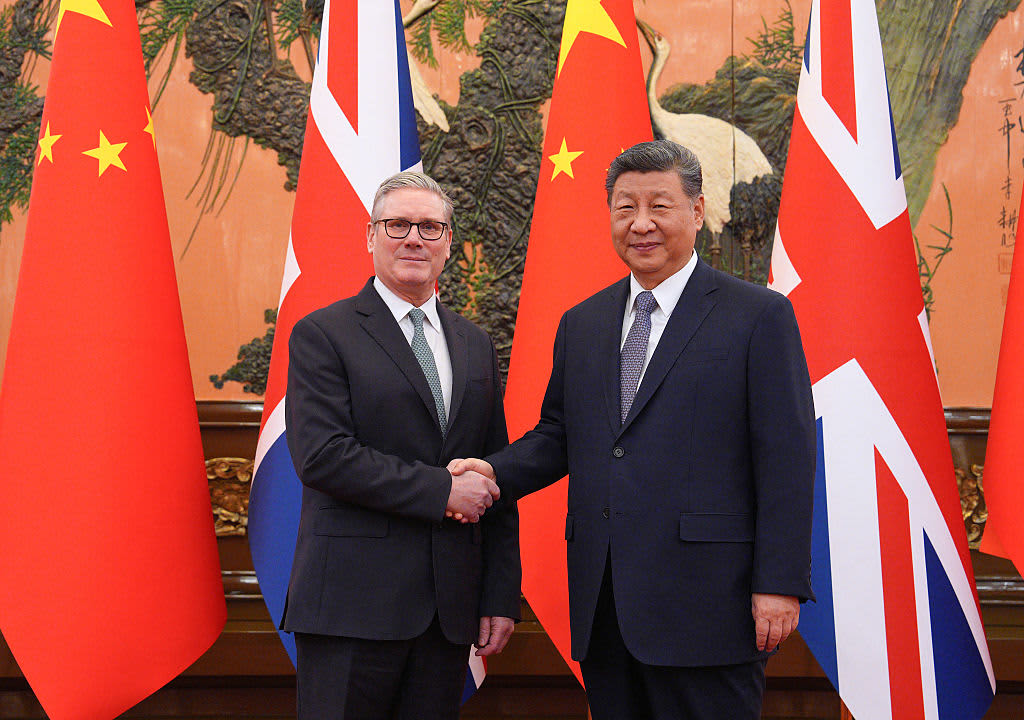
In January 2026 alone, the diplomatic calendar in Beijing was remarkably dense. High-profile visits from British Prime Minister Keir Starmer and Canadian Prime Minister Mark Carney ended years of frosty high-level disengagement. They were joined by the leaders of Ireland, South Korea, and Finland, representing a collective economic bloc that, while still deeply integrated with the American economy, is no longer willing to leave its relationship with China to chance. The arrival of Uruguay’s President Yamandú Orsi, scheduled for next week, further underscores the changing landscape in the Western Hemisphere, particularly following the recent U.S. military and political interventions in Venezuela.
For many of these nations, the motivation is less about a fundamental ideological shift and more about economic survival. The second administration of Donald Trump has introduced a level of fiscal and trade uncertainty that has rattled global markets. From the imposition of sweeping "Liberation Day" tariffs in early 2025 to the more recent maneuvers regarding Greenland and Iran, Washington’s "America First" posture has often left its closest partners in the crossfire. In this climate, Beijing has seized the opportunity to present itself as a predictable, stabilizing force in the global economy—a narrative that is gaining traction among leaders who were once China’s most vocal critics.
The economic data underpinning these visits reveals the high stakes involved. The five nations that sent leaders to Beijing in January represent a combined GDP of approximately $8.71 trillion. While this is less than half of China’s $18.74 trillion economy and a fraction of the United States’ $28.75 trillion output, these middle powers serve as critical nodes in the global supply chain. By re-establishing direct lines of communication with President Xi, these capitals are attempting to build a "hedging strategy" that preserves their strategic optionality. As Yue Su, principal economist at the Economist Intelligence Unit, notes, the risks of total disengagement from China are now viewed as significantly higher than the political costs of a selective reset.

The tangible results of this diplomatic flurry are already manifesting in major industrial deals. During Prime Minister Starmer’s visit—the first by a British leader in eight years—the focus was squarely on commercial pragmatism. A delegation of nearly 60 British corporate and cultural leaders accompanied the Prime Minister, culminating in a landmark announcement by pharmaceutical giant AstraZeneca. The company committed to investing $15 billion in its Chinese operations through 2030, a clear signal that the private sector is betting on long-term stability in the Chinese market despite geopolitical tensions.
Canada’s engagement under Prime Minister Mark Carney followed a similar pattern of transactional diplomacy. After years of strained relations and trade barriers, Ottawa and Beijing reached a significant compromise: Canada agreed to slash tariffs on Chinese-made electric vehicles from a prohibitive 100% down to a more manageable 6.1%. In exchange, Beijing lifted restrictions on Canadian canola seeds, providing a vital lifeline to Canada’s agricultural sector. This "tit-for-tat" liberalization illustrates the new reality of 2026 diplomacy, where specific economic interests are prioritized over broad geopolitical alignment.
Beijing’s strategy in hosting these leaders is multifaceted. By facilitating these visits, the Chinese government is working to break the perceived "Western-centric" model of global governance. The head of the Communist Party’s international affairs department recently argued in official state media that China’s modernization offers a "new choice" for developing and developed nations alike—one that does not require total adherence to Washington’s policy dictates. For China, which is currently grappling with a domestic economic transition and a push for technological self-sufficiency, these foreign investments and trade deals provide much-needed external validation and economic momentum.
However, this diplomatic pivot remains fraught with tension. The shadow of the United States looms large over every handshake in the Great Hall. President Trump has not been a silent observer of these developments; he recently characterized Britain’s engagement with China as "very dangerous" and threatened Canada with 100% tariffs if Ottawa pursues a deeper trade pact with Beijing. This rhetoric places middle powers in an agonizing position, forced to balance their security reliance on the U.S. with their economic dependence on China.
The European response, in particular, remains fragmented. While leaders like Ireland’s Taoiseach seek to protect their tech-heavy trade interests, others remain wary. French President Emmanuel Macron, for instance, demonstrated the volatility of the current era by threatening China with new tariffs on industrial surpluses just 24 hours after concluding a state visit to Beijing in late 2025. This "dual-track" approach—seeking trade while simultaneously preparing for protectionism—defines the current European strategy toward the world’s second-largest economy.

The upcoming 2026 Asia-Pacific Economic Cooperation (APEC) forum, which China will host, is expected to be the next major crucible for this balancing act. With senior officials set to meet in Guangzhou next month, the stage is being set for a potential meeting between President Xi and President Trump later this year. The two leaders reached a fragile one-year trade truce in October 2025, but the sustainability of that agreement is questioned by analysts worldwide. James Zimmerman, Chair of the American Chamber of Commerce in China, has called for both leaders to move beyond temporary truces and establish a framework for genuine global stability, noting that the world cannot afford a cycle of constant disruption.
The influx of world leaders to Beijing also reflects a recognition of China’s evolving role in regional security and infrastructure. Since the U.S. increased its influence over Venezuela and other energy-rich regions, South American and Middle Eastern nations have increasingly looked to Beijing as a counterweight. The visit of Uruguay’s President Orsi is a testament to this trend, as Montevideo seeks to diversify its export markets and secure infrastructure investment through the Belt and Road Initiative, independent of Washington’s oversight.
As the first quarter of 2026 unfolds, the global economic map is being redrawn not by a single grand alliance, but by dozens of smaller, pragmatic recalibrations. The "Beijing Reset" is not a sign that the West is abandoning the United States, but rather an acknowledgment that the unipolar era has been replaced by a more complex, multipolar reality. For the U.K., Canada, and the EU, the path forward involves a delicate dance: maintaining the security architecture of the West while ensuring that their economies remain plugged into the growth engines of the East.
Ultimately, the success of these diplomatic missions will be measured by their ability to withstand the inevitable pressures from Washington. As Chinese companies, particularly in the green energy and technology sectors, continue their global expansion, the pressure on Western leaders to provide a "fair environment" for Chinese investment will only grow. For now, the world’s capitals have decided that the risks of an empty chair in Beijing are far greater than the risks of a difficult conversation with Washington. The flurry of activity in the Great Hall of the People suggests that in 2026, the era of "strategic disengagement" is officially over, replaced by a tense, transactional, and necessary era of engagement.