
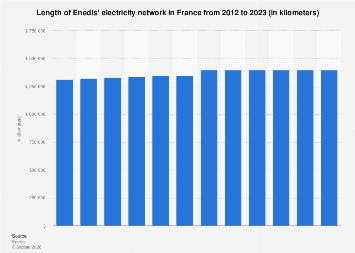
The physical infrastructure underpinning France’s electricity supply, managed by Enedis, has seen a consistent trajectory of expansion and modernization from 2012 to 2023. This extensive network, comprising over [Insert approximate figure here, e.g., 1.4 million] kilometers by 2023, is the lifeblood of the nation’s power distribution, connecting millions of consumers to essential energy sources. Enedis, a wholly owned subsidiary of Électricité de France (EDF), holds the critical responsibility for the management and maintenance of this vast low-voltage electricity transmission and distribution network. It is crucial to distinguish Enedis’s role from that of Réseau de Transport d’Électricité (RTE), the independent operator tasked with managing France’s high and very-high voltage transmission grid, which operates at a different scale and serves a distinct purpose in the national energy landscape.
The period between 2012 and 2023 represents a significant era for energy infrastructure globally, marked by increasing demand, the imperative of energy transition, and the integration of new technologies. Within this context, Enedis’s network figures offer a tangible measure of the ongoing investment and operational efforts required to sustain and evolve France’s power delivery system. The network’s length, measured in kilometers, encompasses both High Voltage A (HTA) lines, typically operating at 20,000 volts, and Low Voltage (BT) lines, which deliver electricity at 400 volts/230 volts to end-users. This dual-voltage system is fundamental to ensuring efficient and safe electricity delivery across diverse geographical terrains, from densely populated urban centers to more dispersed rural communities.
The meticulous management of such an expansive network is a complex undertaking, requiring continuous monitoring, proactive maintenance, and strategic upgrades. Factors influencing network length and its evolution include population growth, increased electrification of various sectors (such as transportation and heating), and the decentralized generation of renewable energy sources. As France, like many European nations, has pursued ambitious decarbonization goals, the electricity grid has had to adapt to accommodate the intermittency of renewables like solar and wind power, and to facilitate the flow of electricity from a wider array of generation points. This often necessitates the reinforcement and expansion of existing lines, as well as the integration of smart grid technologies to enhance flexibility and resilience.
Economic implications of Enedis’s network are profound and far-reaching. A robust and reliable electricity grid is a prerequisite for sustained economic activity. Businesses across all sectors depend on uninterrupted power supply for their operations, from manufacturing plants and data centers to retail establishments and service industries. Any disruptions, whether due to aging infrastructure, extreme weather events, or insufficient capacity, can lead to significant economic losses through production downtime, spoiled goods, and lost revenue. Therefore, the consistent investment in and maintenance of Enedis’s network can be viewed as a critical component of France’s economic competitiveness and stability.
Furthermore, the ongoing development of the electricity network plays a pivotal role in the broader energy transition narrative. The expansion and upgrading of the grid are essential for enabling the widespread adoption of electric vehicles, the integration of smart home technologies, and the efficient distribution of power generated from renewable sources. This adaptation is not merely a technical challenge but also an economic opportunity, driving innovation in areas such as energy storage, demand-side management, and grid optimization software. The more extensive and intelligent the network becomes, the greater its capacity to support a cleaner, more sustainable energy future.
Global comparisons offer valuable context for understanding the scale of Enedis’s operations. Many developed nations are facing similar challenges in modernizing their aging electricity grids while simultaneously preparing them for the demands of the 21st century. Countries with vast geographical areas, such as Canada or Australia, often contend with the logistical complexities of maintaining extensive transmission and distribution networks across challenging terrains. In contrast, more densely populated European nations like Germany or the United Kingdom are focused on integrating renewable energy and enhancing grid resilience in the face of increasing demand and the retirement of traditional power sources. France’s situation, with its relatively mature and comprehensive network, highlights the ongoing need for investment in upgrades and smart technologies to meet future energy needs.
The financial commitment required to manage and expand a national electricity grid is substantial. Enedis, as a regulated utility, operates within a framework that dictates investment priorities and tariff structures. These investments are crucial not only for maintaining operational efficiency and reliability but also for ensuring the grid’s capacity to handle future energy demands, including those driven by the electrification of transport and industry. The figures from 2012 to 2023 reflect this ongoing capital expenditure, which is essential for both national energy security and economic development.
The evolution of the network also speaks to the broader trends in energy consumption patterns. As households and industries become more energy-conscious and adopt more efficient technologies, the demands on the grid can shift. The rise of distributed energy resources, such as rooftop solar panels, further complicates grid management, requiring greater flexibility and bi-directional power flow capabilities. Enedis’s role in integrating these diverse energy sources and managing their impact on the network is increasingly vital. The company’s efforts to modernize its infrastructure are therefore directly linked to its ability to facilitate a more dynamic and resilient energy ecosystem.
The distinction between Enedis and RTE is a critical one for understanding the complete picture of France’s electricity infrastructure. While RTE manages the high-voltage "backbone" of the national grid, ensuring bulk power transmission across long distances, Enedis focuses on the "last mile" – the intricate web of low-voltage lines that deliver electricity directly to homes, businesses, and public services. This localized distribution network is where the complexities of diverse energy demands, local generation, and the integration of smart technologies are most acutely felt. The length of Enedis’s network is a testament to the sheer scale of this localized delivery system.
In conclusion, the data on Enedis’s electricity network length from 2012 to 2023 provides a quantitative snapshot of a critical element of France’s national infrastructure. This expansion and ongoing management underscore the persistent need for investment in energy transmission and distribution, driven by evolving energy demands, the imperative of the energy transition, and the overarching goal of ensuring economic stability and growth. The intricate operations of Enedis are fundamental to powering the French economy and supporting its journey towards a sustainable energy future.