
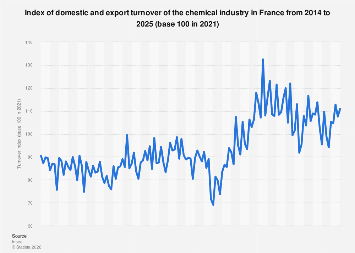
The French chemical industry is on a trajectory of substantial expansion, with projections indicating robust revenue growth through 2025. This vital sector, a cornerstone of the nation’s industrial prowess, is navigating a complex global landscape characterized by evolving consumer demands, technological advancements, and an increasing emphasis on sustainability. Forecasts suggest that the sector’s output will not only recover from recent global economic headwinds but also surpass previous benchmarks, underscoring its resilience and strategic importance to the French economy.
This anticipated upswing is underpinned by several key drivers. Foremost among these is a sustained commitment to research and development (R&D). French chemical companies are heavily investing in innovation, focusing on developing high-value-added products and novel solutions that address emerging market needs. This includes a significant push towards green chemistry and bio-based materials, aligning with both regulatory pressures and growing consumer preferences for environmentally friendly products. The sector’s ability to pivot towards sustainable alternatives is proving to be a crucial competitive advantage, attracting investment and fostering new market opportunities.
Furthermore, the strategic realignment of global supply chains is creating new avenues for French chemical manufacturers. As nations seek to de-risk their reliance on single sourcing and bolster domestic production capabilities, France, with its established industrial infrastructure and skilled workforce, is well-positioned to capitalize on this trend. Investments in advanced manufacturing technologies, such as digitalization and automation, are also enhancing efficiency and productivity, allowing French firms to compete more effectively on the international stage.
Market analysis indicates that the specialty chemicals segment, in particular, is expected to be a significant contributor to overall revenue growth. This category, which includes products tailored for specific applications in industries like pharmaceuticals, cosmetics, electronics, and automotive, is characterized by higher profit margins and greater resilience to economic fluctuations. French expertise in areas such as fine chemicals, polymers, and performance materials is highly sought after, driving demand for these sophisticated products.
The broader economic impact of the French chemical industry extends far beyond its direct revenue figures. It serves as a critical enabler for numerous downstream sectors, providing essential raw materials and intermediate products that are indispensable for manufacturing across a wide array of industries. A thriving chemical sector thus translates into enhanced competitiveness and job creation for the entire French economy. According to industry association data, the chemical sector directly employs hundreds of thousands of individuals and supports an even larger number of indirect jobs, contributing significantly to national employment and economic stability.
Globally, the chemical industry is a multi-trillion-dollar market, with major players across Europe, North America, and Asia. France consistently ranks among the top chemical-producing nations in Europe, competing with giants like Germany. The sector’s performance is often viewed as a bellwether for broader industrial health. Recent trends show a global chemical market grappling with inflationary pressures, volatile energy prices, and geopolitical uncertainties. However, a discernible shift towards sustainable and circular economy principles is reshaping investment priorities and product development strategies worldwide.
In this global context, French chemical companies are demonstrating a proactive approach. Many are actively divesting from legacy, carbon-intensive operations and reinvesting in greener alternatives. This strategic pivot is not merely an environmental imperative but a sound economic strategy, as it aligns with future market demands and regulatory landscapes. Investments in renewable energy sources for production processes and the development of biodegradable or recyclable materials are becoming standard practice.
The European Union’s Green Deal initiative, with its ambitious targets for climate neutrality, is a particularly influential factor shaping the trajectory of the French chemical sector. This regulatory framework incentivizes and mandates the adoption of sustainable practices, pushing companies to innovate in areas such as CO2 capture and utilization, the use of renewable feedstocks, and the development of circular business models. While these transitions require substantial capital investment, they also promise to unlock new markets and create a more resilient and future-proof industry.
Looking ahead, the revenue projections for France’s chemical industry by 2025 are not merely statistical forecasts; they represent a tangible reflection of strategic foresight and adaptive capacity. The sector’s ability to harness innovation, embrace sustainability, and navigate the complexities of global trade will be paramount in determining its continued success. The ongoing investments in R&D, coupled with a clear focus on high-value specialty chemicals and environmentally responsible production, position the French chemical industry for a period of sustained growth and enhanced global competitiveness. This evolution is not just about revenue; it is about redefining the chemical industry for a sustainable future.