


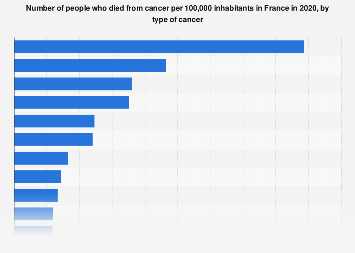
In 2020, France recorded a mortality rate of 44.4 deaths per 100,000 inhabitants due to lung cancer, positioning it as the leading cause of cancer-related fatalities within the nation. This figure highlights a persistent global challenge, as lung cancer frequently ranks among the deadliest malignancies worldwide. The economic and societal impact of such a high mortality rate is substantial, encompassing healthcare expenditures, lost productivity, and the immeasurable human cost. Understanding these specific mortality rates by cancer type is crucial for targeted public health interventions, resource allocation, and advancing research priorities.
Following lung cancer, malignancies affecting the colon and rectum presented the second-highest mortality rate, with 23.3 deaths per 100,000 people. This places colorectal cancer as a significant public health concern in France, demanding continued efforts in screening, early detection, and treatment optimization. Breast cancer, a disease that disproportionately affects women but can also occur in men, accounted for 18 deaths per 100,000 inhabitants in the same year. While significant progress has been made in breast cancer treatment and survival rates, its continued presence on the mortality list underscores the need for ongoing vigilance and advancements in diagnostic and therapeutic approaches.
The data further reveals that pancreatic cancer was responsible for 17.6 deaths per 100,000, a particularly grim statistic given the often-late diagnosis and limited treatment options for this aggressive cancer. Liver cancer followed with a mortality rate of 12.3 per 100,000, reflecting complex etiologies that can include viral hepatitis, alcohol abuse, and non-alcoholic fatty liver disease. Prostate cancer, while often treatable, contributed 12 deaths per 100,000, indicating its enduring impact on the male population.
The intricate tapestry of cancer mortality in France also includes leukemia, which registered 8.3 deaths per 100,000. Bladder cancer accounted for 7.2 deaths per 100,000, while Hodgkin’s disease and lymphomas collectively caused 6.7 deaths per 100,000. Stomach cancer, though less prevalent in some Western countries compared to historical rates, still represented a mortality figure of 6 deaths per 100,000. Cancers of the brain and central nervous system, often associated with complex treatment challenges and significant neurological impact, recorded 5.9 deaths per 100,000.
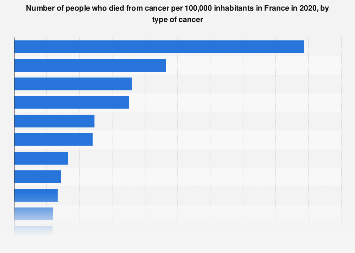
Less common but still impactful were kidney cancer (4.8 deaths per 100,000) and ovarian cancer (4.7 deaths per 100,000). Ovarian cancer, similar to pancreatic cancer, is often diagnosed at advanced stages, contributing to its challenging prognosis. At the lower end of the spectrum presented, cervical cancer showed a mortality rate of 1.1 deaths per 100,000, a testament to the effectiveness of screening programs like the Pap smear and the advent of the HPV vaccine.
Globally, cancer remains a leading cause of death, with the World Health Organization estimating 10 million deaths worldwide in 2020. The distribution of cancer types and their associated mortality rates vary significantly by region, influenced by genetic predispositions, lifestyle factors, environmental exposures, access to healthcare, and socioeconomic conditions. For instance, lung cancer is a dominant cause of mortality in many developed nations, while liver cancer may be more prevalent in regions with higher rates of hepatitis B and C infection. Similarly, disparities in screening and early detection access can contribute to higher mortality rates for certain cancers in less developed healthcare systems.
The economic implications of cancer mortality are multifaceted. Beyond direct healthcare costs associated with diagnosis, treatment, and palliative care, there are significant indirect costs related to lost labor force participation, reduced productivity, and the burden on families and caregivers. Investment in cancer research, prevention strategies, and improved treatment modalities is therefore not only a humanitarian imperative but also an economically sound decision, aiming to mitigate these substantial societal costs.
In France, as in many high-income countries, the healthcare system is robust, offering advanced medical technologies and a well-trained workforce. However, the persistent high mortality rates for certain cancers underscore the ongoing need for proactive public health initiatives. These include intensified campaigns for smoking cessation to combat lung cancer, promotion of healthy diets and physical activity to reduce the risk of colorectal and other diet-related cancers, and comprehensive awareness programs for breast, prostate, and ovarian cancers to encourage early detection.
The data for 2020 provides a snapshot of the cancer mortality landscape in France. Continuous monitoring and analysis of such statistics are essential for evaluating the effectiveness of current cancer control strategies and for identifying emerging trends. The development of personalized medicine, advancements in immunotherapy, and innovative surgical techniques offer promising avenues for improving patient outcomes. However, the foundational elements of cancer control—prevention, early detection, and equitable access to high-quality care—remain paramount in the global fight against this disease. The specific mortality rates presented for France serve as a critical benchmark for national health authorities and researchers striving to reduce the burden of cancer and improve the health and well-being of its population.