


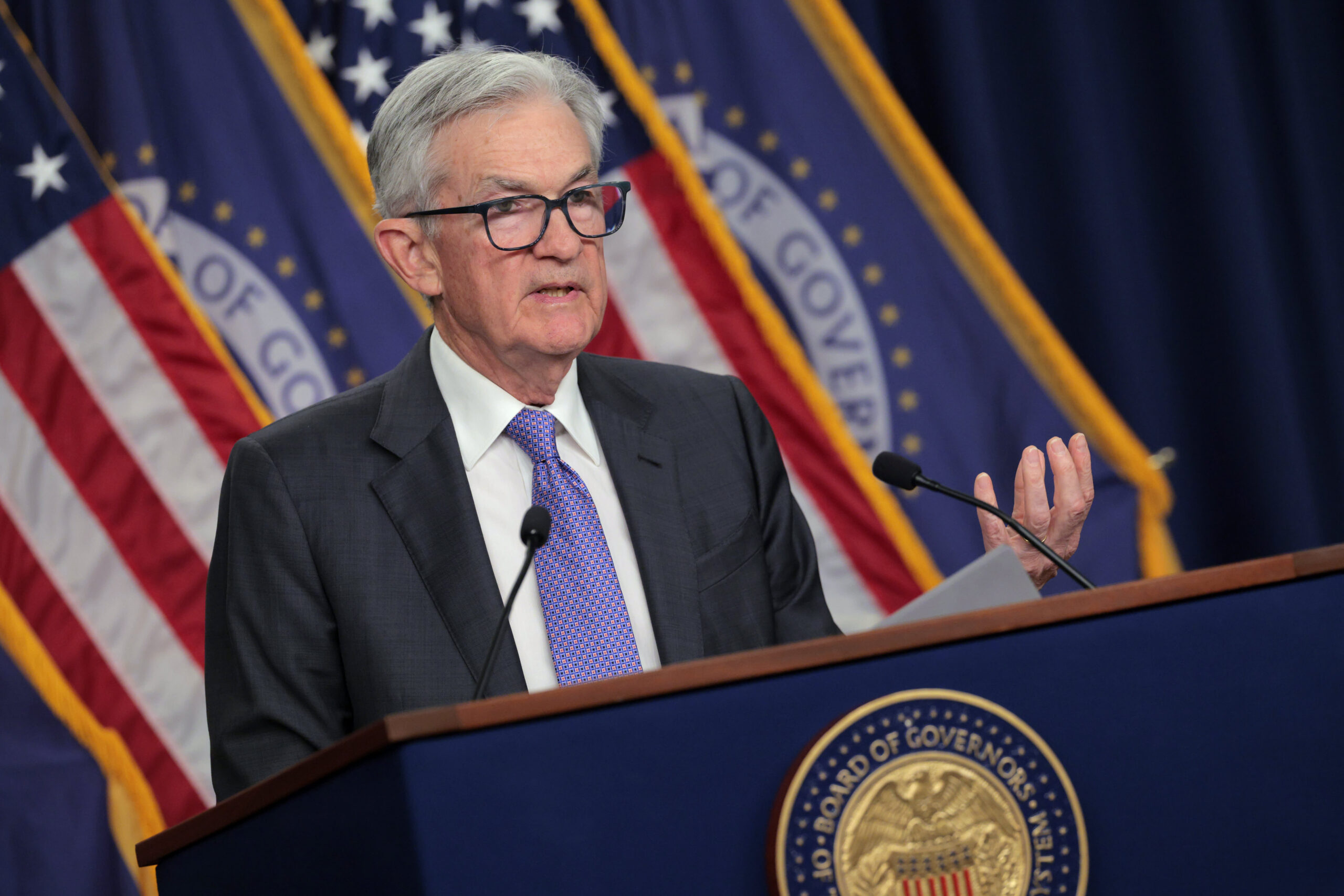
The Federal Open Market Committee (FOMC) convenes this week in Washington, D.C., against a backdrop of unprecedented institutional pressure and a complex macroeconomic landscape that has left investors and economists anticipating a strategic pause. While the central bank’s decision on interest rates this Wednesday is widely expected to result in no immediate change, the meeting is far from a routine affair. Instead, it represents a critical juncture where the technical mechanics of monetary policy intersect with a high-stakes battle over the future of central bank independence.
Market participants, guided by recent rhetoric from Fed officials and a series of robust economic data points, have priced in a near-certainty that the federal funds rate will remain held within its current restrictive territory. This "wait-and-see" approach comes as the committee evaluates the lagging effects of three consecutive quarter-percentage-point cuts implemented during the latter half of last year. However, the true significance of this week’s gathering lies in the subtext: the looming shadow of a presidential administration seeking to reshape the Fed’s leadership and a legal skirmish that has pushed Chair Jerome Powell into an uncharacteristically defensive posture.
A Strategic Pause in the Easing Cycle
The prevailing sentiment among economists is that the Federal Reserve is currently satisfied with the trajectory of the U.S. economy, necessitating a period of observation rather than intervention. Following the aggressive tightening cycle of 2022 and 2023, and the subsequent pivot to modest easing in 2024, the FOMC appears to be searching for the "neutral rate"—the level at which monetary policy neither stimulates nor restrains economic growth.
Former Fed Vice Chair Roger Ferguson recently characterized the upcoming session as a "standing pat" meeting. The central bank’s leadership feels that the current policy stance provides sufficient cushion to monitor incoming data on inflation and employment without the need for immediate recalibration. This patience is supported by a labor market that has shown surprising resilience; despite fears of a slowdown, hiring has stabilized and consumer spending remains a primary engine of domestic growth.
Market pricing, as reflected in the CME Group’s FedWatch tool, suggests that investors do not anticipate another rate reduction until at least June, with a secondary cut potentially occurring in December. This timeline reflects a broader consensus that while inflation is moving toward the Fed’s 2% target, the final "last mile" of disinflation may prove stickier than previously hoped, particularly in the services sector and housing costs.
The Political Siege and Institutional Independence
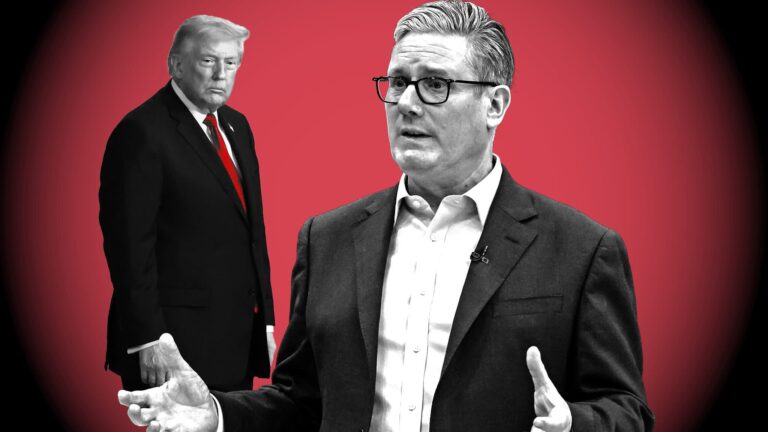
While the interest rate decision itself may lack drama, the political environment surrounding the Eccles Building is increasingly volatile. President Donald Trump has signaled that a decision on Chair Powell’s successor is imminent, with reports suggesting a nomination could be announced as early as this week. The timing of such an announcement, potentially coinciding with the Fed’s policy statement, is viewed by many as a calculated move to diminish Powell’s influence and redirect the national narrative away from the Fed’s refusal to cut rates more aggressively.
The tension has been further exacerbated by a Department of Justice subpoena served to Powell regarding a multi-year, multi-billion-dollar renovation project at the Fed’s Washington headquarters. In a move that shocked many long-time Fed watchers, Powell released a videotaped statement decrying the probe as a "pretext" for political intimidation. This rare public pushback highlights the escalating friction between the executive branch and the theoretically independent central bank.
Powell’s defense of the institution is expected to be a focal point of the post-meeting press conference. Analysts believe he will reiterate his commitment to a data-driven approach, insulated from the "preferences of the president." However, the cumulative pressure of the DOJ probe, the ongoing Supreme Court challenge regarding Governor Lisa Cook’s tenure over mortgage fraud allegations, and the expiring term of Trump appointee Stephen Miran have created a sense of institutional siege. Miran, notably, has been a hawkish dissenter, favoring larger cuts than his colleagues, and his potential departure or stay-on status adds another layer of uncertainty to the committee’s internal dynamics.

Analyzing the Economic Crosscurrents
The Fed’s decision to hold rates is not merely a political calculation but a response to a "Goldilocks" economic scenario that refuses to cool down entirely. Gross Domestic Product (GDP) growth has consistently outperformed expectations, and while the Consumer Price Index (CPI) has retreated from its 9.1% peak in 2022, the core Personal Consumption Expenditures (PCE) price index—the Fed’s preferred inflation gauge—remains stubbornly above the 2% threshold.
Morgan Stanley’s chief economist, Michael Gapen, suggests that the Fed’s statement on Wednesday will likely reflect an upgrade to the assessment of economic activity. The removal of language citing "increased downside risks to employment" would signal that the Fed no longer views a recession as an immediate threat. Instead, the focus has shifted back to ensuring that inflation does not stage a resurgence.
This "hawkish hold" strategy serves two purposes. First, it prevents the financial markets from pricing in too much easing, which could prematurely loosen financial conditions and reignite inflationary pressures. Second, it provides the Fed with "optionality"—the ability to move in either direction depending on how the data evolves over the spring. If the labor market were to suddenly weaken, the Fed has ample room to cut; if inflation remains stagnant, they can maintain current levels indefinitely.
Global Implications and the Strong Dollar
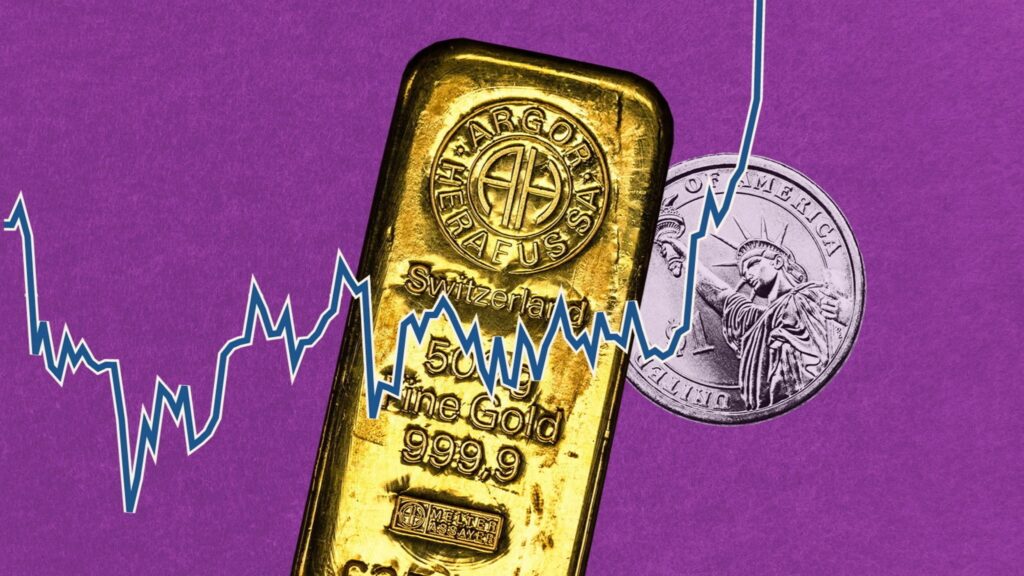
The Federal Reserve’s "wait-and-see" posture has profound implications beyond U.S. borders. As the world’s primary reserve currency, the U.S. dollar reacts sharply to the Fed’s interest rate trajectory. The decision to maintain higher rates for a longer duration has kept the dollar strong against a basket of major currencies, including the Euro and the Yen.
For the European Central Bank (ECB) and the Bank of England (BoE), the Fed’s hesitation creates a policy dilemma. If these central banks cut rates while the Fed remains on hold, the resulting currency depreciation could import inflation through higher costs for dollar-denominated commodities like oil. Consequently, the global monetary cycle remains largely tethered to the decisions made in Washington.
In emerging markets, the Fed’s stance is a double-edged sword. While a stable U.S. economy supports global trade, sustained high interest rates increase the burden of dollar-denominated debt and can trigger capital flight from developing economies toward the safety of high-yielding U.S. Treasuries. The "patient" Fed of 2025 is thus a source of both stability and strain for the international financial system.
The Path Forward: June and Beyond
As the Wednesday meeting concludes, the focus will immediately shift to the "dot plot" and the Summary of Economic Projections (SEP) expected in future meetings. For now, the FOMC must navigate a narrow path between maintaining its credibility as an inflation-fighter and resisting the gravitational pull of election-year politics.
Gregory Daco, chief economist at EY-Parthenon, notes that while the Fed is not "pressed by the data" to cut rates, the psychological pressure of the political environment cannot be ignored. The challenge for Powell will be to deliver a message of continuity and stability during his press conference, even as the foundations of the central bank’s autonomy are being tested.
Ultimately, the January meeting may be remembered less for what happened to interest rates and more for how the Federal Reserve handled the most significant challenge to its independence in decades. Whether the committee leans toward a "dovish" hold—signaling that cuts are still coming—or a "hawkish" hold—suggesting that the current plateau could last through the summer—will determine the volatility of global markets for the first half of the year. For an economy that has defied nearly every expert prediction over the last twenty-four months, the only certainty is that the Fed’s next move will be dictated by a complex mosaic of data, law, and political will.