

The traditional boundaries between the United States executive branch and its central bank have reached a historic breaking point following the Department of Justice’s announcement of a criminal investigation into Federal Reserve Chair Jerome Powell. This development, centered on a $2.5 billion renovation project at the Federal Reserve’s headquarters, has sent shockwaves through global financial markets, prompting a sharp sell-off in U.S. equity futures and igniting a fierce debate over the future of American monetary independence. As the S&P 500, Dow Jones Industrial Average, and Nasdaq futures all retreated in the wake of the news, the incident has highlighted a deepening rift that many analysts believe could permanently alter the risk profile of U.S. assets.
At the heart of the controversy is the Department of Justice’s probe into the multi-billion-dollar modernization of the Marriner S. Eccles Building and surrounding facilities. While the administration frames the investigation as a matter of fiscal oversight and accountability, market participants and political analysts view the move through a much more cynical lens. The timing of the probe—occurring as Chair Powell’s term nears its conclusion in May and amid a period of intense presidential criticism regarding interest rate policy—suggests a strategic attempt to exert leverage over the central bank’s leadership.
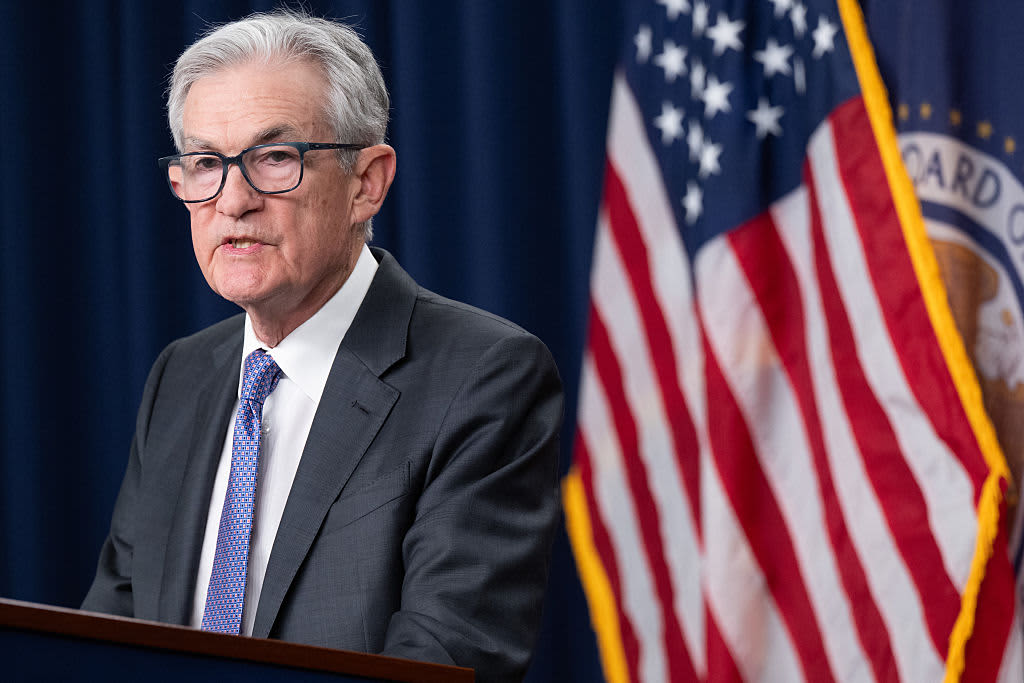
Jerome Powell has remained defiant in the face of the investigation. In a rare and pointed video statement, the Fed Chair characterized the probe as a direct consequence of the central bank’s commitment to data-driven policy over political expediency. Powell asserted that the Federal Reserve must set interest rates based on an objective assessment of the public interest, rather than bowing to the preferences of the White House. This defense of the "dual mandate"—balancing price stability with maximum employment—comes at a time when the administration has frequently accused the Fed of stifling economic growth and housing accessibility by maintaining a restrictive monetary stance.
Market strategists have been quick to interpret the administration’s tactics as a form of institutional intimidation. Some veteran observers of the G10 currency markets have likened the situation to the "Maduro option," a reference to the recent aggressive geopolitical maneuvers against the Venezuelan leadership. In this context, the criminal probe is viewed not as a standard legal inquiry, but as a warning shot intended to coerce a resignation or to provide the legal pretext necessary for a forced removal. Unlike previous rhetorical attacks on Fed officials, this investigation carries the weight of a formal accusation, shifting the conflict from the realm of political discourse into the judicial system.

The speed and aggression of the administration’s maneuvers are particularly concerning for global investors. With midterms on the horizon, the executive branch is under immense pressure to deliver lower borrowing costs to a frustrated electorate. By challenging the Fed’s autonomy so overtly, the administration risks creating a "Trump Risk Premium" on U.S. debt. Economists warn that when a central bank’s independence is compromised, inflation expectations often become unanchored. If investors believe that interest rate decisions are being made to win elections rather than to stabilize the currency, they will demand higher yields to compensate for the increased risk of future inflation.
This phenomenon is already manifesting in the Treasury market. While the President’s stated goal is to drive interest rates down, the uncertainty surrounding the Fed’s independence is paradoxically pushing rates higher at the long end of the yield curve. Investment managers at major European asset firms have noted that by questioning the Fed’s autonomy, the administration is fueling the very upward pressure on rates it seeks to avoid. This "counterproductive" strategy has led many portfolio managers to avoid long-term U.S. sovereign debt, fearing that political volatility will outweigh the traditional safety of the Treasury market.
The broader economic impact of this confrontation extends beyond interest rates. The perception of a politicized Federal Reserve is driving a narrative of American institutional decline, encouraging global investors to diversify their portfolios away from U.S.-centric assets. For decades, the independence of the Fed has been a cornerstone of the "exorbitant privilege" enjoyed by the U.S. dollar as the world’s primary reserve currency. If that independence is seen as illusory, the structural demand for the dollar and U.S. equities could face a sustained decline.
In response to this shifting landscape, capital is beginning to flow toward alternative markets. China has emerged as an increasingly popular destination for those looking to capitalize on the artificial intelligence narrative while hedging against U.S. political risk. Despite ongoing geopolitical tensions, the perceived stability of Chinese industrial policy in specific sectors is attracting "AI trade" enthusiasts who are wary of the volatility in Washington. Similarly, European markets are seeing renewed interest in specific niches. While the broader Eurozone economy remains sluggish, pockets of opportunity are appearing in Germany, particularly in sectors tied to infrastructure and defense stimulus. In the United Kingdom, investors are eyeing a potential rebound in healthcare, materials, and energy as they seek to rebalance their global exposure.
The upcoming transition of power at the Federal Reserve adds another layer of complexity to the crisis. With a new Fed Chair expected to be announced in the coming months, there are growing fears that the selection process will be entirely dictated by loyalty rather than expertise. A successor perceived as a political appointee would likely suffer from a significant "credibility gap" from day one. In the eyes of international bondholders, a Fed Chair who acts on presidential directives would be unable to effectively manage a crisis or curb inflationary spikes, potentially leading to a flight from the dollar.

Historically, central bank independence has been a hard-won feature of modern economies. In the United Kingdom, the Bank of England was granted operational independence in 1997 to prevent the "boom and bust" cycles associated with politically timed interest rate cuts. In the Eurozone, the European Central Bank’s independence is enshrined in international treaties, making it legally shielded from the whims of individual national governments. The current situation in the United States represents a departure from this global norm, placing the country in the company of emerging markets where central banks are often treated as extensions of the executive office.
The DOJ probe into the $2.5 billion renovation of the Eccles Building may ultimately be the catalyst for a fundamental realignment of the American financial system. Whether the investigation yields evidence of wrongdoing or is eventually dismissed as a political maneuver, the damage to the Federal Reserve’s reputation for impartiality may take years to repair. For now, the "Maduro option" has introduced a level of sovereign risk into the U.S. market that was once unthinkable.
As the administration potentially looks toward high-profile global forums like Davos to announce a new Fed Chair, the international community will be watching closely for signs of institutional capitulation. The tension between the need for short-term economic relief and the requirement for long-term monetary stability has never been more acute. If the Federal Reserve is successfully brought to heel by the executive branch, the resulting shift in the global financial order could see the end of the U.S. dollar’s undisputed hegemony and a permanent change in how the world values American credit.
In the immediate term, the markets remain on high alert. The volatility in the 10-year Treasury yield serves as a real-time barometer of the world’s faith in the American experiment. As long as the specter of criminal prosecution hangs over the head of the world’s most powerful central banker, the "safe haven" status of the United States will remain under intense scrutiny, forcing a generation of investors to rethink the foundations of their global allocations.