
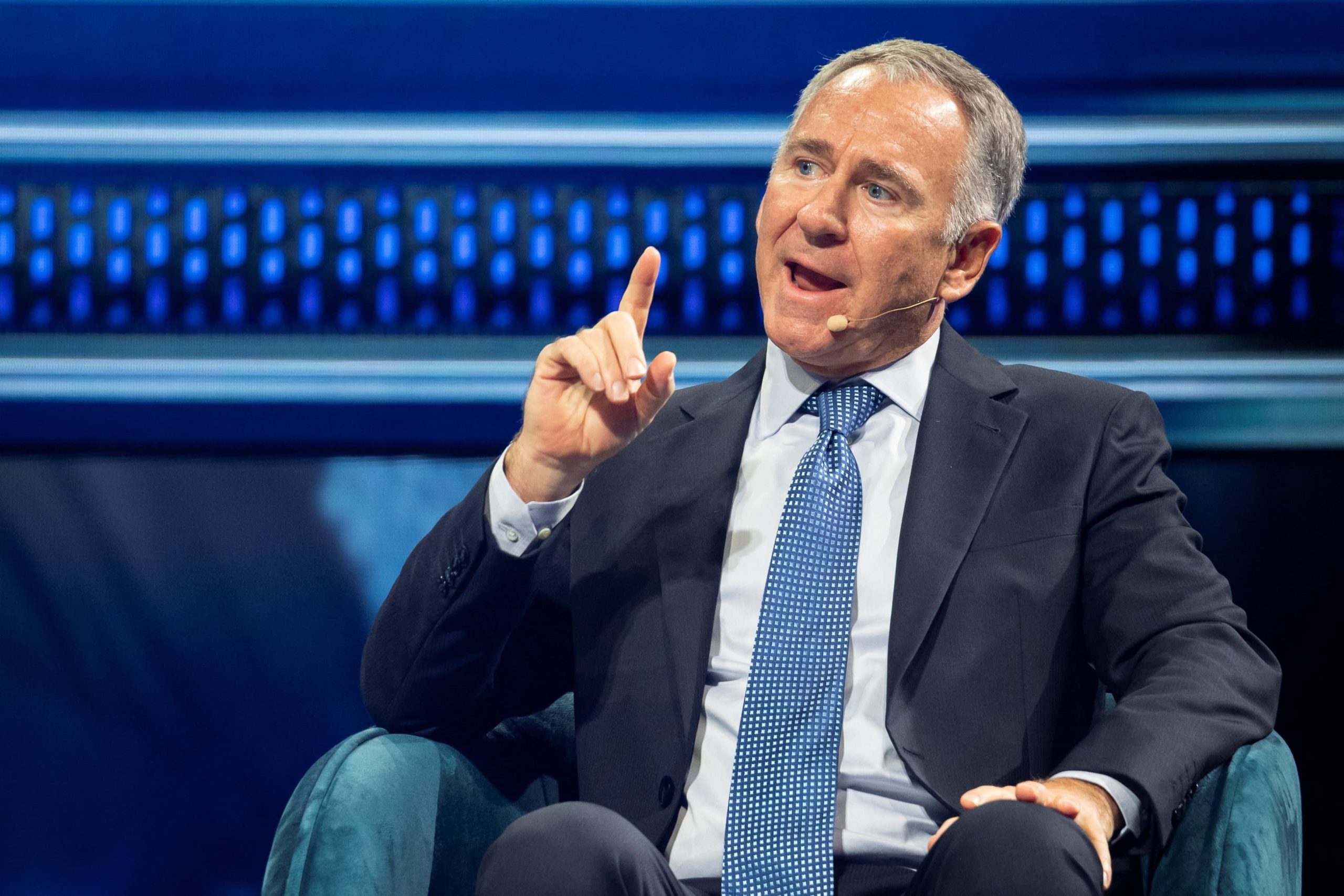
In an era where the global hedge fund industry is often defined by an insatiable quest for scale, Ken Griffin’s Citadel is moving in the opposite direction to preserve its competitive edge. The Miami-based powerhouse has informed its clients that it intends to return approximately $5 billion in profits following a robust performance throughout 2025. This move, which is expected to be finalized at the start of the 2026 fiscal year, underscores a sophisticated philosophy of capital discipline that has come to define the world’s most successful multistrategy investment firm.
According to individuals familiar with the firm’s internal operations, the decision to return capital is not a reflection of a lack of opportunity, but rather a calculated effort to maintain an optimal ratio between assets under management (AUM) and the available "alpha" in the global markets. The firm’s flagship fund, Wellington, has reportedly posted a 9.3% gain through mid-December 2025. While this figure represents a solid return in a year marked by shifting interest rate expectations and geopolitical volatility, the $5 billion payout does not represent the entirety of the firm’s annual earnings. Instead, it is a strategic "right-sizing" of the fund’s capital base.
By returning these funds, Citadel is expected to enter 2026 with a leaner asset base of roughly $67 billion, down from its current peak of $72 billion. This tactical retrenchment is designed to ensure that the firm does not suffer from "size drag"—a phenomenon where a fund becomes so large that its own trades move the market against it, or where it is forced to deploy capital into lower-conviction ideas simply to keep the money working. In the high-stakes world of multistrategy investing, maintaining agility is often more valuable than amassing sheer volume.
The practice of returning capital is a hallmark of Citadel’s operational maturity. Since 2017, including the projected distribution for this year, the firm has returned a staggering $32 billion to its investors. This cycle of harvesting profits and returning them to limited partners has created a "gilded" reputation for the firm, making it one of the most sought-after vehicles for institutional capital. Unlike many peers who prioritize management fees—which are calculated as a percentage of AUM—Citadel’s model is heavily weighted toward performance. By keeping AUM at a level that maximizes percentage returns, the firm aligns its own incentives with those of its investors, who would rather have 10% of a smaller pool than 5% of a bloated one.
The broader hedge fund landscape has watched Citadel’s trajectory with a mixture of awe and emulation. According to data from LCH Investments, which tracks the net gains of the world’s most successful money managers, Citadel remains the most profitable hedge fund in history based on net gains since inception. Founded by Ken Griffin in 1990 with just $4.6 million, the firm has generated approximately $83 billion in net gains for its investors through the end of 2024. With the anticipated 2025 performance factored in, industry analysts expect that cumulative figure to eclipse $88 billion when the official rankings are refreshed in early 2026.
This historical performance places Citadel in an elite tier of "super-managers" that includes Ray Dalio’s Bridgewater Associates and Izzy Englander’s Millennium Management. However, Citadel’s specific multistrategy approach—which diversifies across equities, fixed income and macro, commodities, credit, and quantitative strategies—has proven remarkably resilient during the market dislocations of the early 2020s. The firm’s ability to generate "idiosyncratic" returns—those not correlated with the broader S&P 500 or bond market—is exactly what institutional investors like pension funds and sovereign wealth funds are paying for.

The 9.3% return for the Wellington fund in 2025 is particularly notable given the macroeconomic backdrop. The year was characterized by a "higher-for-longer" interest rate environment that eventually gave way to a series of experimental cuts by the Federal Reserve. Such transitions often create significant dispersion in the markets, providing a fertile ground for multistrategy shops that can go long on winners and short on losers across different asset classes. While a 9.3% gain might seem modest compared to the triple-digit rallies seen in certain artificial intelligence stocks, in the context of a diversified, low-volatility portfolio, it represents a significant achievement in wealth preservation and steady growth.
Economically, the decision to return $5 billion has implications that ripple beyond the firm’s headquarters. It signals a belief that the current "opportunity set" in global markets may be tightening. Hedge fund managers typically return capital when they believe that the marginal dollar of new investment will not yield a high enough return to justify its inclusion. By capping its AUM at $67 billion for the start of 2026, Citadel is essentially signaling to the market that it sees a specific ceiling on high-alpha opportunities for the coming twelve months.
This move also highlights the intensifying "war for talent" in the hedge fund industry. Multistrategy firms like Citadel operate on a "pod" model, where individual teams of portfolio managers are given capital to trade within specific parameters. To attract the best traders, firms must prove they can provide the best infrastructure, the most sophisticated data, and, crucially, a capital environment where their strategies won’t be diluted. By returning profit, Citadel ensures that its existing portfolio managers are working with a concentrated, high-octane capital pool, which is a powerful recruiting tool in a sector where the top 1% of talent dictates the winners and losers.
Furthermore, the $5 billion distribution serves as a liquidity event for Citadel’s investors, many of whom are large-scale institutions facing their own capital allocation challenges. In an environment where private equity exits have slowed and venture capital distributions have dried up, the consistent cash-back profile of a firm like Citadel is highly prized. It allows these institutions to rebalance their portfolios, meet their own pension obligations, or reinvest the capital into other emerging opportunities.
Comparatively, the hedge fund industry at large has faced a period of consolidation. While "mega-funds" like Citadel, Millennium, and Point72 continue to grow and dominate, smaller, single-strategy funds have struggled to keep up with the rising costs of technology and compliance. Citadel’s ability to return $32 billion over eight years while still remaining one of the largest firms on the planet is a testament to the "flywheel effect" of its business model: superior performance attracts better talent, which leads to better technology, which in turn facilitates even more consistent performance.
Looking ahead to 2026, the $67 billion AUM target suggests a firm that is preparing for a market that may be defined by more surgical, less broad-based opportunities. With global elections, shifting trade policies, and the continued integration of AI into the economy, the volatility that multistrategy funds thrive on is unlikely to disappear. However, the nature of that volatility is changing. By stripping away $5 billion in "excess" capital, Griffin is ensuring that his firm remains a lean, highly reactive predator in a market that punishes the slow and the oversized.
In the final analysis, Citadel’s $5 billion payout is more than just a dividend to its clients; it is a statement of institutional philosophy. It reinforces the idea that in the world of high-finance, excellence is measured not by how much capital one can hold, but by how efficiently one can deploy it. As the industry enters a new year, the eyes of the financial world will remain fixed on Citadel, watching to see if this disciplined approach to capacity management will continue to yield the record-breaking gains that have made the firm a legend of modern capitalism. For now, the message from Miami is clear: growth is good, but performance is paramount.