


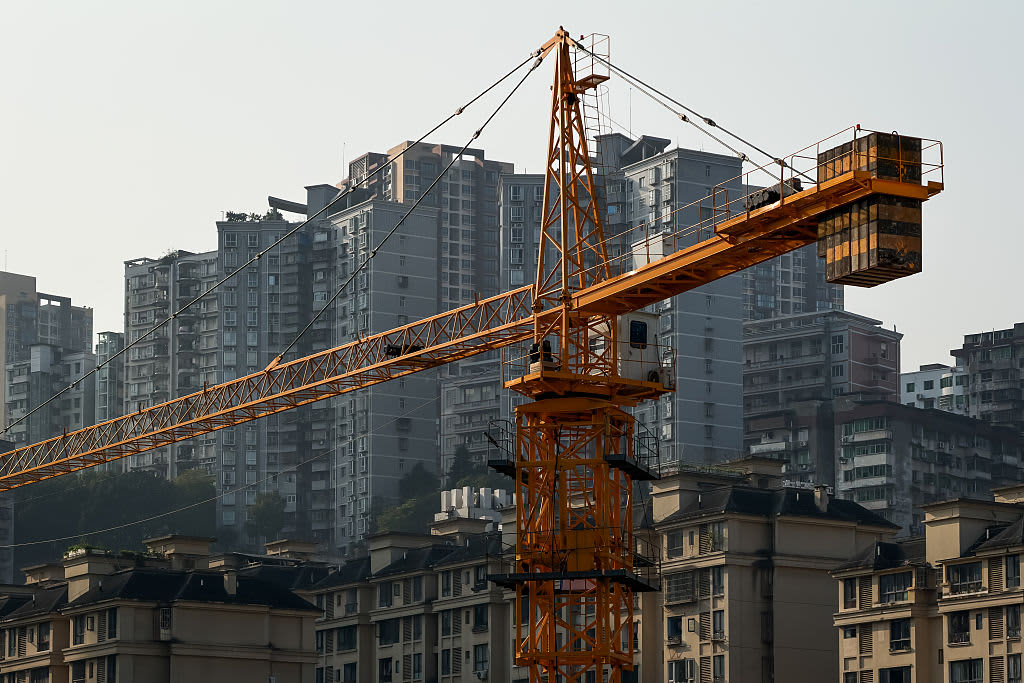
The architectural silhouette of Chongqing’s skyline, characterized by the skeletal frames of unfinished residential towers and the dormant arms of construction cranes, has become a poignant symbol of the transition currently gripping the world’s second-largest economy. As Beijing aggressively pivots toward a future defined by "New Productive Forces"—a catchphrase for high-end manufacturing, artificial intelligence, and green energy—the cold mathematics of macroeconomic data suggests that this high-tech surge is not yet large enough to fill the void left by the imploding real estate sector. While the halls of power in the capital emphasize technological self-reliance and industrial modernization, a growing body of economic analysis warns that the scale of this transition is dangerously mismatched with the country’s immediate growth needs.
According to a comprehensive analysis by the Rhodium Group, China’s strategic bet on "frontier" industries has yielded impressive headlines but insufficient output to stabilize the broader economy. Between 2023 and 2025, emerging sectors including artificial intelligence, robotics, and electric vehicles (EVs) contributed a modest 0.8 percentage points to China’s total economic output. During the same window, the contraction in real estate and traditional industrial sectors carved a staggering 6 percentage point hole in the nation’s growth trajectory. This stark divergence underscores a fundamental reality: the "new economy" is currently too small to act as a primary engine for a nation accustomed to 5% annual GDP growth.
The challenge for Beijing is one of sheer magnitude. For over two decades, the property market served as the bedrock of Chinese wealth and local government revenue, at its peak accounting for more than 25% of the country’s GDP. The subsequent collapse of this model has left a vacuum that high-tech investment is struggling to bridge. To maintain a 5% growth target through the end of the decade, Rhodium estimates that these new industries would need to expand sevenfold over the next five years. Such a feat would require an additional 2.8 trillion yuan (approximately $390 billion) in new investment this year alone—a 120% increase over 2025 levels. While state-directed capital is flowing into semiconductor fabs and AI labs, the capacity for these sectors to absorb and productively utilize such a massive influx of capital remains an open question.
This structural imbalance is further complicated by the maturation of some of China’s most successful "new" industries. The electric vehicle sector, which has been the poster child for Chinese industrial policy, is showing signs of reaching a plateau in domestic growth. After years of explosive expansion fueled by generous subsidies and infrastructure development, the industry is grappling with market saturation and thinning margins. Analysts suggest that the fastest rates of growth for EVs are likely in the rearview mirror, meaning the sector can no longer be relied upon to provide the double-digit growth increments necessary to offset the property drag.

The real estate crisis, meanwhile, continues to deepen despite sporadic attempts at intervention. Data from the China Real Estate Information Corp (CRIC) indicates that new home sales by floor area have plummeted to levels not seen since 2009. This is not merely a corporate crisis for developers like Evergrande or Country Garden; it is a systemic erosion of household wealth. Since roughly 70% of Chinese household assets are tied up in property, the slump has triggered a "negative wealth effect," stifling domestic consumption and leaving the economy even more dependent on state-led investment and exports.
Global investment firms have echoed these concerns. A recent macro outlook from KKR estimated that property-related weakness would shave at least 1.2 percentage points off China’s GDP growth in the current fiscal year. While digital technologies are projected to contribute a healthy 2.6 percentage points, the net result leaves the economy hovering at a precarious 4.6% growth rate—below the psychological and political threshold of 5%. KKR’s analysis suggests that while the drag from real estate might halve by 2027, there is limited evidence that digital industries or consumer demand can accelerate quickly enough to provide a "soft landing."
Beyond the GDP figures, the shift toward a tech-centric economy is creating a profound disruption in the labor market. The "Old Economy"—construction, steel manufacturing, and low-end textiles—was highly labor-intensive, providing millions of jobs for a broad spectrum of the workforce. In contrast, the "New Economy" of robotics and AI-driven automation is designed for efficiency, not mass employment. While these sectors offer higher wages for specialized engineers, they employ significantly fewer people per unit of output.
The social implications of this shift are significant. KKR’s research indicates that increased factory automation, combined with China’s 30% share of global manufacturing, could potentially displace up to 100 million jobs over the next decade. This displacement would exceed the total workforce of most G7 nations, creating a massive re-employment challenge. Already, the cracks are showing; while urban unemployment remains officially around 5%, youth unemployment has consistently hovered at levels three times higher, reflecting a mismatch between the aspirations of university graduates and the realities of a tightening job market.
This internal economic friction is spilling over into international trade. With domestic consumption dampened by the property crisis and the job market in flux, Chinese factories are increasingly looking toward global markets to absorb their excess capacity. This has led to a surge in low-priced exports of EVs, lithium batteries, and solar panels—goods that Beijing considers its "New Three" growth engines. However, this export-led strategy is meeting fierce resistance. The United States, the European Union, and even emerging economies like Mexico have moved to implement or increase tariffs on Chinese goods, citing concerns over unfair subsidies and industrial overcapacity.

The Rhodium report warns that China’s reliance on export markets makes its economy uniquely vulnerable to these geopolitical "black swans." If the "New Productive Forces" cannot find a robust market at home, and if foreign markets continue to build protectionist walls, China faces the risk of a prolonged period of stagnation. The strategy of doubling down on technology, while essential for long-term competitiveness, may be exacerbating short-term trade risks by forcing a global confrontation over market share.
In many ways, China’s current predicament mirrors the divergence seen in the U.S. economy, where a handful of AI-linked tech giants have driven stock market gains while the "Main Street" economy struggles with inflation and high interest rates. However, in the Chinese context, the stakes are heightened by the state’s central role in economic planning. Beijing argues that its focus on innovation is a multi-year project designed to ensure national security and technological sovereignty in an increasingly hostile global environment. Zhang Jianping, a senior official at China’s Commerce Ministry, has defended the policy, stating that traditional sectors like steel and real estate must integrate these new technologies to survive the next industrial revolution.
As policymakers prepare for the annual parliamentary meetings in March, the pressure to deliver a more forceful stimulus package for the property sector is mounting. While the leadership has been hesitant to return to the debt-fueled growth of the past, the reality of a slowing economy may force their hand. The challenge will be to balance the immediate need for a property floor with the long-term goal of becoming a high-tech superpower.
Ultimately, China’s journey toward a tech-driven economy is a high-stakes experiment in economic engineering. The success of "New Productive Forces" is not just a matter of building better chips or faster robots; it is a matter of scale, timing, and social stability. As the 2026 fiscal year unfolds, the world will be watching to see if Beijing can calibrate its transition before the weight of the old economy pulls the new one down. For now, the cranes over Chongqing remain a reminder that while the future may be digital, the foundations of the present are still very much made of concrete and steel—and those foundations are currently under immense strain.