
For decades, the engine of the Chinese economy was fueled by a relentless cycle of urbanization, infrastructure spending, and a red-hot real estate market. However, as Beijing attempts to pivot toward a future defined by "New Productive Forces"—a catch-all term for high-tech industries like artificial intelligence, humanoid robotics, and electric vehicles—the transition is proving more difficult than the nation’s central planners anticipated. Recent economic data and analytical models suggest that while China’s technological ascent is undeniable, the scale of these emerging sectors remains insufficient to fill the massive void left by a collapsing property sector. This structural imbalance is not only threatening the country’s ambitious 5% annual growth target but is also forcing the world’s second-largest economy into an increasingly precarious reliance on global export markets, heightening the risk of international trade conflicts.
The mathematical reality of China’s current economic trajectory is stark. Between 2023 and 2025, advanced industries including AI, green energy, and advanced manufacturing contributed approximately 0.8 percentage points to the nation’s total economic output. During the same period, the contraction in real estate and traditional industrial sectors resulted in a staggering 6 percentage point drag on growth. This discrepancy highlights the fundamental challenge facing the Communist Party: the "old" economy is shrinking at a pace that the "new" economy cannot yet match. To sustain the growth rates of the previous decade, experts estimate that China’s high-tech investment would need to expand sevenfold over the next five years. This would require an additional 2.8 trillion yuan in new investment within the current fiscal year alone—a 120% increase over the previous year’s levels.
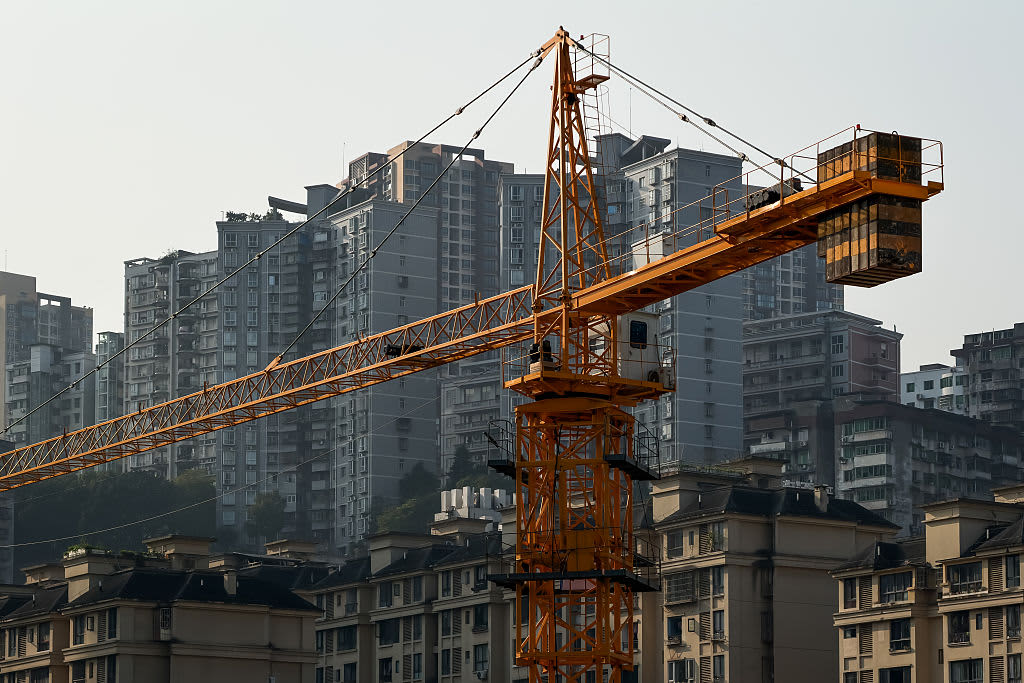
The drag from the real estate sector is particularly profound because of its historical role as the bedrock of Chinese household wealth and local government revenue. At its peak, property-related activity accounted for more than 25% of China’s GDP. Today, the sector is in a prolonged slump, with new home sales by floor area recently hitting levels not seen since 2009. The "wealth effect" of declining property values has suppressed domestic consumption, as Chinese citizens, who hold roughly 70% of their assets in real estate, feel less financially secure. While Beijing has recently signaled a potential shift toward more forceful support for the housing market, the effectiveness of these measures remains to be seen. The consensus among global investment firms is that property weakness will continue to shave at least 1.2 percentage points off GDP growth annually for the foreseeable future, potentially capping total growth at around 4.6%, even with a robust 2.6 percentage point contribution from digital and green technologies.

Central to Beijing’s strategy is the pursuit of technological self-reliance, a goal made urgent by tightening U.S. restrictions on advanced semiconductors and AI hardware. The government’s latest five-year development plan, set to be formalized in the coming months, doubles down on state-led investment in "hard tech." However, critics of this top-down approach argue that state-directed capital often leads to overcapacity rather than efficient innovation. In the electric vehicle (EV) sector, for instance, years of subsidies have created a world-leading industry, but one that is now facing diminishing returns and slowing domestic growth rates. The rapid expansion phase of the EV market has likely peaked, and the industry must now contend with a saturated domestic market and rising protectionism abroad.
This domestic saturation leads to a critical secondary problem: the necessity of exports. Because the Chinese consumer is not yet strong enough to absorb the massive output of these new high-tech factories, Beijing has become increasingly dependent on gaining market share in foreign jurisdictions. This "export-led" solution to a domestic demand problem is meeting fierce resistance. The European Union, Mexico, and the United States have all moved to implement or increase tariffs on Chinese-made goods, particularly EVs and green energy components. The narrative of "Chinese overcapacity" has become a central theme in international trade diplomacy, leaving China’s growth trajectory highly vulnerable to geopolitical shifts and new trade barriers. If the global community continues to "de-risk" or decouple from Chinese supply chains, the very industries Beijing is counting on for its economic survival may find themselves without a market.
The human element of this transition also presents a daunting challenge for social stability. Traditional industries like construction and low-end manufacturing are massive employers of low-to-medium-skilled labor. In contrast, the high-tech sectors Beijing is prioritizing—such as AI and automated robotics—are capital-intensive rather than labor-intensive. While these industries offer higher wages for specialized engineers, they employ significantly fewer people overall. Furthermore, the push for increased factory automation, intended to offset China’s shrinking and aging workforce, carries the risk of massive labor displacement. Some estimates suggest that the widespread adoption of robotics and AI could lead to the loss of up to 100 million jobs over the next decade. This displacement would be larger than the entire workforce of many developed nations, creating a potential social crisis if new service-sector jobs are not created to absorb the surplus labor.
Currently, the labor market is already showing signs of distress. Urban unemployment has remained stubbornly above 5%, while youth unemployment—the segment of the population most likely to work in the "new economy"—has been significantly higher, sometimes triple the national average. This creates a paradox: a generation of highly educated youth is entering a market where the "old" jobs are disappearing, but the "new" tech jobs are either too few in number or require hyper-specialized skills that the broader education system is still catching up to.

Global comparisons offer a cautionary tale. The United States is experiencing a similar divergence, where a handful of AI-linked tech giants have driven massive stock market gains and productivity hopes while other sectors of the "real" economy struggle with inflation and high interest rates. However, the U.S. economy remains fundamentally supported by robust domestic consumption, which accounts for nearly 70% of its GDP. China’s consumption, by contrast, remains significantly lower as a share of the economy, making its transition to a tech-led model far more reliant on external factors.
Despite these headwinds, there is a strong sentiment within Beijing that the country has no choice but to stay the course. Officials at the Ministry of Commerce and other state agencies argue that the pivot to high-tech is a long-term strategic necessity, not a short-term stimulus plan. They contend that traditional industries like steel, chemicals, and textiles must integrate AI and smart manufacturing to remain globally competitive. From this perspective, the current economic pain is the "growing pains" of a necessary evolution toward a more sustainable, high-quality growth model.
The coming months will be pivotal. As top leaders gather in March for the annual parliamentary meetings, the world will be watching for signs of a more balanced policy approach—one that continues to foster innovation while providing a more substantial floor for the property sector and the labor market. Without a more comprehensive strategy to stimulate domestic demand and repair the housing market, China’s high-tech gamble may succeed in creating world-class industries, but fail to provide the broad-based economic stability the country requires to avoid the "middle-income trap." The gap between the decline of the old and the rise of the new remains wide, and for now, the bridge Beijing is building consists more of ambition than of solid economic footing. The risk remains that China’s high-tech push, while impressive in its scope, will be insufficient to counteract the gravitational pull of a debt-laden and slowing traditional economy.