

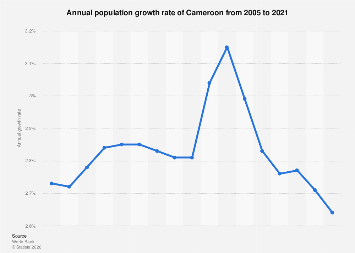
Cameroon has experienced a significant demographic expansion between 2005 and 2021, a trend that is reshaping its economic landscape and presenting both substantial opportunities and complex challenges. This sustained population growth is not merely a statistical footnote; it represents a dynamic shift that influences labor markets, consumer demand, infrastructure needs, and the overall trajectory of the nation’s development. Understanding the nuances of this demographic evolution is crucial for policymakers, investors, and international development partners seeking to harness its potential and mitigate its inherent risks.
The period under review, spanning from 2005 to 2021, witnessed a consistent upward trend in Cameroon’s population. While precise figures fluctuate based on reporting methodologies and data collection cycles, available indicators point to a robust increase. This growth is primarily driven by a high birth rate, a characteristic common to many developing economies, coupled with improving, albeit still fragile, healthcare systems that contribute to increased life expectancy. As of recent estimates, Cameroon’s population stands well over 25 million, a considerable leap from earlier decades. This growth rate outpaces many nations in more developed regions, placing Cameroon among the continent’s more populous countries.
This demographic momentum carries profound economic implications. A larger population, particularly a youthful one, signifies a growing labor force. In the short to medium term, this can translate into a demographic dividend if sufficient job creation keeps pace with the influx of young workers entering the market. For industries such as agriculture, manufacturing, and services, this expanding workforce can provide a competitive edge, potentially lowering labor costs and increasing production capacity. Sectors like construction and infrastructure development are also inherently linked to population growth, requiring expanded housing, transportation networks, and public utilities.
However, the flip side of this demographic expansion is the imperative for job creation. If the economy cannot absorb the growing number of job seekers, it risks exacerbating unemployment and underemployment, leading to social unrest and hindering economic progress. The International Labour Organization (ILO) has consistently highlighted the challenge of youth unemployment in sub-Saharan Africa, a situation that Cameroon, with its young demographic, must proactively address. Investing in education and vocational training that aligns with market demands is paramount. Furthermore, fostering an environment conducive to entrepreneurship and small and medium-sized enterprises (SMEs) can create decentralized employment opportunities across the country.
Consumer markets are another direct beneficiary of population growth. A larger populace means a greater demand for goods and services, from basic necessities like food and clothing to more sophisticated products and entertainment. This expanding consumer base presents a significant opportunity for both domestic producers and foreign investors. The rise of an urban middle class, often a consequence of demographic shifts and economic development, further fuels this demand, driving growth in sectors like retail, telecommunications, and financial services. Market research firms often track demographic shifts to identify emerging consumer trends and opportunities within African economies, and Cameroon is no exception.
On the global stage, Cameroon’s demographic growth places it within a broader trend of rapid population expansion across many African nations. Countries like Nigeria, Ethiopia, and the Democratic Republic of Congo are also experiencing substantial demographic increases, collectively shaping the future economic and geopolitical landscape of the continent. This shared demographic reality underscores the importance of regional economic integration and coordinated development strategies to leverage collective strengths and address common challenges. Comparisons with other rapidly growing economies, both within Africa and globally, offer valuable insights into best practices for managing demographic transitions and fostering inclusive growth.
The strain on public services is another critical aspect of sustained demographic growth. As the population increases, so does the demand for healthcare, education, sanitation, and water supply. Governments must make substantial investments to expand and improve the quality of these services. The World Health Organization (WHO) and UNESCO regularly publish data on per capita spending on health and education in various countries, illustrating the scale of investment required to maintain or improve service levels as populations grow. In Cameroon, this means allocating significant portions of the national budget to these critical sectors, often necessitating international aid and partnerships.
Infrastructure development is intrinsically linked to demographic trends. A growing population requires more housing, better roads, expanded public transportation, and reliable energy grids. The African Development Bank (AfDB) consistently identifies infrastructure deficits as a major impediment to economic growth across the continent. For Cameroon, addressing these needs is not only about accommodating current growth but also about laying the groundwork for future prosperity. Investments in large-scale projects, such as power generation, transportation corridors, and urban planning, are essential to prevent bottlenecks and facilitate economic activity.
The environmental impact of a growing population also warrants careful consideration. Increased demand for resources, energy, and land can put pressure on natural ecosystems. Sustainable development practices, including investments in renewable energy, responsible resource management, and urban planning that prioritizes green spaces, become increasingly important. International bodies like the United Nations Environment Programme (UNEP) emphasize the need for developing nations to integrate environmental sustainability into their growth strategies to avoid long-term ecological damage.
Economically, the demographic dividend is a concept that policymakers aspire to achieve. It occurs when a country’s working-age population grows faster than its dependent population (children and the elderly), leading to a potential increase in economic growth. For Cameroon to fully realize this dividend, it needs to implement policies that foster high-quality education, create productive employment, and promote good governance. Failure to do so can result in a "demographic burden," where a large, unemployed youth population becomes a source of social and economic strain.
Statistics from organizations like the World Bank and the United Nations Population Division provide detailed projections and historical data on population growth rates, age structures, and fertility rates for countries like Cameroon. These datasets are invaluable for economic modeling and policy planning. They indicate that Cameroon’s population is projected to continue growing, albeit at varying rates, in the coming decades, underscoring the long-term nature of the challenges and opportunities presented by its demographic profile.
In conclusion, Cameroon’s demographic expansion between 2005 and 2021 is a defining characteristic of its current and future economic narrative. It presents a potent engine for growth through an expanding labor force and consumer market, but it simultaneously demands substantial investments in education, job creation, infrastructure, and public services. Navigating this demographic transition successfully will require strategic foresight, robust policy implementation, and sustained efforts to ensure that the benefits of growth are shared equitably, paving the way for a more prosperous and stable future for the nation.