

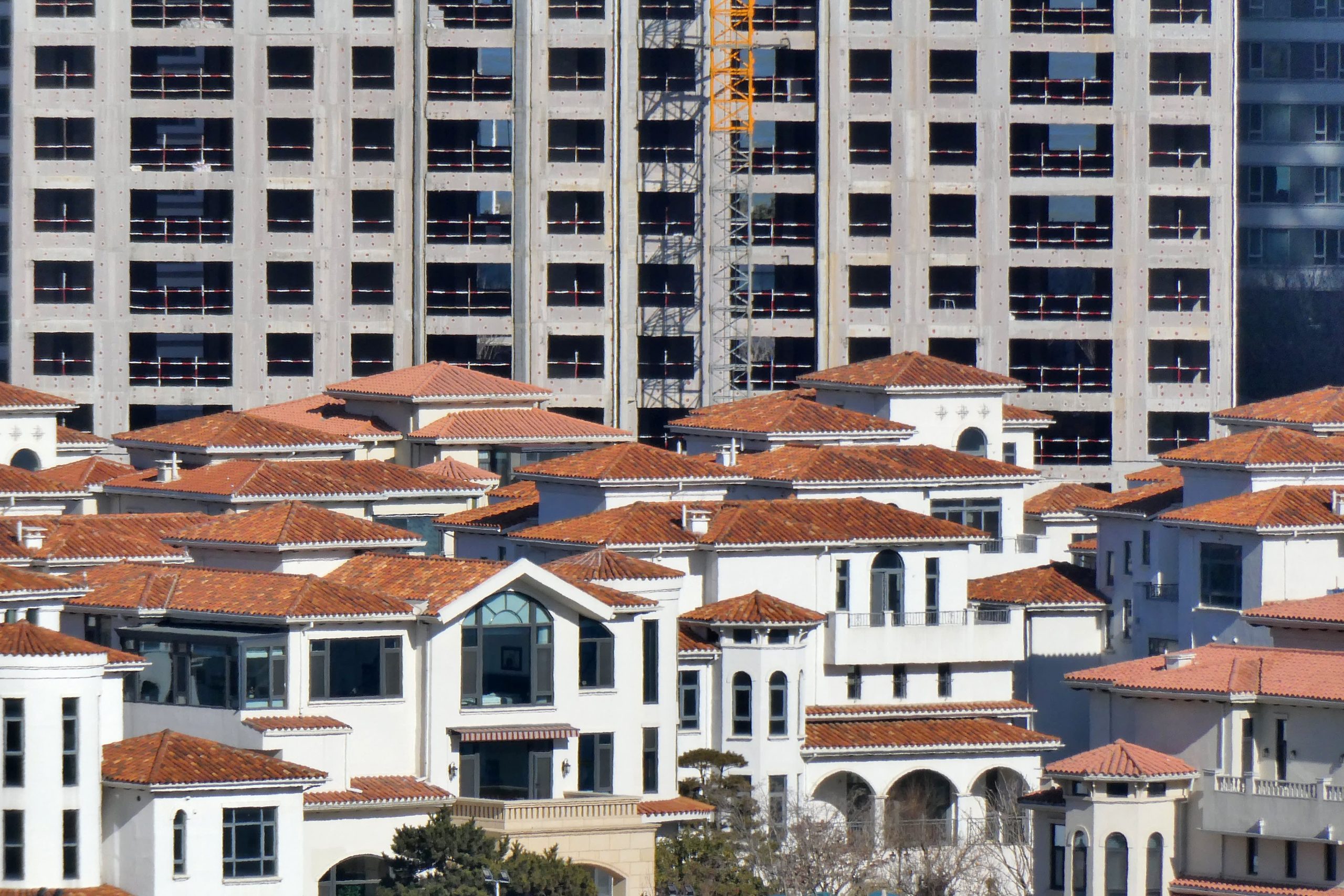
The silence that has characterized much of China’s official response to its protracted property crisis appears to be breaking, replaced by a calibrated rhetorical shift that suggests a more aggressive intervention may be on the horizon. For over four years, the world’s second-largest economy has grappled with a real estate deleveraging cycle that has evolved from a controlled cooling into a systemic drag on national growth. However, as 2026 begins, a series of high-level signals and policy commentaries are igniting hope among investors and economists that the central government is preparing to move beyond the "piecemeal" support measures that have defined its strategy to date.
The catalyst for this renewed optimism arrived via Qiushi, the Communist Party’s preeminent theoretical journal. In its first publication of the year, the journal—whose name translates to "Seeking Truth"—called for the implementation of "more powerful and precise measures" to stabilize the property market. While such language might seem abstract to outside observers, in the context of Chinese political signaling, it represents a significant departure from the more cautious "period of adjustment" framing used throughout 2025. This shift has already resonated in the financial markets; the Hang Seng China A Properties Index, a barometer for the sector’s health featuring heavyweights like Vanke and Seazen, surged by more than 6% in the opening weeks of the year.
The timing of this rhetorical pivot is not accidental. It precedes the National People’s Congress (NPC) in March, an annual parliamentary event where the leadership sets the economic agenda and growth targets for the year. This year’s meeting carries added weight as it will unveil the granular details of China’s next five-year development plan. For the property sector, which once accounted for roughly a quarter of China’s GDP, the March meeting represents a critical juncture. There is a growing consensus among analysts that Beijing can no longer afford to let the sector languish if it hopes to meet broader economic objectives.
Ting Lu, chief China economist at Nomura, characterized the Qiushi article as the most comprehensive assessment of the property market since the sector’s liquidity crisis began in mid-2021. According to Lu, the significance of the commentary lies in its urgency. He argues that rising international trade tensions and the potential for a slowdown in the export sector—which has been a rare bright spot for China—may eventually compel Beijing to ramp up domestic stimulus significantly. If the "export engine" begins to sputter due to global protectionism or a softening in external demand, property remains the most potent lever available to the state to stabilize the domestic economy.

The scale of the downturn remains staggering. Despite a high-level directive in September 2024 to "halt the decline" of the real estate market, the fundamentals have continued to deteriorate. New home sales have nearly halved since the 2021 peak, a direct consequence of the "Three Red Lines" policy designed to curb developers’ reliance on excessive debt. By the end of 2025, floor space sold had regressed to levels not seen since 2009. This decade-and-a-half reversal underscores the depth of the crisis; the traditional model of "pre-sales," where developers used buyer deposits to fund future projects, has effectively collapsed as consumer confidence in project completion remains at historic lows.
This lack of confidence is perhaps the greatest hurdle for policymakers. Across China, millions of apartments remain unfinished, leaving buyers with mortgages on homes they cannot inhabit. While the government has introduced "whitelist" programs to provide credit to specific stalled projects, the delivery rate has not been fast enough to restore trust. The Qiushi commentary directly addressed this, arguing against the prevailing notion in some policy circles that real estate is no longer central to China’s economic future. By warning that officials must prepare for potential bankruptcies of even major developers, the journal signaled a more pragmatic, "eyes-wide-open" approach to the sector’s fragility.
Financial stress is no longer limited to the smaller, more speculative players. Vanke, long considered one of the industry’s most stable and conservative developers, has become a symbol of the broader contagion. Once a darling of the credit markets, Vanke has recently faced downgrades from international agencies like S&P Global Ratings. The developer narrowly avoided a default on a 2 billion yuan ($283 million) onshore bond in late 2025 by securing an extension, but its ongoing struggle to meet debt obligations highlights the industry-wide credit crunch. Data from Wind Information shows that the outstanding loan balance for real estate developers fell year-over-year in the third quarter of 2025 for the first time in over a decade, indicating that banks remain deeply hesitant to lend to the sector.
To counter this, economists expect the government to transition toward more "innovative" measures. Michelle Kwok, HSBC’s head of Asia real estate research, suggests that the most impactful policies will be those that directly reduce the financial burden on prospective homeowners. This could include a more aggressive state-led program to acquire excess housing inventory—essentially a "bad bank" for real estate—turning unsold private developments into social housing. Such a move would serve two purposes: providing liquidity to cash-strapped developers and addressing the housing needs of the urban working class.
However, the path to a robust recovery is fraught with structural challenges. Larry Hu, chief China economist at Macquarie, projects that home construction completions will continue to fall, estimating a 12% decline in the coming year following a 17% drop in 2025. In his view, the central government is likely holding back its most potent "bazooka" stimulus measures until external economic pressures, such as a downturn in the global tech cycle or further tightening by the U.S. Federal Reserve, force its hand. Until the export sector shows signs of real fatigue, Beijing may continue to prioritize its "New Three" industries—electric vehicles, lithium-ion batteries, and renewable energy—over a full-scale property bailout.

There is also a political dimension to the current policy debate. While the Qiushi article signals a shift, it was authored by a deputy director within a research center under the housing ministry. This suggests that while the ministry is advocating for more decisive action, a full consensus at the highest levels of the Politburo may still be forming. Historically, articles in Qiushi that carry the full weight of the top leadership often use specific "pseudo-signatures" or are attributed to the central committee itself. The current discourse suggests a lively internal debate between those who wish to move past the property-driven growth model and those who recognize that the transition to a tech-driven economy is taking longer than expected.
The broader economic impact of the property slump extends far beyond the construction sites. Real estate and its related industries influence everything from local government revenues—which rely heavily on land sales—to consumer spending. When property values stagnate or fall, the "wealth effect" that previously drove middle-class consumption disappears. For the Chinese government, stabilizing the market is not just about bailing out developers; it is about protecting the primary store of wealth for the majority of its citizens.
As the March meeting approaches, the global investment community is watching for specific keywords: "inventory absorption," "liquidity support," and "demand-side easing." If Beijing moves to consolidate these measures into a unified, "one-go" package rather than the reactive, city-by-city adjustments seen over the last year, it could mark the definitive bottom of the cycle.
In the final analysis, 2026 is shaping up to be a year of reckoning for Chinese real estate. The shift in tone from official mouthpieces suggests that the era of "benign neglect" is ending. Whether the upcoming policy pivots will be enough to reverse a decade of structural decline remains to be seen, but for the first time in years, the "truth" being sought in the halls of power appears to be that the property sector is simply too big to fail.