


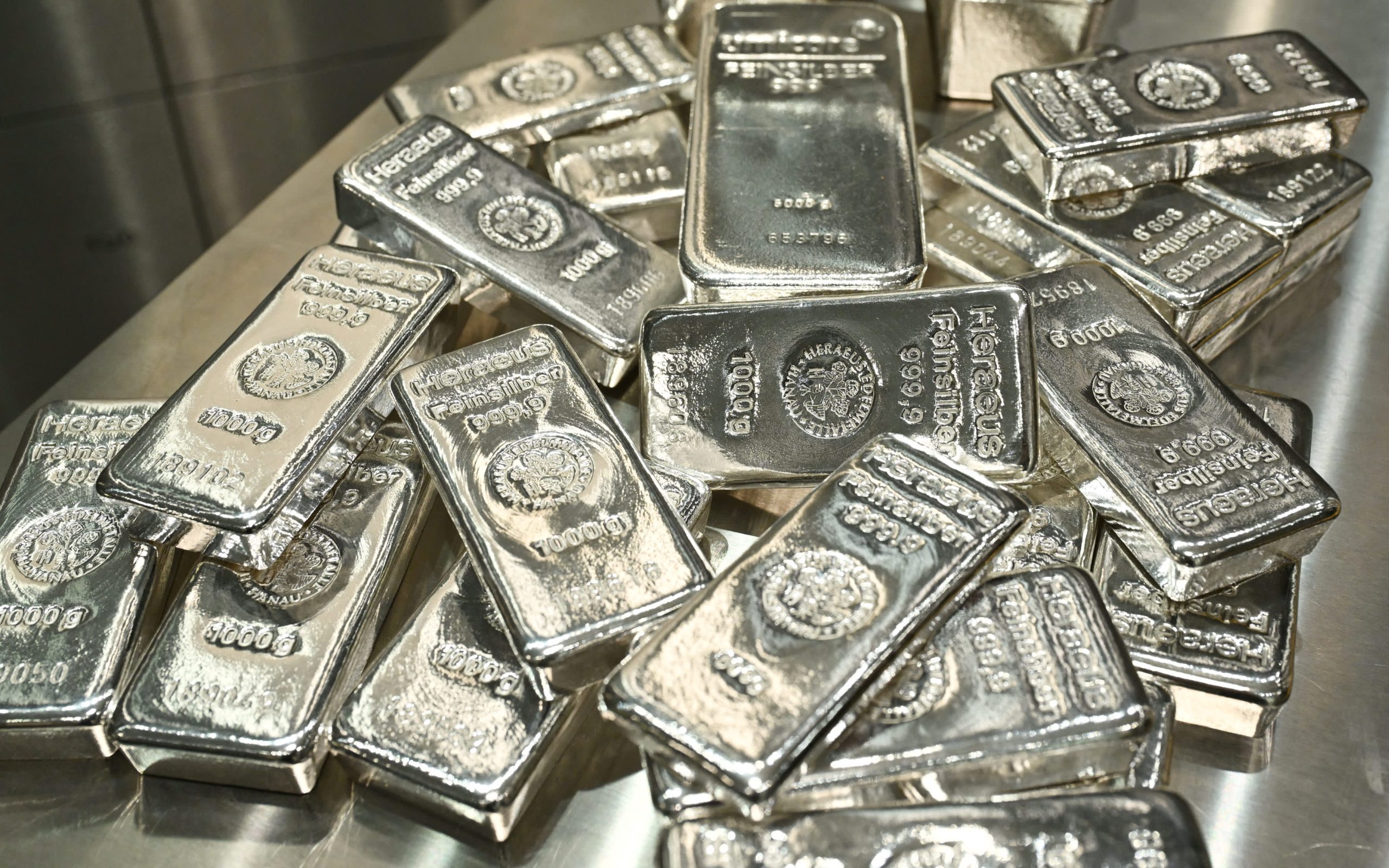
The global landscape for industrial commodities underwent a fundamental shift this week as China formalized its transition toward treating silver not merely as a precious metal or a standard industrial input, but as a strategic resource subject to rigorous export oversight. Starting Thursday, the Chinese Ministry of Commerce will implement a new regulatory framework that tightens the spigot on silver outflows, a move that closely mirrors the restrictive "playbook" Beijing has previously utilized for rare earth elements, gallium, and germanium. This policy shift arrives at a precarious moment for international markets, as silver prices hover near historic highs and Western industries—ranging from electric vehicle manufacturing to aerospace defense—scramble to secure reliable supply chains.
The elevation of silver to a "strategic material" represents a significant departure from its historical classification as an ordinary commodity. While the world often associates silver with jewelry or bullion, its industrial utility is unparalleled due to its status as the most electrically and thermally conductive metal on earth. For Beijing, the decision to tighten controls is an exercise of geopolitical leverage, positioning the metal alongside other critical materials like tungsten and antimony, both of which are also facing increased export scrutiny. This regulatory tightening was foreshadowed in October during high-level diplomatic engagements between U.S. President Donald Trump and Chinese President Xi Jinping in South Korea, where a temporary truce on rare earth minerals was struck, even as the groundwork for these new silver restrictions was being laid.
Industry leaders have been quick to sound the alarm regarding the potential for mid-to-long-term disruptions. Elon Musk, CEO of Tesla, recently expressed grave concerns over the move, noting that silver is an indispensable component in a vast array of industrial processes. In the automotive sector specifically, the transition to electric vehicles (EVs) has dramatically increased the "silver load" per unit. A standard internal combustion engine vehicle requires approximately 15 to 28 grams of silver, but an EV can require up to 50 grams for its complex electrical systems, battery management units, and sensor arrays. As the world’s largest producer of EVs, China’s control over the primary silver supply chain grants it a dual advantage: it secures its domestic manufacturing needs while potentially throttling the progress of international competitors.

The mechanics of the new restrictions involve a rigorous licensing system. The Chinese government recently published a list of only 44 domestic companies authorized to export silver for the 2026–2027 period. By limiting the number of approved entities, Beijing can more effectively monitor the final destination of its silver exports, ensuring that the metal does not inadvertently bolster the defense capabilities of rival nations or bypass trade sanctions. This level of oversight is particularly concerning for the United States, which only recently added silver to its nationally designated list of critical minerals. The U.S. Department of the Interior cited silver’s essential role in electrical circuits, high-capacity batteries, and anti-bacterial medical instruments as the primary drivers for this designation.
Market data underscores the sheer scale of China’s dominance in this sector. In the first eleven months of the current year, China exported more than 4,600 tons of silver, while importing a mere 220 tons. This massive trade surplus in physical metal highlights China’s role as the global clearinghouse for silver refined for industrial use. While Mexico and Peru remain the world’s top miners of silver ore, China has successfully positioned itself as the dominant force in the processing and refining stages of the supply chain. Shifting these refining capabilities to North America or Europe would require billions in capital investment and years of regulatory approvals, leaving Western manufacturers vulnerable in the interim.
The immediate reaction in the physical silver market has been one of heightened urgency. Reports from mining and trading firms indicate that buyers are now willing to pay significant premiums to secure physical delivery. David Stein, CEO of Canada-based Kuya Silver, noted that manufacturers and large trading firms have recently approached his company with offers as high as $10 above the prevailing spot price. Such a massive "basis" or premium over the paper market suggests that industrial users are no longer confident in the ability of futures exchanges to provide physical metal during times of crisis. This "scramble for silver" is a classic indicator of a market transitioning from a period of abundance to one of structural deficit.
From a broader economic perspective, the surge in silver prices—which touched a record peak above $80 an ounce earlier this week—is being viewed by some analysts as a referendum on the health of the U.S. dollar. Silver has more than doubled in value over the past year, marking its strongest performance since the legendary bull market of 1979. During that era, high inflation and geopolitical instability drove investors into hard assets; today, similar forces appear to be at play. The U.S. dollar index has declined by nearly 9.5% this year, its worst showing in nearly a decade. Economists, including George Mason University’s Tyler Cowen, have characterized the simultaneous rally in silver and gold as a "flashing warning" for the American economy, suggesting that the global market is increasingly seeking refuge from a devaluing fiat currency.

The implications for the renewable energy sector are particularly acute. Silver is the primary component in the conductive paste used in solar photovoltaic (PV) cells. As the global energy transition accelerates, the demand for high-efficiency solar panels—such as those using TOPCon or HJT technology—has led to an even higher intensity of silver use per megawatt of capacity. If silver exports from China are restricted or become prohibitively expensive, the cost of solar installations globally could rise, potentially slowing the pace of carbon reduction targets in the West. China, which already controls the vast majority of the world’s solar panel manufacturing capacity, could use its silver reserves to maintain low costs for its domestic green energy industry while exporting higher costs to the rest of the world.
The European Union has also expressed growing anxiety over these developments. A recent survey conducted by the EU Chamber of Commerce in China revealed that a majority of its member companies are already feeling the impact of export controls or expect to be impacted shortly. For European manufacturers, the concern is twofold: the direct cost of the raw material and the "regulatory uncertainty" that makes long-term planning nearly impossible. When a metal is reclassified as a strategic asset, export licenses can be revoked or delayed with little notice, creating a "just-in-case" inventory mentality that further drives up prices and depletes available global stocks.
Looking ahead, the geopolitical "tit-for-tat" between Washington and Beijing shows no signs of abating. The U.S. has increasingly utilized export bans on high-end semiconductors and AI chips to slow China’s technological advancement. In response, China is leveraging its dominance in the "old economy" materials—the physical building blocks of the digital and green revolutions. By controlling the flow of silver, antimony, and tungsten, Beijing is demonstrating that it possesses its own set of economic "choke points."
As the new rules take effect, the focus will shift to how quickly other silver-producing nations can fill the void. While countries like Poland and Australia have significant reserves, they lack the integrated supply chain infrastructure that China has spent decades building. In the short term, the silver market is likely to remain characterized by high volatility and regional price disparities. For global industry, the era of cheap, easily accessible silver may be coming to an end, replaced by a new reality where the metal’s value is determined as much by diplomatic relations as by industrial demand. This shift reinforces the growing trend of "resource nationalism," where nations prioritize domestic stability and strategic leverage over the efficiencies of a globalized free market.