The geopolitical landscape of the High North has been thrust back into the international spotlight as a diplomatic rift widens between the United States and the Kingdom of Denmark over the status of Greenland. Following renewed signals from the American political establishment regarding a potential acquisition of the world’s largest island, Danish officials have issued a firm rebuke, signaling that the era of treating sovereign territories as real estate assets has long since passed. This tension highlights a deeper, more complex struggle for influence in the Arctic, a region increasingly defined by melting ice, untapped mineral wealth, and the intensifying shadow of great-power competition between Washington, Moscow, and Beijing.
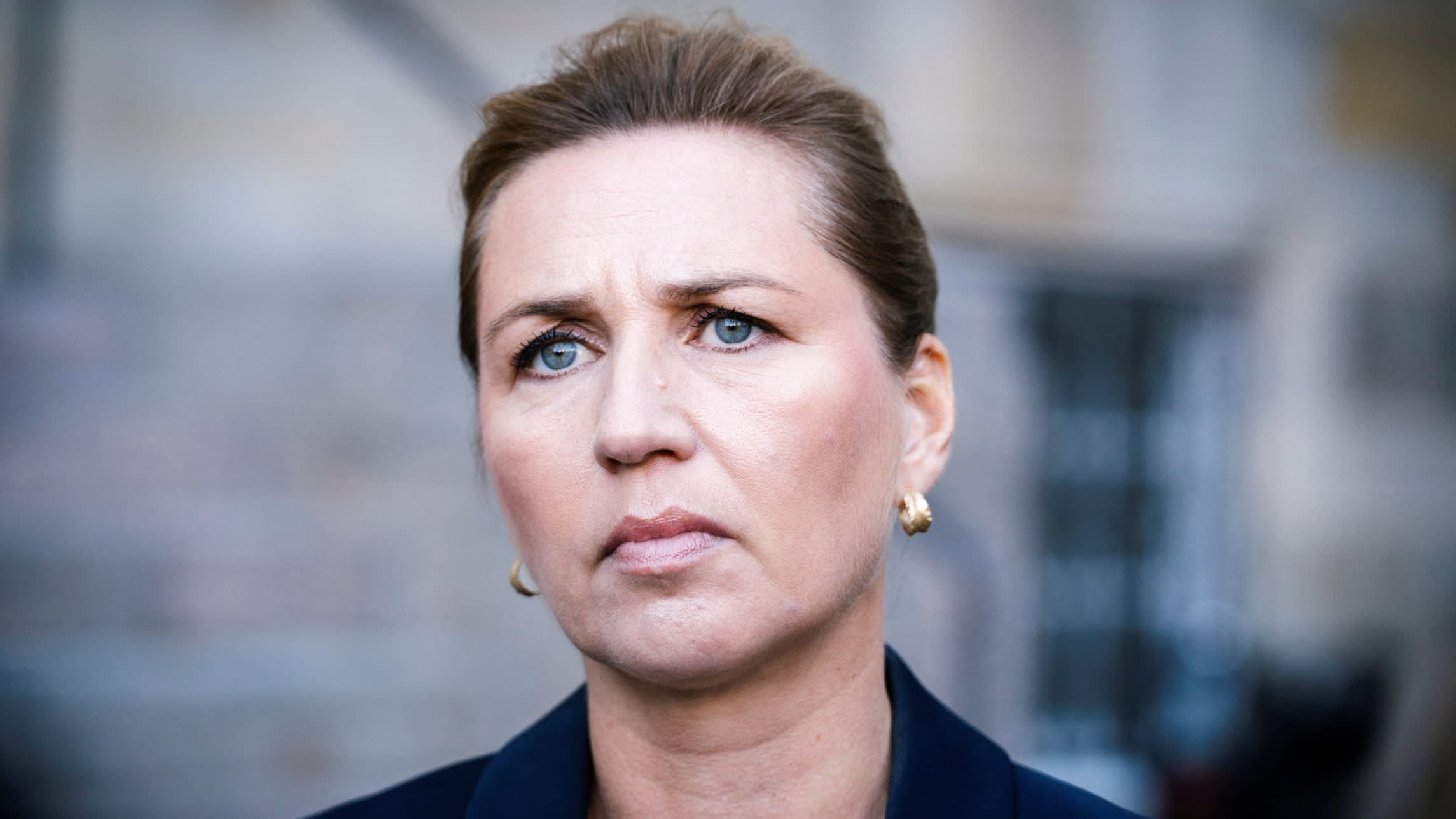
The concept of the United States purchasing Greenland is not a modern novelty, but its resurgence in contemporary political discourse has met with unprecedented resistance. While the proposal was famously floated during the first Trump administration in 2019—dismissed at the time by Danish Prime Minister Mette Frederiksen as "absurd"—the persistent return of the topic suggests a fundamental shift in how the United States views its strategic depth in the North Atlantic. For Copenhagen, however, the rhetoric is more than a diplomatic nuisance; it is viewed as an affront to the sovereignty of the Danish Realm and a misunderstanding of the autonomous status of the Greenlandic people.
Greenland, though part of the Kingdom of Denmark, operates under a comprehensive self-government framework established in 2009. This legal structure grants the government in Nuuk authority over most domestic matters, including the management of its vast natural resources, while Copenhagen retains control over foreign policy, defense, and monetary affairs. Any discussion regarding the island’s future, Danish officials argue, must begin and end with the 57,000 residents of Greenland. The notion that a transaction could be brokered between two distant capitals without the explicit consent and agency of the local population is seen as an anachronism of 19th-century colonialism.
From a purely strategic standpoint, the American interest in Greenland is grounded in the harsh realities of 21st-century security. The island sits in the middle of the GIUK gap (Greenland, Iceland, and the United Kingdom), a naval chokepoint that is vital for monitoring Russian submarine activity moving from the Arctic into the Atlantic. The United States already maintains a significant presence at the Pituffik Space Base (formerly Thule Air Base), which houses a sophisticated early-warning radar system capable of detecting intercontinental ballistic missiles. As the Arctic ice continues to recede at a rate of roughly 13% per decade, the region is becoming a navigable maritime frontier, potentially shortening global shipping routes by thousands of miles and necessitating a more robust military posture.
Economically, Greenland represents one of the final frontiers of the global energy and mineral transition. The United States Geological Survey estimates that the Arctic may hold up to 22% of the world’s undiscovered technical oil and gas resources. More importantly, Greenland is believed to possess some of the world’s largest deposits of rare earth elements (REEs), including neodymium, praseodymium, dysprosium, and terbium. These minerals are essential for the production of electric vehicle motors, wind turbines, and advanced military hardware. Currently, China controls approximately 85% to 90% of the global processing capacity for these elements, creating a supply chain vulnerability that Washington is eager to mitigate.
The economic potential of Greenland has already sparked a "quiet war" for investment. In recent years, the U.S. government has taken proactive steps to counter Chinese influence in the region. When a Chinese state-owned enterprise expressed interest in financing the construction of three international airports in Greenland, the Danish government, under significant pressure from Washington, stepped in to provide the funding itself to prevent Beijing from gaining a strategic foothold. The U.S. has since reopened its consulate in Nuuk and provided various aid packages aimed at sustainable development, signaling a "soft power" approach that contrasts sharply with the "hard power" rhetoric of territorial acquisition.
For Denmark, the challenge is balancing its role as a loyal NATO ally with its duty to protect the integrity of its realm. The Danish economy, while robust, provides an annual block grant of approximately $600 million to Greenland, accounting for more than half of the island’s public budget. While some political factions in Greenland view full independence as the ultimate goal, the path to economic self-sufficiency is steep. The island’s economy is currently dominated by the fishing industry, which makes up about 90% of its exports. Transitioning to a mining-based economy offers a route to independence, but it brings significant environmental risks to a fragile ecosystem and threatens the traditional lifestyles of the indigenous Inuit population.
Market analysts suggest that the "Greenland for sale" narrative complicates the investment climate by creating political instability. International mining conglomerates require long-term legal certainty to commit the billions of dollars necessary for Arctic extraction. If the territory is perceived as a pawn in a geopolitical tug-of-war, capital may flow toward more stable jurisdictions. Furthermore, the diplomatic friction threatens to undermine the Arctic Council, the primary intergovernmental forum for regional cooperation. Since the Russian invasion of Ukraine, the Council’s work has been severely disrupted; adding a rift between the U.S. and Denmark further destabilizes the "Arctic Exceptionalism" that has historically kept the region a zone of low tension.
Global comparisons illustrate the unique nature of this dispute. Unlike the 1867 purchase of Alaska from a cash-strapped Russian Empire or the 1917 purchase of the Danish West Indies (now the U.S. Virgin Islands), the modern world operates under a strict norms-based order regarding self-determination. Expert insights from international law scholars suggest that any attempt to "buy" a territory inhabited by a self-governing people would likely be challenged at the United Nations and could lead to a catastrophic breakdown in transatlantic relations. The consensus among European diplomats is that while the U.S. is encouraged to be a partner in Arctic development, it cannot be a proprietor.
The economic impact of this ongoing diplomatic saga extends to the broader European Union. Although Greenland left the European Economic Community in 1985, it remains an Overseas Country and Territory (OCT) of the EU, maintaining a strategic partnership that includes fishing rights and development aid. Europe is equally keen to secure its own access to Greenlandic minerals to fuel its "Green Deal" initiatives. A U.S. acquisition would effectively lock the EU out of these resources, creating a new point of contention in the already complex trade relationship between Brussels and Washington.
As the 2024 U.S. election cycle approaches, the rhetoric surrounding Greenland is expected to remain a recurring theme in discussions of American "greatness" and strategic foresight. However, the message from Copenhagen is increasingly clear: Greenland is not a commodity to be traded on the global market. The Danish government has urged the American leadership to move past "transactional diplomacy" and instead focus on collaborative frameworks that respect the autonomy of the Greenlandic people and the existing borders of the Arctic nations.
In the final analysis, the Greenland dispute is a microcosm of the new global order. It pits the old-world logic of territorial expansion against the modern realities of sovereign autonomy and resource nationalism. While the United States views the island through the lens of a "strategic imperative" to counter Russia and China, Denmark and Greenland view it through the lens of identity and self-governance. For now, the "Greenland Gambit" remains a non-starter in the halls of Copenhagen, leaving Washington to find more conventional ways to project power in the rapidly changing North. The ice may be melting, but the political resolve to maintain the status quo in the Danish Realm appears to be as solid as ever.