

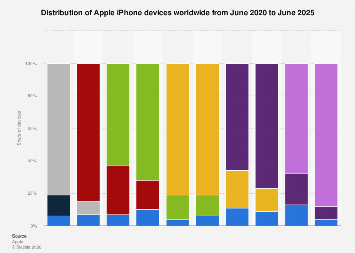
The smartphone operating system landscape, dominated by Apple’s iOS and Google’s Android, is a dynamic arena where software updates and hardware cycles dictate user adoption. For Apple, understanding the penetration of its latest iOS versions is crucial for gauging developer engagement, app compatibility, and the overall health of its ecosystem. Projections for iPhone share by iOS version in 2025 offer a forward-looking perspective on consumer migration patterns and the strategic implications for one of the world’s most valuable technology companies.
While precise, granular data for future market share is typically proprietary and accessible through specialized market intelligence platforms, industry trends and historical patterns provide a strong basis for forecasting. Typically, Apple sees rapid adoption of its new operating system releases. Within months of a major iOS launch, a significant percentage of active iPhones are running the latest version. This rapid uptake is driven by a combination of factors unique to Apple’s tightly controlled ecosystem. The consistent hardware and software integration allows for a more predictable and often smoother upgrade path compared to the fragmented Android market. Furthermore, Apple’s emphasis on security and new features acts as a powerful incentive for users to remain on the cutting edge.
By 2025, it is highly probable that the vast majority of active iPhones will be running iOS 18 or a subsequent iteration, assuming a typical annual release cycle. Historical data from previous years consistently shows over 70%, and often upwards of 80-90%, of active iPhones running the most recent or the immediately preceding iOS version within a year of their release. For instance, following the release of iOS 17, adoption rates quickly surpassed those of iOS 16. This trend is expected to continue, with iOS 18 likely achieving similar, if not higher, penetration rates by 2025. This sustained high adoption rate is a significant competitive advantage for Apple, allowing developers to focus their efforts on a more unified platform, thereby fostering innovation and a richer app experience for users.
The economic implications of this high adoption rate are substantial. For Apple, it means that the majority of its user base is equipped with the latest software capabilities, enhancing the perceived value of its devices and services. This includes access to advanced features, improved security protocols, and optimized performance, all of which contribute to customer loyalty and reduce churn. The company can also more effectively roll out new services and applications, confident that a large segment of its user base can immediately leverage them. This is particularly relevant for services like Apple Arcade, Apple Fitness+, and advancements in augmented reality (AR) capabilities, which often depend on the latest software frameworks.
From a developer’s perspective, the dominance of recent iOS versions simplifies development and testing. Instead of supporting a wide array of older operating systems with varying functionalities and potential bugs, developers can concentrate their resources on optimizing for the latest platforms. This leads to higher quality applications and a more consistent user experience across the app store. The reduced fragmentation in iOS compared to Android, where device manufacturers and carrier customizations create a much more complex environment, is a long-standing advantage for Apple’s developer community. This efficiency translates into faster app development cycles and a quicker return on investment for software creators.
The global smartphone market is characterized by intense competition, with Android holding the larger global market share in terms of units shipped. However, within the premium segment and in key markets like North America and parts of Europe, iOS commands a significant and highly valuable user base. The projected iOS version distribution in 2025 reflects the continued strength of Apple’s ecosystem in attracting and retaining users who prioritize seamless integration, robust security, and timely access to new technologies. This loyal user base often demonstrates higher average revenue per user (ARPU) compared to their Android counterparts, making them particularly attractive to businesses and service providers.
Looking beyond immediate adoption rates, the longevity of iOS device support also plays a critical role. Apple has a reputation for supporting older iPhone models with software updates for several years, often longer than many Android manufacturers. This practice, while increasing development complexity for Apple, fosters goodwill among consumers and encourages them to hold onto their devices for extended periods. By 2025, iPhones released several years prior will likely still be running relatively recent versions of iOS, contributing to the overall high penetration of newer software. This strategy not only enhances the perceived value of iPhones but also indirectly contributes to sustainability efforts by extending product lifecycles.
The economic impact of this concentrated iOS version usage extends to accessory markets and the broader tech industry. Developers of third-party accessories, from smartwatches to audio devices, can design products that leverage the latest iOS features and APIs with greater confidence. This leads to a more cohesive and innovative product ecosystem surrounding the iPhone. Furthermore, the consistent performance and feature set across a large portion of the iPhone user base make it an ideal platform for testing and deploying emerging technologies, such as advanced AI integrations or sophisticated health-monitoring features, which are increasingly becoming central to the smartphone experience.
While the focus remains on iOS, it’s important to acknowledge the broader context of mobile operating system evolution. Android, with its open-source nature and diverse hardware offerings, continues to capture the largest global market share. However, the fragmentation challenges inherent in the Android ecosystem, including delayed updates and varying hardware capabilities across devices, mean that the adoption of new Android versions typically lags significantly behind iOS. This disparity underscores the strategic advantage Apple holds in its ability to dictate the pace of software evolution and ensure a more uniform experience for its users. By 2025, this divergence is expected to persist, further solidifying the premium positioning of the iOS ecosystem.
In conclusion, the projected high penetration of the latest iOS versions on iPhones by 2025 is not merely a technical statistic; it represents a cornerstone of Apple’s business strategy and a key driver of its economic success. This unified software environment fosters innovation, enhances user experience, and creates a predictable and valuable market for developers and service providers. As the smartphone market continues to mature, Apple’s ability to maintain this ecosystem control and rapid software adoption will remain a critical factor in its ongoing dominance, particularly within the lucrative premium segment of the global mobile device industry.