
The global asset management industry witnessed a seismic shift on Monday as Janus Henderson Group PLC reached a definitive agreement to be acquired by a consortium led by Nelson Peltz’s Trian Fund Management and the venture capital powerhouse General Catalyst. The all-cash transaction, valued at approximately $7.4 billion, marks a significant turning point for the storied firm, signaling a broader trend of consolidation and privatization within an industry grappling with fee compression and the relentless rise of passive investing. Under the terms of the agreement, the purchasing group will acquire all outstanding shares of Janus Henderson for $49.00 per share in cash. This offer represents a 6.5% premium over the company’s closing price on the preceding Friday and an 18% surge from its valuation on October 24, just before reports of a potential takeover began to circulate in financial circles.
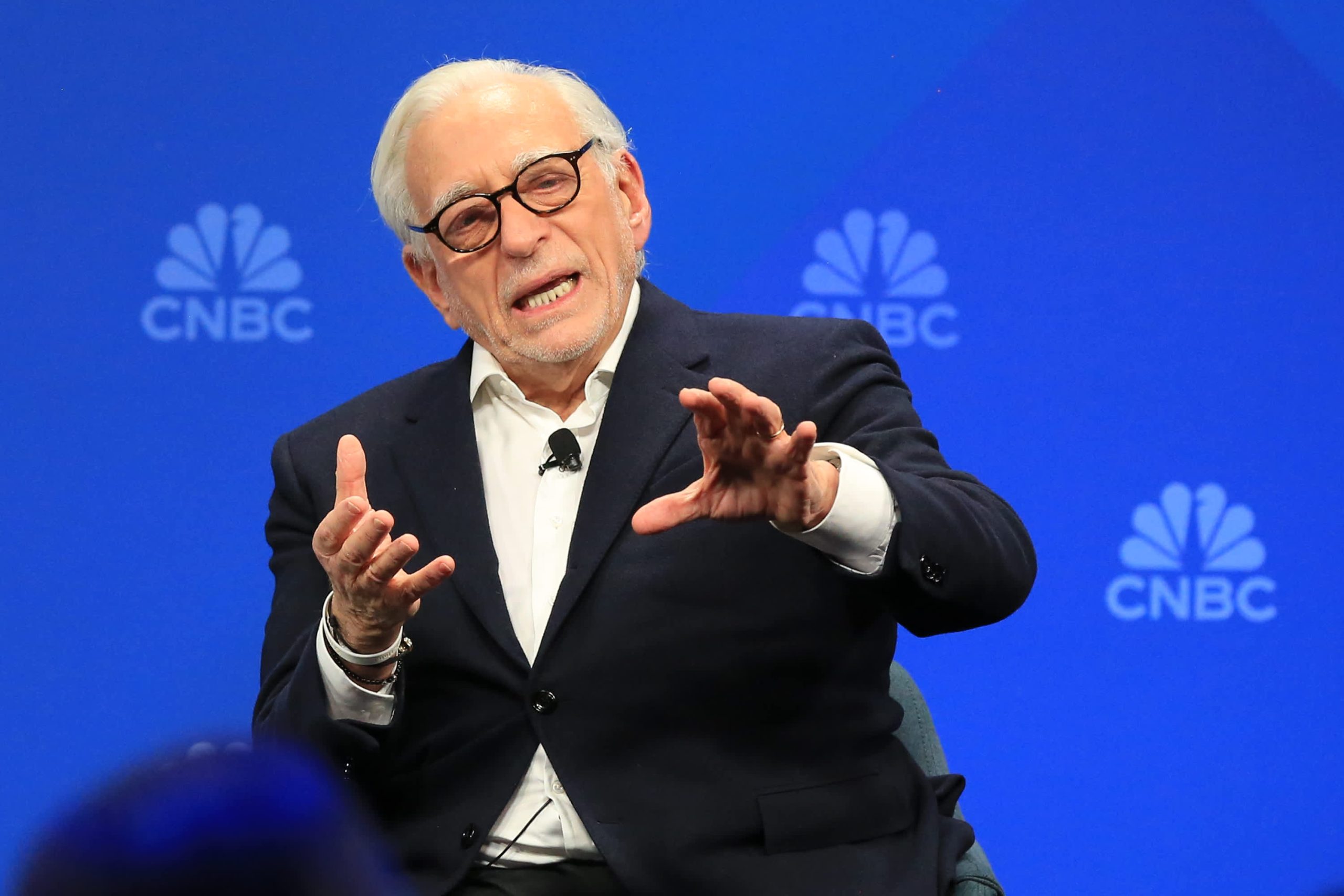
The deal, which is slated for completion in mid-2026, represents the culmination of a multi-year strategic involvement by Trian Fund Management. Nelson Peltz’s firm first initiated a position in Janus Henderson in late 2020, positioning itself as an activist investor seeking to unlock value within the Anglo-American asset manager. Since Trian’s initial entry, Janus Henderson’s stock price has effectively doubled, a testament to the operational adjustments and strategic refocusing encouraged by Peltz and his team, who currently hold two seats on the company’s board of directors. By moving from a significant minority stakeholder to a primary owner alongside General Catalyst, Trian is signaling a deep conviction in the long-term viability of active management when paired with aggressive technological modernization.
The involvement of General Catalyst adds a distinct dimension to the acquisition. While Trian brings the traditional "activist" playbook and deep knowledge of financial services restructuring, General Catalyst provides a bridge to the technology sector. In an era where artificial intelligence, big data, and algorithmic trading are redefining the competitive moat of investment firms, General Catalyst’s expertise in scaling tech-driven enterprises is expected to be a cornerstone of the new Janus Henderson. CEO Ali Dibadj noted that the partnership would allow the firm to "further invest in our product offering, client services, technology, and talent to accelerate our growth," a sentiment echoed by Nelson Peltz, who emphasized the "growing opportunity to accelerate investment in people and technology" away from the scrutiny of public quarterly reporting.
The broader economic backdrop of this acquisition is one defined by intense pressure on mid-tier asset managers. For over a decade, the industry has been bifurcated: on one side, behemoths like BlackRock and Vanguard have captured trillions in inflows through low-cost passive index funds; on the other, boutique firms have survived by offering highly specialized, niche strategies. Firms like Janus Henderson, which was formed through the 2017 merger of the U.S.-based Janus Capital Group and the U.K.-based Henderson Group, have often found themselves caught in the "squeezed middle." These firms must maintain global infrastructures and diverse product lines while facing the same downward pressure on management fees as their larger competitors. By taking the company private, Trian and General Catalyst are betting that Janus Henderson can more effectively pivot its business model without the volatility of the public markets.
Market analysts suggest that the $7.4 billion valuation reflects a calculated bet on the recovery of active management. While passive funds have dominated the narrative, the return of market volatility and higher interest rates has created an environment where "alpha"—the ability to outperform a benchmark—is once again in high demand. Janus Henderson, which manages over $350 billion in assets across equities, fixed income, and multi-asset strategies, possesses a global distribution network that is highly attractive to private equity and venture capital investors looking to deploy capital in the financial services space. The acquisition price of $49 per share implies a forward-looking confidence that the firm’s underlying portfolio management talent can be retained and leveraged more efficiently under a private governance structure.
The 2026 closing timeline is notably extended, suggesting a complex regulatory approval process across multiple jurisdictions. Janus Henderson is a truly global entity, with major hubs in Denver and London, and a dual listing on the New York Stock Exchange and the Australian Securities Exchange. Regulators in the United States, the United Kingdom, and Australia will likely scrutinize the deal to ensure that fiduciary responsibilities to the firm’s diverse client base—which includes pension funds, sovereign wealth funds, and retail investors—are maintained. Furthermore, the transition period will allow the new owners to begin the groundwork for integrating General Catalyst’s technological stack into Janus Henderson’s existing operations, potentially streamlining back-office functions and enhancing the digital experience for institutional clients.
From a macroeconomic perspective, this deal highlights a significant trend in the "private-for-longer" movement. Increasingly, mature companies in the financial sector are finding that the costs of being a public company—ranging from regulatory compliance to the pressure for short-term earnings growth—outweigh the benefits of access to public equity markets. In the case of Janus Henderson, the private ownership model allows for a more aggressive reinvestment of cash flows into proprietary technology and the recruitment of top-tier portfolio managers who might otherwise be lured away by hedge funds or private credit shops. The "war for talent" remains a critical variable in the asset management industry, and the ability to offer equity incentives in a privately held, growth-oriented entity could give Janus Henderson a competitive edge.
The impact on the workforce is another critical component of the deal. Janus Henderson employs approximately 2,000 people globally. While acquisitions often lead to concerns regarding "synergies" and potential layoffs, the messaging from both Trian and General Catalyst has focused on expansion and talent acquisition. By emphasizing the need to invest in "people," the new owners are attempting to stabilize the firm’s human capital during the transition. For the investment professionals at Janus Henderson, the shift to private ownership may provide a more stable environment to execute long-term investment strategies that do not necessarily align with the ninety-day cycles of Wall Street analysts.
The financial performance of Janus Henderson leading up to this deal has been a story of resilience amidst outflows. Like many active managers, the firm has seen periodic net outflows as investors migrated toward cheaper ETFs. However, under CEO Ali Dibadj, who took the helm in 2022, the firm has focused on diversifying its revenue streams, including a push into the burgeoning world of active ETFs and private credit. The Trian and General Catalyst acquisition is seen by many as a validation of Dibadj’s strategic direction, providing the "dry powder" necessary to scale these initiatives faster than would be possible as a dividend-paying public company.
As the industry looks toward 2026, the Janus Henderson deal may serve as a blueprint for other mid-sized managers. If the combination of activist financial discipline and venture-backed technological innovation proves successful, it could trigger a wave of similar take-private transactions. Competitors such as Invesco, Franklin Templeton, and Schroders will undoubtedly be watching the integration process closely. The success of this $7.4 billion gamble will ultimately be measured not just by the premium paid to today’s shareholders, but by the firm’s ability to reclaim its position as a dominant force in a global market that is increasingly defined by scale, technology, and the relentless pursuit of superior investment returns.
For the broader investment community, the deal underscores the shifting nature of capital. The lines between private equity, venture capital, and traditional asset management are blurring. When a firm like General Catalyst, typically associated with early-stage tech disruption, joins forces with an activist like Trian to buy a traditional asset manager, it signals that the future of finance lies at the intersection of capital and code. As Janus Henderson prepares to delist and enter this new chapter, the financial world awaits to see if this hybrid ownership model can indeed accelerate growth in a sector that has been desperate for a new narrative. For now, the 3% uptick in share price following the announcement suggests that the market views this not as an exit, but as a necessary evolution for one of the industry’s most recognizable names.