

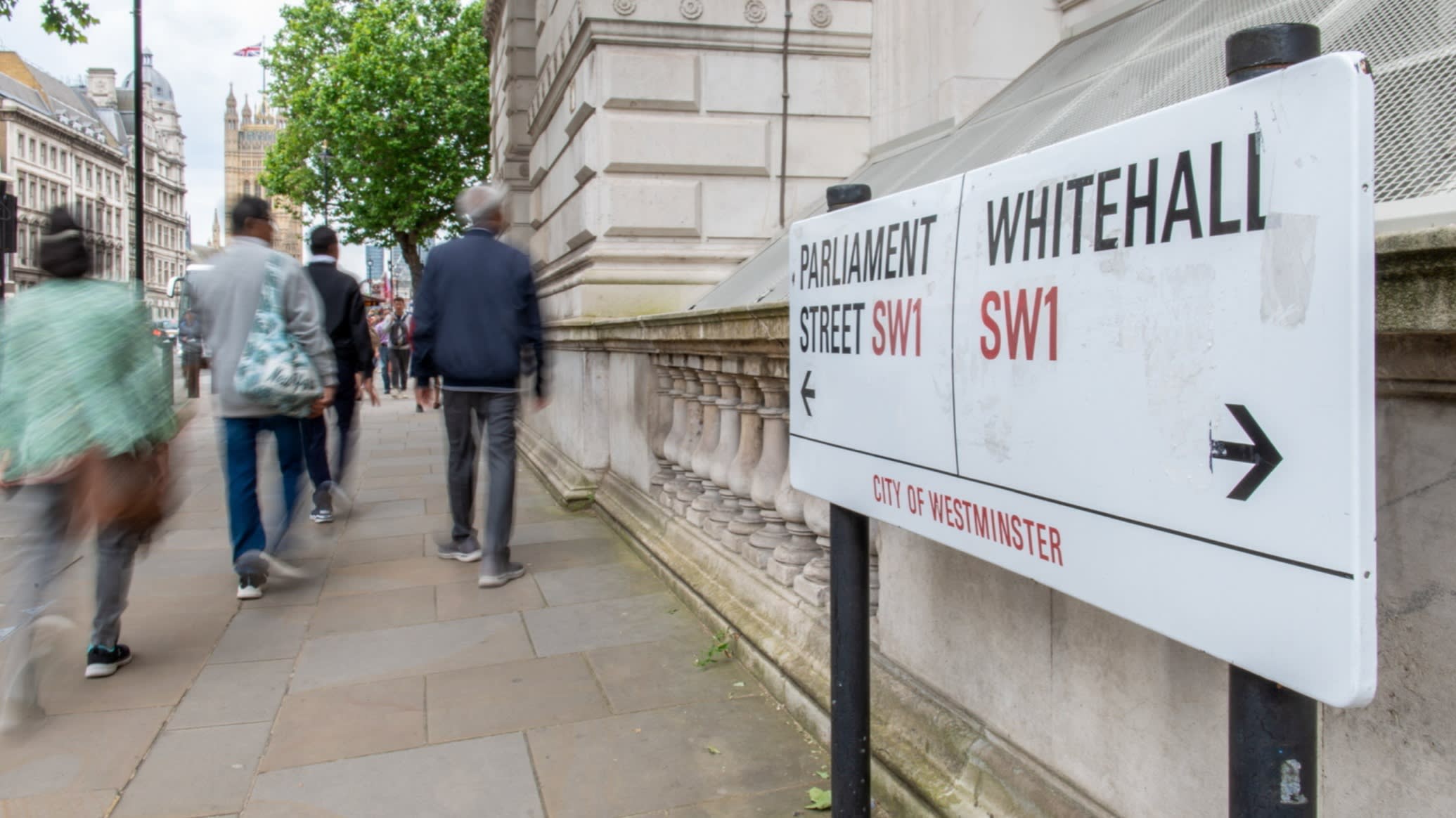
For years, the halls of Whitehall have echoed with the rhetoric of "efficiency drives," "digital transformation," and the urgent need to "rewire the state." Successive British administrations have entered Downing Street with the explicit goal of trimming the size of the civil service, arguing that a leaner, more agile workforce is essential for modern governance and fiscal responsibility. Yet, despite these repeated pledges to return headcount to pre-pandemic levels or to match the leaner profiles of the mid-2010s, the UK civil service has demonstrated a remarkable capacity for growth. Recent data reveals that the number of full-time equivalent employees has reached its highest level in over a decade, creating a profound tension between political ambition and administrative reality.
This expansion comes at a precarious moment for the British economy. With the Treasury grappling with a significant fiscal "black hole," high debt-to-GDP ratios, and stagnant productivity across the public sector, the rising cost of the state’s human infrastructure has become a central point of contention. The dilemma is no longer just a matter of political ideology; it is a fundamental question of how a modern middle power manages its obligations in an era of permanent crisis management, from the lingering complexities of Brexit to the mounting pressures on the healthcare and immigration systems.
The trajectory of the civil service over the last eight years tells a story of a state that has found it impossible to shrink. Following the 2016 Brexit referendum, the machinery of government had to be fundamentally rebuilt. Functions that were previously managed by the European Union—ranging from international trade negotiations and agricultural subsidies to chemical regulation and aviation safety—had to be repatriated to London. This necessitated the creation of entire new departments and the hiring of thousands of specialists. While the "Brexit dividend" was promised as a reduction in red tape, the administrative reality was the opposite: a massive increase in the domestic regulatory and policy apparatus.
This structural growth was further accelerated by the COVID-19 pandemic. The global health crisis required an unprecedented expansion of the state’s reach, from the administration of the furlough scheme and the procurement of personal protective equipment to the establishment of the Test and Trace program. During this period, the civil service was lauded for its ability to scale up rapidly under pressure. However, as the emergency receded, the expected "scale-down" failed to materialize. Instead, the temporary surge in headcount became baked into the departmental baselines, a phenomenon economists often describe as the "ratchet effect," where public spending and staffing levels rise during crises but rarely return to their previous levels once the crisis subsides.
Economically, the continued growth of the civil service raises serious concerns regarding public sector productivity. According to the Office for National Statistics (ONS), public sector productivity has remained largely flat or has even declined in certain areas over the past several years, failing to keep pace with the private sector. When a workforce grows while its output remains stagnant, the unit cost of public services inevitably rises. For the British taxpayer, this means paying more for a state that does not necessarily deliver faster or better results. The "rewiring" promised by politicians was intended to solve this through technology and AI, yet the implementation of these tools has been hampered by aging "legacy" IT systems and a lack of high-level digital skills within the permanent bureaucracy.
The fiscal implications are equally stark. The civil service pay bill now accounts for a significant portion of departmental spending. As the government seeks to balance the books, the rising headcount puts immense pressure on other areas of public expenditure, such as capital investment in infrastructure or R&D. Furthermore, the reliance on a large permanent workforce is often supplemented by a shadow workforce of external consultants. Critics point out that when governments attempt to freeze hiring to meet political targets, departments often bypass these restrictions by hiring expensive outside contractors to fill the gaps, often at double or triple the cost of a salaried civil servant. This "consultancy trap" suggests that the size of the state is not just a headcount issue, but a functional one: the government simply has more work to do than its current structures can handle efficiently.
A comparative look at global peers provides further context. While the UK’s public sector as a percentage of total employment is roughly in line with the OECD average—higher than the United States but significantly lower than Nordic countries or France—it is the rate of growth that distinguishes the British experience in recent years. In many European nations, the focus has shifted toward "digital-first" government models that proactively reduce the need for manual processing. In contrast, the UK has seen significant growth in "operational" roles, particularly within the Home Office and the Ministry of Justice. The backlog in asylum processing and the crisis within the prison and courts systems have forced the government to hire more staff simply to prevent the system from seizing up entirely.
The political challenge of "rewiring the state" is compounded by the changing nature of governance. Modern voters demand more from their government than they did forty years ago. There is an expectation of rapid response to social issues, comprehensive environmental regulation, and sophisticated cybersecurity. Each of these demands requires a specialized workforce. When a government pledges to cut 60,000 or 70,000 jobs—as was proposed under the previous Conservative administration—it often finds that such cuts are impossible to achieve without withdrawing from specific services that the public values.
Expert analysts suggest that the failure to reduce the civil service is a symptom of "mission creep" and a lack of prioritization. Governments of all stripes tend to add new responsibilities to the state’s plate without ever removing the old ones. This results in a "zombie bureaucracy" where departments continue to perform tasks and produce reports that no longer serve a clear strategic purpose. To truly rewire the state, experts argue that the government must move beyond simple headcount targets and instead conduct a fundamental audit of what the state should do versus what it can do.
The role of Artificial Intelligence is often cited as the ultimate solution to the headcount dilemma. Proponents of a smaller state argue that generative AI and automation could replace tens of thousands of administrative roles, particularly in data entry, basic policy research, and citizen inquiries. However, the transition to an AI-driven civil service requires significant upfront investment and a cultural shift that has yet to take hold. There is also the risk that AI will not reduce headcount but rather shift the requirement toward more expensive, highly-skilled technical roles, thereby increasing the total wage bill even if the number of bodies decreases.
As the new Labour government settles into power, the rhetoric has shifted toward "mission-driven" government. While this approach emphasizes outcomes over processes, it does not necessarily signal a smaller civil service. In fact, many of the proposed missions—such as the transition to clean energy or the overhaul of the social care system—will require immense administrative capacity and specialized expertise. The challenge for the current leadership will be to prove that they can achieve these goals without allowing the bureaucracy to swell further, potentially by utilizing the "invest-to-save" model where smarter spending today leads to a more efficient state tomorrow.
In conclusion, the continued growth of the UK civil service represents a significant gap between political narrative and administrative reality. The state has become a massive, complex machine that is increasingly difficult to shrink, driven by the structural demands of Brexit, the institutional legacy of the pandemic, and the rising expectations of a modern society. Unless there is a fundamental shift in how the government prioritizes its functions and integrates technology, the "rewiring of the state" will remain an elusive goal. For the time being, the British civil service remains an expanding entity, challenging the economic assumptions of those who believe that a modern government can do more with less. The coming decade will determine whether the UK can finally break the cycle of growth or if a large, permanent bureaucracy is simply the price of governing in the 21st century.