

For the better part of a decade, the Chinese electric vehicle (EV) sector has functioned as the primary engine of the global automotive transition, fueled by aggressive state subsidies, a burgeoning middle class, and a regulatory environment that prioritized "New Energy Vehicles" (NEVs) above all else. However, as the industry hurtles toward 2026, the narrative of an unstoppable boom is being replaced by a more sobering reality. The Chinese market is transitioning into a mature, hyper-competitive, and increasingly saturated landscape where the "gold rush" mentality has given way to a brutal war of attrition. Recent data suggests that the era of easy double-digit growth is ending, replaced by a survival test that will likely leave only a handful of dominant players standing.
The cooling of the world’s largest EV market became palpably evident in the final months of 2025. While China remains the global leader in sheer volume, the momentum that once seemed impervious to economic headwinds is beginning to fracture. According to the China Passenger Car Association (CPCA), even the industry’s most established titans are feeling the chill. Tesla, once the undisputed benchmark for EV desirability in China, saw its sales contract by 7.4% year-on-year between January and November. Perhaps more shocking was the performance of BYD, the domestic champion that recently overtook Tesla in global volume. BYD reported a 5.1% decline in sales over the same period, with its November passenger car sales plummeting by a staggering 26.5% compared to the previous year.
This contraction at the top of the food chain is not merely a sign of a slowing economy; it is a symptom of a market that has reached a tipping point. NEV penetration in China hit 59.4% of all new passenger car sales in late 2025, a milestone that indicates the industry is moving past the "early adopter" phase and into the "mass market" phase where growth is naturally harder to sustain. As the pool of first-time buyers shrinks, manufacturers are forced to compete for replacement buyers and skeptics, all while navigating a domestic economy grappling with a prolonged property crisis and cautious consumer spending.
The result of this saturation is a price war of unprecedented scale and duration. What began as a tactical move by Tesla in early 2023 to protect market share has evolved into a permanent feature of the Chinese automotive landscape. Discounts are no longer measured in small percentages but in life-altering sums of money. For instance, the Mercedes-Benz EQS EV has seen price cuts as high as 432,000 yuan (approximately $61,660), while Volvo’s XC70 has faced reductions of 147,000 yuan. These are not merely seasonal sales; they are reflections of a desperate need to clear inventory in a market where supply vastly outstrips demand. Analysts at UBS anticipate that this pricing pressure will persist for years, fundamentally altering the profitability profiles of even the most efficient manufacturers.

As the price war intensifies, the market is undergoing a rapid and ruthless consolidation. Just three years ago, the top ten manufacturers in China accounted for roughly 60% to 70% of the NEV market. Today, that figure has surged to approximately 95%. This concentration of power suggests that the window of opportunity for smaller players and "zombie" brands is closing. Experts at Citic CLSA point out that brand recognition has become a primary survival trait; in an environment where a vehicle represents a significant financial commitment, consumers are increasingly unwilling to risk purchasing from a startup that might not exist in two years to provide servicing or software updates.
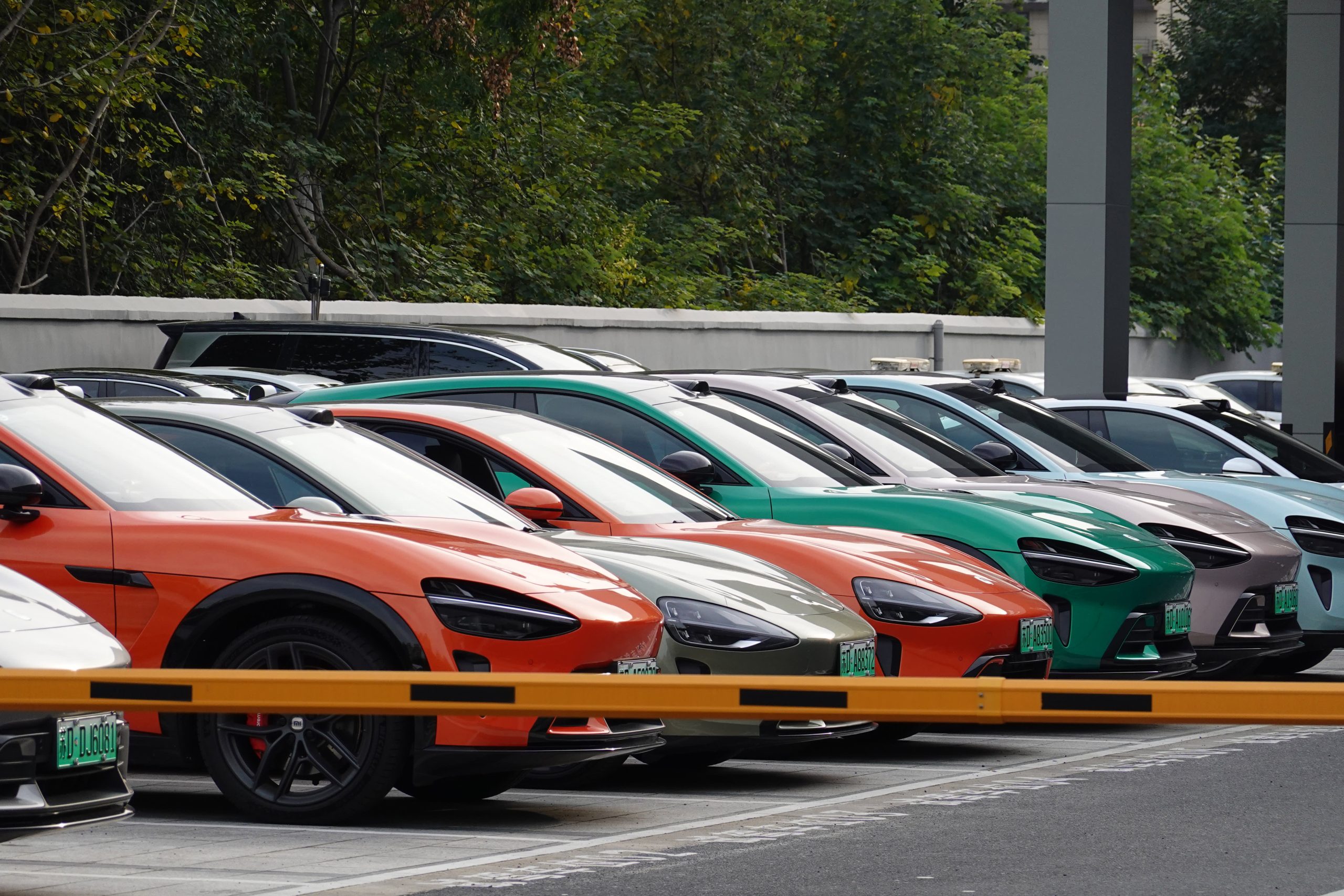
Interestingly, this consolidation is not just favoring the "old guard" of the EV world. While traditional startups like Nio, Xpeng, and Li Auto—once the "Big Three" of Chinese EV innovation—struggle to maintain their positions in the top ten monthly sales charts, a new breed of competitor is emerging from the technology sector. Companies like Xiaomi and those utilizing Huawei’s sophisticated software stacks are seeing explosive growth, with some recording sales increases of more than 90%. These tech-centric players are redefining the car as a "smartphone on wheels," leveraging their existing ecosystems and massive brand loyalty to disrupt the established order. This shift underscores a critical evolution in the 2026 survival test: it is no longer enough to build a reliable electric car; one must now build a superior digital experience.
The domestic environment is further complicated by shifting government policies. For years, the Chinese government provided the "carrots" of subsidies and tax exemptions to stimulate demand. However, as the market matures, Beijing is pivoting toward a more sustainable, if more painful, fiscal stance. The planned re-imposition of purchase taxes and the scaling back of trade-in subsidies are expected to act as a significant drag on growth. UBS predicts that the growth rate of China’s EV sales could halve in the coming year, falling from the robust 20% seen in 2025 to a much more modest figure as the fiscal stimulus fades.
Faced with a saturated and low-margin market at home, Chinese automakers are looking to the horizon. The "Great Escape" into international markets has become a strategic necessity rather than a secondary ambition. Geely, which currently ranks second only to BYD in domestic NEV sales, has seen its electric car exports quadruple recently, reaching nearly 90 countries. Similarly, BYD is aggressively localizing production to bypass growing trade barriers, with a major manufacturing hub in Hungary slated to ramp up in 2026. This global expansion is a double-edged sword; while it offers higher profit margins than the cutthroat Chinese domestic market, it also brings Chinese firms into direct conflict with Western regulators and legacy automakers in their home territories.
The arrival of Chinese EVs in Europe and Southeast Asia is forcing a reckoning for the global automotive industry. Firms like Sino Auto Insights suggest that the competition is no longer just about price but about the speed of innovation. Chinese manufacturers have shortened vehicle development cycles to as little as 18 to 24 months, roughly half the time required by traditional European or American automakers. This "China Speed" is the new benchmark for survival in the global area.

Despite the domestic turmoil, foreign automakers are not ready to concede the Chinese market. The sheer scale of China—where Volkswagen still delivers over 17 million vehicles annually, significantly more than its Western European volume—makes it too important to abandon. The strategy for foreign giants like Volkswagen and General Motors has shifted from importing global models to "localizing" their entire R&D and supply chain within China. Volkswagen’s massive research center in Hefei is a testament to this, allowing the German giant to develop and validate products entirely within the Chinese ecosystem for the first time. This "In China, for China" approach is a recognition that the only way to survive the 2026 shakeout is to compete on the same terms, and at the same speed, as the domestic disruptors.
General Motors and Ford are also leveraging their Chinese operations as export hubs, utilizing the country’s superior battery supply chain and manufacturing efficiency to serve other global markets. This dual-track strategy—competing for the Chinese consumer while using China as a springboard for global sales—represents the complex reality of the modern automotive industry.
As 2026 approaches, the Chinese EV market stands at a crossroads. The exuberance of the boom years has been replaced by a clinical focus on scale, software, and international expansion. For the manufacturers that survive this period of consolidation, the reward will be a dominant position in the future of global mobility. For those that fail to adapt to the new reality of lower growth and higher competition, the 2026 survival test will be their final chapter. In this hyper-dynamic environment, being on top one month is no guarantee of security; the next quarter could easily find a former leader playing catch-up in a market that never stops moving.