

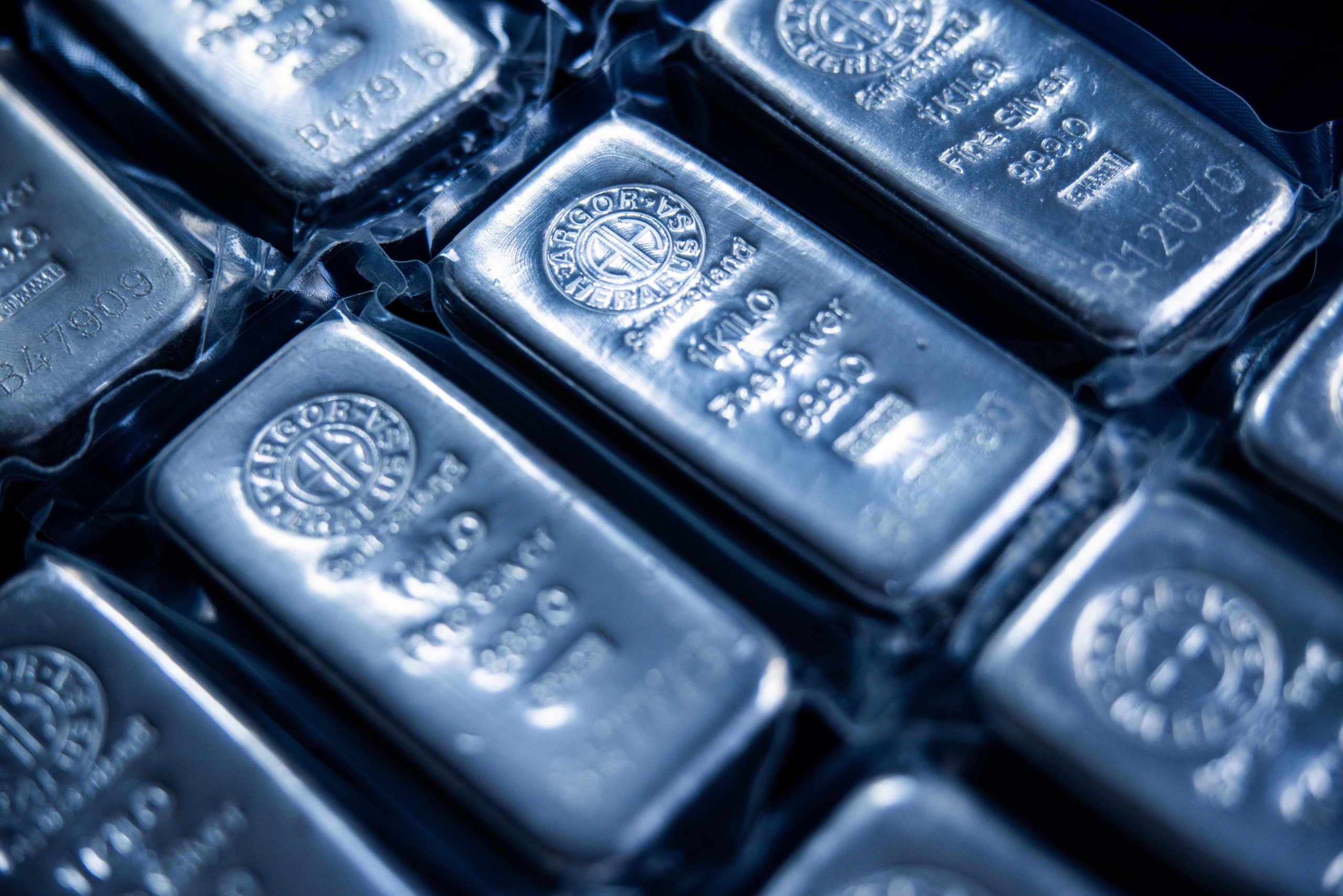
The global commodities market witnessed a landmark moment in the overnight trading session as silver prices breached the psychological and historical ceiling of $80 per ounce, marking a culmination of one of the most aggressive rallies in the history of precious metals. However, the euphoria was short-lived. Almost as soon as the $80 barrier was shattered, the metal staged a dramatic and swift reversal, sliding more than 3% to trade near $75.41 per ounce. This high-octane volatility underscores the current tug-of-war between fundamental industrial demand and the speculative fever that has gripped the precious metals sector throughout the early months of 2025.
Despite the sharp intraday pullback, silver’s trajectory remains nothing short of extraordinary. Beginning the year at a modest $20 per ounce, the metal has appreciated by a staggering 155% year-to-date. This performance has significantly outpaced its more expensive cousin, gold, which has also enjoyed a historic run. While gold futures recently climbed above the $4,550 mark—a gain of approximately 70% for the year—silver’s triple-digit percentage increase highlights its unique position as both a monetary safe haven and a critical industrial feedstock. The current market environment has created a "perfect storm" for silver, though the recent $80 rejection suggests that investors are beginning to question how much further this vertical ascent can be sustained without a period of consolidation.
The primary catalyst behind silver’s meteoric rise is its dual identity. Unlike gold, which is primarily held as a reserve asset and jewelry, silver is an indispensable component in the modern industrial economy. The global transition toward renewable energy has placed silver at the center of the "green revolution." Silver is the most electrically conductive of all metals, making it an essential material for the production of photovoltaic (PV) cells. As solar capacity installations accelerate globally—particularly in China, the United States, and the European Union—demand for silver paste used in solar panels has reached record highs. Market analysts point out that newer generations of solar cells, such as N-type TOPCon and HJT cells, require significantly higher loadings of silver than older technologies, further tightening the supply-demand balance.
Beyond the energy sector, the rapid expansion of artificial intelligence and high-performance computing has introduced a new frontier for silver demand. Data centers, which serve as the backbone of the AI boom, rely on silver for high-end electrical contacts and connectors. Similarly, the automotive industry’s shift toward electric vehicles (EVs) has doubled the silver requirements per vehicle compared to traditional internal combustion engine cars. In an EV, silver is used in everything from battery management systems to power steering and infotainment units. With industrial demand now accounting for more than 50% of total global silver consumption, the metal has become a bellwether for the high-tech and green energy sectors.
However, the industrial story is only one half of the equation. The breach of $80 was equally fueled by silver’s traditional role as a "store of value" and a hedge against macroeconomic instability. Throughout 2025, investor anxiety has been stoked by a combination of persistent geopolitical tensions and a deteriorating fiscal outlook in the United States. As the U.S. national deficit continues to balloon, concerns over the long-term purchasing power of the dollar have intensified. Historically, when the U.S. dollar weakens or when inflation expectations rise, capital flows into hard assets. Silver, often referred to as "the poor man’s gold," offers a lower entry point for retail investors, leading to massive inflows into silver-backed Exchange Traded Funds (ETFs) and physical bullion.
The geopolitical landscape has added further fuel to the fire. Ongoing conflicts in Eastern Europe and the Middle East, coupled with shifting trade alliances, have prompted central banks and private investors to diversify away from fiat currencies. While central banks primarily purchase gold for their reserves, the spillover effect on silver is undeniable. The "gold-silver ratio"—a metric used to determine how many ounces of silver it takes to buy one ounce of gold—has been a focal point for traders. With gold trading at $4,550 and silver at $80, the ratio stood at roughly 57:1. This is a significant compression from historical averages that have often exceeded 80:1, suggesting that silver is finally closing the valuation gap that has persisted for years.
The sudden reversal from the $80 peak can be attributed to several technical and psychological factors. In the world of commodities trading, major round numbers like $80 often act as "take-profit" zones for institutional traders and algorithmic systems. After a 155% rally, many market participants were likely sitting on substantial paper gains, and the breach of the all-time high triggered a wave of automated sell orders. Furthermore, the Relative Strength Index (RSI), a technical indicator used to measure the speed and change of price movements, had moved deep into "overbought" territory, signaling that the market was ripe for a correction.
Economic analysts also point to the influence of the U.S. Federal Reserve and the broader interest rate environment. While silver and gold are hedges against uncertainty, they are also non-yielding assets. If the Federal Reserve maintains a "higher-for-longer" stance on interest rates to combat stubborn inflation, the opportunity cost of holding silver increases. Any hint of a more hawkish tone from central bank officials often leads to a temporary strengthening of the U.S. dollar, which puts immediate downward pressure on dollar-denominated commodities like silver. The overnight slide to $75.41 likely reflects a recalibration of these interest rate expectations as traders weigh the likelihood of future rate cuts.
Supply-side constraints are also playing a critical role in the current price environment. For several years, the silver market has been in a structural deficit, with demand consistently outstripping mine supply and recycling. Major silver-producing nations, including Mexico and Peru, have faced operational challenges ranging from labor strikes and environmental regulations to declining ore grades. Because silver is often produced as a byproduct of lead, zinc, and copper mining, its supply is not always responsive to its own price increases. Even with silver at $80, it takes years to bring new mining capacity online, meaning the supply crunch is unlikely to be resolved in the near term.
The impact of $80 silver ripples through the global economy, affecting various industries differently. For the solar industry, rising silver prices represent a significant increase in input costs, potentially slowing the pace of the energy transition if manufacturers cannot find ways to "thrift" or reduce the amount of silver used in each cell. Conversely, for mining companies and nations that export the metal, the price surge provides a massive windfall, boosting corporate earnings and national trade balances.
Looking ahead, the question for investors is whether the $80 mark represents a temporary ceiling or a launchpad for even higher valuations. While the overnight reversal was sharp, the underlying fundamentals of the silver market remain remarkably tight. The Silver Institute and other industry bodies continue to forecast record demand for the foreseeable future, driven by the dual engines of industrial innovation and monetary hedging.
As the dust settles from the overnight volatility, the market’s focus will shift to key support levels. If silver can maintain its footing above the $70 to $72 range, it may build a base for another attempt at the $80 threshold. However, if the correction deepens, it could signal a broader cooling of the speculative fervor that has dominated 2025 thus far. For now, silver remains the standout performer of the year, a metal that has transcended its humble origins to become a vital, and increasingly expensive, pillar of the global financial and industrial system. The journey to $80 may have ended in a retreat, but the forces that propelled it there show no signs of disappearing.