

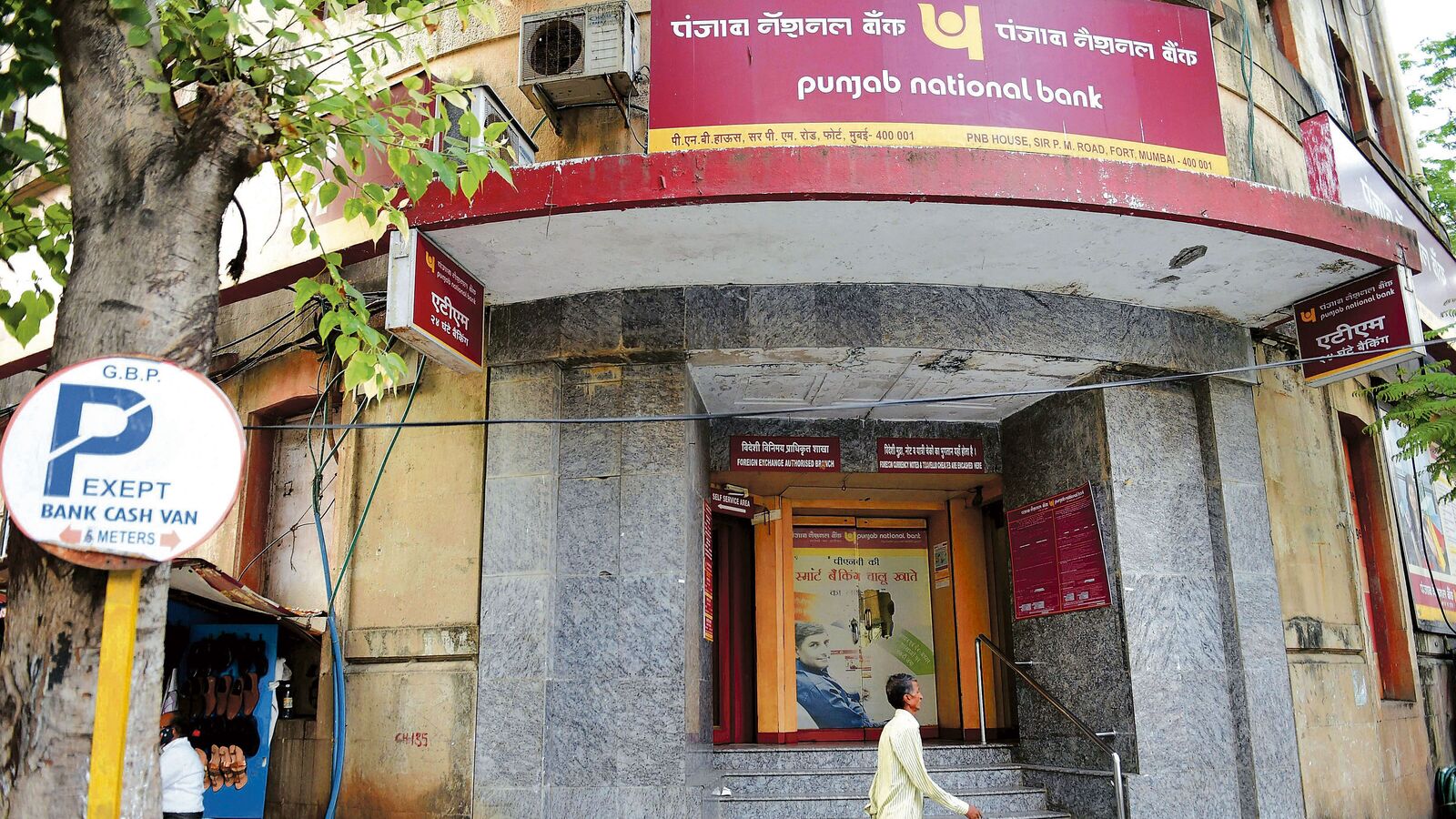
Punjab National Bank (PNB), one of India’s largest public sector lenders, has officially reported a significant borrowal fraud amounting to approximately ₹2,434 crore to the Reserve Bank of India (RBI). This substantial financial irregularity is directly linked to the erstwhile promoters of SREI Equipment Finance Ltd and SREI Infrastructure Finance Ltd, entities that recently underwent a comprehensive resolution process under the Corporate Insolvency Resolution Process (CIRP) overseen by the National Company Law Tribunal (NCLT). The disclosure, made to stock exchanges following market hours on December 26, 2025, casts a renewed spotlight on the intricate challenges of asset quality and corporate governance within India’s financial ecosystem, particularly concerning state-owned banks.
The reported fraud is bifurcated across two distinct loan accounts: a sum of ₹1,241 crore pertains to SREI Equipment Finance Ltd, while the remaining ₹1,193 crore is associated with the loan account of SREI Infrastructure Finance Ltd. PNB has confirmed that it has already made full provisioning for this entire outstanding amount, a standard practice in the banking industry to absorb potential losses from non-performing assets or fraudulent accounts. This proactive provisioning, while necessary, will inevitably impact the bank’s profitability and capital adequacy ratios, even if the ultimate recovery of funds remains a long-term objective. For a bank of PNB’s scale, with a loan book running into trillions of rupees, a ₹2,434 crore fraud represents a notable, albeit not catastrophic, hit, equivalent to roughly 0.2-0.3% of its total advances, depending on the latest quarterly figures. However, its significance lies more in the systemic implications and the ongoing battle against financial malfeasance.
The timing of this revelation, emerging after the successful resolution of the SREI Group under CIRP, is particularly pertinent. SREI Equipment Finance and SREI Infrastructure Finance, once prominent players in India’s infrastructure and equipment financing sector, faced severe financial distress, ultimately leading to their insolvency proceedings. The CIRP mechanism, introduced under India’s Insolvency and Bankruptcy Code (IBC) 2016, is designed not only to resolve corporate defaults but also to provide a framework for forensic audits and the uncovering of financial irregularities that may have contributed to a company’s downfall. It is often during these rigorous investigative phases, when new management or resolution professionals gain access to internal records, that hidden frauds or misrepresentations by previous management come to light. The "erstwhile promoters" aspect indicates that the fraud likely occurred under previous management, with the new entities emerging from the CIRP being distinct from those responsible for the initial misconduct.
This incident also brings to the fore the persistent challenges faced by public sector banks (PSBs) in India, which have historically grappled with higher levels of non-performing assets (NPAs) and susceptibility to large-scale frauds compared to their private sector counterparts. While the Indian banking sector, especially PSBs, has shown remarkable improvement in asset quality over the past few years, driven by robust recovery mechanisms, write-offs, and a strengthening economy, such fraud reports serve as stark reminders of the inherent risks. PNB itself has demonstrated significant progress in managing its asset quality. Its gross NPAs decreased from ₹47,582 crore at the end of September 2024 to ₹40,343 crore by September 2025. This improvement was attributed to a combination of enhanced recoveries, successful upgradation of accounts, and a reduction in fresh slippages, as highlighted in a separate exchange filing on December 15, 2025.

During the first half of fiscal year 2026 (H1FY26), PNB recovered a commendable ₹3,909 crore from NPAs, comprising ₹2,105 crore through cash recoveries and ₹1,804 crore from upgrading accounts to standard status. Furthermore, the bank’s write-offs declined significantly to ₹3,201 crore in H1FY26, down from ₹8,061 crore in H1FY25, indicating better underlying asset health and recovery prospects. Fresh slippages, though still present at ₹3,136 crore in H1FY26, saw a slight reduction from ₹3,159 crore in H1FY25. These figures collectively paint a picture of a bank making concerted efforts to clean up its balance sheet. However, the discovery of a large borrowal fraud, even if linked to past events, underscores that the process of identifying and rectifying legacy issues is ongoing and can present unexpected setbacks.
The implications for PNB extend beyond the immediate financial hit. Investor sentiment, particularly in state-owned entities, is highly sensitive to news of fraud and asset quality concerns. Although PNB shares ended marginally lower by 0.50% at ₹120.35 on the BSE following the announcement, the long-term perception of risk and governance within the bank could be affected. For an institution that has previously been embroiled in high-profile financial scandals, such as the Nirav Modi fraud, maintaining public and investor trust is paramount. The RBI, as the central banking authority and primary regulator, plays a crucial role in overseeing the integrity of the financial system. Reporting such frauds to the RBI is a mandatory step, triggering further scrutiny and potentially leading to investigations into the bank’s internal controls and lending practices that allowed such a situation to develop.
From a broader economic perspective, the continuous uncovering of such frauds, even as the overall NPA situation improves, highlights the need for perpetual vigilance. The Indian government and the RBI have implemented various reforms to strengthen corporate governance, enhance risk management frameworks, and improve fraud detection mechanisms across the banking sector. These include stricter loan origination processes, continuous monitoring of large exposures, the establishment of early warning systems, and forensic audits for stressed assets. The IBC, in particular, has proven to be a powerful tool not just for resolution but also for unearthing malpractices, as evidenced by the SREI case. Globally, regulators are increasingly emphasizing the ‘G’ in ESG (Environmental, Social, and Governance) criteria, with robust governance frameworks being recognized as critical for financial stability and investor confidence.
PNB, with its extensive network of 10,228 domestic branches and two international branches as of September 30, 2025, holds a significant position in India’s financial landscape. Its deep penetration into rural and semi-urban areas (63.3% of its branches) underscores its role in inclusive finance. This wide reach, while beneficial for financial inclusion, also presents unique challenges in oversight and fraud prevention across diverse geographies and client segments. The bank’s ongoing efforts to digitize operations and streamline processes are crucial not only for efficiency but also for enhancing the transparency and traceability of transactions, which are vital in combating sophisticated financial frauds.
Looking ahead, PNB will likely intensify its recovery efforts related to these fraudulent accounts, pursuing all available legal avenues against the implicated parties. The resolution of the SREI entities under CIRP might offer some pathways for recovery through the new entities or through claims against the erstwhile promoters’ assets, though such processes are often protracted. This incident serves as a reinforcement for all Indian banks, especially PSBs, to further fortify their internal controls, enhance due diligence processes, and leverage advanced analytics and artificial intelligence to detect anomalous patterns indicative of fraud. While the sector has made considerable strides in cleaning up its balance sheets, the battle against financial crime and the pursuit of robust asset quality remains a dynamic and ongoing endeavor, requiring continuous adaptation and unwavering commitment from all stakeholders.