

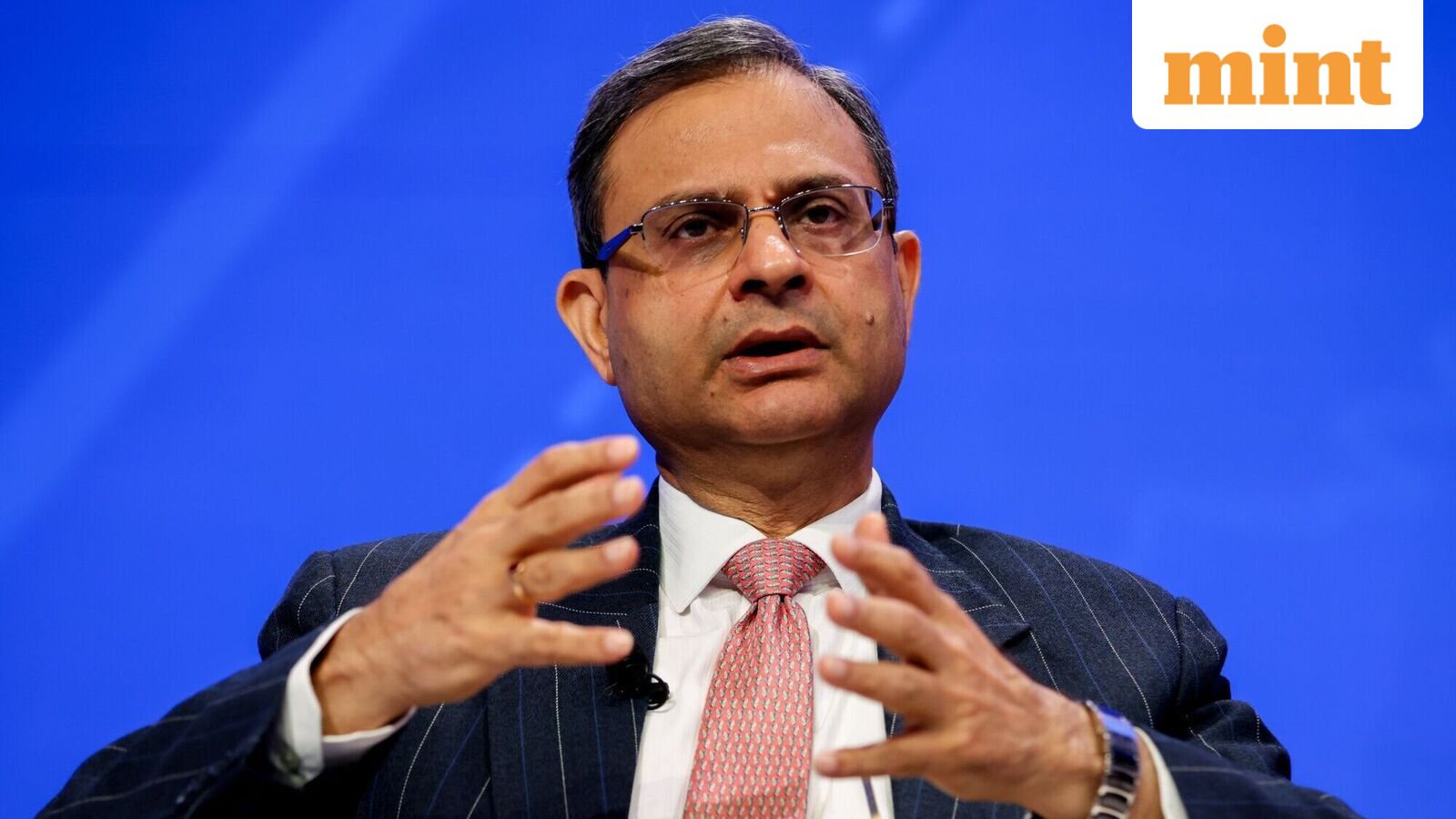
The Reserve Bank of India (RBI) is acutely attuned to the multifarious near-term risks that external forces pose to the Indian economy, affirming its commitment to fortifying robust guardrails designed to buffer against potential global shocks. This proactive stance, articulated by Governor Sanjay Malhotra, underscores a central banking philosophy that prioritizes both stability and growth in a highly interconnected yet increasingly fragmented world. Despite the turbulent international environment, Malhotra conveyed a strong sense of confidence in India’s intrinsic economic and financial resilience, buttressed by consistent growth, manageable inflation, robust balance sheets across financial and non-financial sectors, substantial reserves, and a suite of prudent policy reforms.
The global economic landscape for 2025 has been markedly challenging, shadowed by escalating geopolitical conflicts, persistent trade tensions, and an overarching policy uncertainty that casts a pall over both economic activity and financial markets worldwide. Looking further ahead, the outlook for 2026 and subsequent years remains shrouded in ambiguity, largely due to the fluid and untested nature of evolving policies that are fundamentally reshaping global economic dynamics. These complex international headwinds present a formidable cluster of risks for the Indian economy, as detailed in the central bank’s half-yearly financial stability report. Foremost among these are external uncertainties, particularly the potential for further escalation in geopolitical and trade tensions, alongside a widening trend of geoeconomic fragmentation.
Such developments carry significant implications, potentially triggering heightened volatility in exchange rates, a deceleration in global trade volumes, a compression of corporate earnings, and a noticeable slowdown in foreign direct investment inflows. The impact of these global currents was starkly evident in the performance of the Indian Rupee in 2025. Having commenced the year at 85.65 levels against the US dollar, the currency experienced a depreciation exceeding 6% over the year, positioning it as the worst-performing currency across Asia, according to comprehensive data analysis. This significant weakening was attributed to several factors, including a deterioration in India’s terms of trade, largely stemming from the imposition of tariffs, and a concurrent slowdown in capital flows.
A critical contributing factor to this currency depreciation was the implementation of a 50% tariff by then-US President Donald Trump on Indian goods destined for the American market. This protectionist measure significantly altered trade dynamics, effectively making India’s goods more expensive and less competitive in a crucial export market. The RBI report highlighted that the effective US tariff rate on India was notably higher compared to its other trading partners, a disparity that exerted considerable downward pressure on the Rupee, even amidst a broad weakening of the US dollar against other major global and Asian currencies. Furthermore, the exchange rate exhibited a wider trading range, contributing to increased volatility, with currency derivatives markets indicating a likelihood of sustained volatility as trade tensions continue to weigh heavily on market sentiments.
Adding to the pressure on the Rupee and the broader financial markets was a steady and substantial selling spree by foreign portfolio investors (FPIs). Data from the National Securities Depository Limited (NSDL) revealed that overseas investors were net sellers of Indian equities to the tune of $18.9 billion in 2025, a dramatic reversal from their position as net buyers of $124 million in 2024. This significant outflow of capital reflects a shift in investor sentiment, potentially driven by factors such as rising interest rates in developed economies, heightened global risk aversion, or reassessments of emerging market valuations. The central bank also cautioned against the systemic risk posed by a sudden and sharp correction in US equity markets. Such an event, it warned, could trigger a cascading effect, leading to a correction in domestic equities, eroding investor confidence and wealth, prompting further foreign portfolio outflows, and tightening domestic financial conditions.
The Indian equity markets themselves experienced a period of modest performance in 2025, particularly when compared to their emerging market peers, following a remarkable five-year period of outperformance since 2020. This moderation was attributed to a confluence of factors: tepid corporate earnings growth against a backdrop of relatively slow nominal Gross Domestic Product (GDP) expansion, elevated market valuations suggesting a limited upside, sustained FPI outflows, the adverse outcomes of tariff impositions, and the aforementioned depreciation of the Rupee. These elements collectively created a challenging environment for equity investors, underscoring the interconnectedness of global trade, capital flows, and domestic market sentiment.
Despite these significant headwinds and risks, the RBI report affirmed that the Indian economy and its financial system possess adequate buffers to withstand potential shocks. These resilience pillars include robust domestic growth drivers, which continue to provide a foundational strength against external vulnerabilities. India’s sizeable foreign exchange reserves, currently standing well over $600 billion, serve as a crucial buffer, offering stability for the currency, managing import cover, and instilling confidence in international markets. Furthermore, the financial and corporate sectors maintain sufficient capital and liquidity buffers, a testament to years of prudential regulation and improved balance sheet health post-global financial crisis and pandemic-related stress.
Beyond immediate risk management, Governor Malhotra emphasized the critical imperative of balancing pragmatic regulation and supervision with the simultaneous fostering of innovation, promoting economic growth, and ensuring robust consumer protection. He reiterated that maintaining financial stability and continuously strengthening the financial system remains the central bank’s paramount objective, its "north star." However, Malhotra clarified that financial stability is not an end in itself but rather a foundational element. These objectives are, in his view, mutually reinforcing and indispensable for enhancing productivity and driving long-term economic expansion. The most profound contribution policymakers can make, he argued, is to cultivate a financial system that is inherently robust and resilient to shocks, highly efficient in delivering financial services, and actively promotes responsible innovation.
In line with this philosophy, the central bank has embarked on a significant deregulation and simplification drive. In November, it released an impressive set of 244 consolidated master directions, a comprehensive exercise that replaced more than 9,400 disparate circulars and guidelines accumulated over several decades. Deputy Governor Shirish Murmu clarified that this initiative represented a consolidation rather than a fundamental change in regulations. Its primary purpose, he explained, was to eliminate redundancy, resolve conflicts arising from overlapping directives, and ultimately make compliance simpler and more efficient for financial institutions. This streamlining effort is expected to reduce the regulatory burden, enhance transparency, and free up resources for innovation and core business activities.
Concurrently, the RBI has maintained a vigilant eye on specific pockets of vulnerability within the financial system. The central bank highlighted rising stress in the unsecured lending portfolios of private sector banks. While overall asset quality appeared stable in headline terms, the report pointed to persistently high fresh slippages and write-offs, signaling underlying stress that warrants close monitoring. This development follows a period where unsecured retail lending significantly boosted bank credit growth in the years succeeding the COVID-19 pandemic. However, this trend has sharply decelerated after the RBI tightened risk norms for such lending in November 2023, a proactive measure aimed at containing potential build-up of systemic risk.
The December 2024 report had previously flagged concerns regarding higher write-offs in unsecured lending among private sector banks. Within the Non-Banking Financial Company (NBFC) sector, while asset quality showed headline improvement with declining gross non-performing asset (GNPA) ratios in the December 2025 report, the RBI cautioned that fresh accretions to bad loans were on the rise, and write-offs were increasing. This nuanced assessment indicates a gradual build-up of stress within NBFC loan portfolios, necessitating continued regulatory oversight to prevent any broader contagion.
In conclusion, India’s central bank is navigating a complex global economic environment characterized by geopolitical flux, trade protectionism, and capital market volatility. While acknowledging significant external risks that manifest in currency depreciation and capital outflows, the RBI asserts the inherent robustness of the Indian economy, underpinned by strong domestic fundamentals and substantial financial buffers. The central bank’s strategic approach involves a delicate yet crucial balancing act: maintaining unwavering vigilance over financial stability and prudential regulation, while simultaneously championing an environment that fosters innovation, streamlines regulatory processes, and supports sustainable economic growth. This adaptive and forward-looking policy framework is essential for India to not only withstand global headwinds but also to continue building a more resilient, efficient, and dynamic financial ecosystem for the future.