


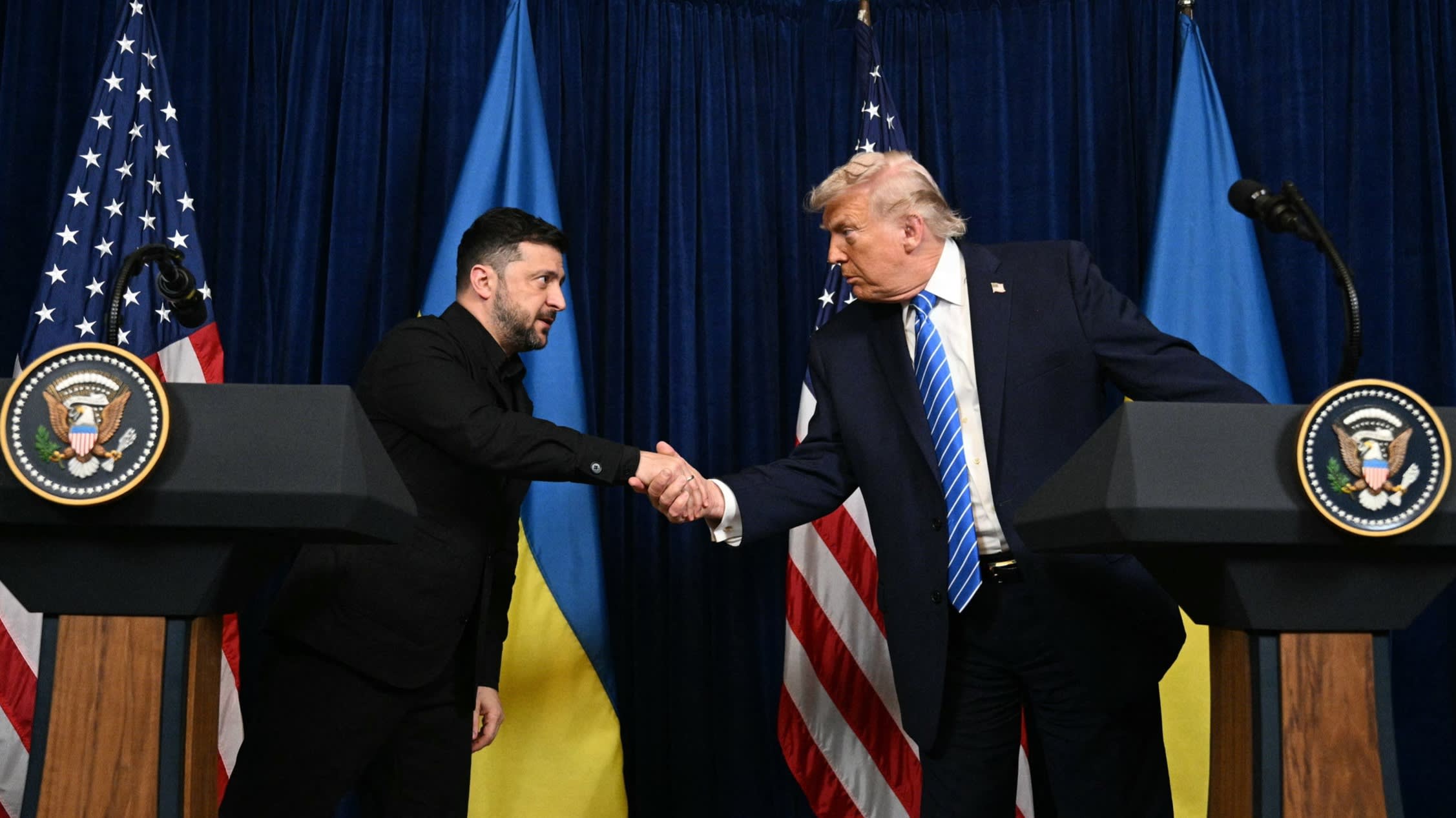
In a move that signals a fundamental shift from short-term tactical survival to long-term strategic endurance, Ukrainian President Volodymyr Zelenskyy has formally proposed a 50-year security guarantee from the United States. This ambitious diplomatic overture aims to transcend the volatile cycles of Western electoral politics and establish a multi-generational framework for deterrence against Russian aggression. By requesting a commitment that spans half a century, Kyiv is seeking more than just military hardware; it is attempting to architect a permanent fixture in the global security landscape that mirrors the post-World War II alliances that stabilized Western Europe and East Asia.
The proposal comes at a critical juncture for both Kyiv and Washington. As the conflict enters a grueling phase of attrition, the initial surge of international fervor has met the cold reality of fiscal constraints and domestic political friction in donor nations. For Ukraine, a 50-year pact represents a "security bridge" to eventual NATO membership, providing a legally binding assurance that U.S. support will not evaporate with changes in the White House or shifts in Congressional leadership. From an economic perspective, such an agreement is viewed by the Zelenskyy administration as the ultimate prerequisite for the nation’s massive reconstruction project, estimated by the World Bank and the European Commission to cost upwards of $486 billion over the next decade.
The economic logic underpinning a five-decade security guarantee is rooted in the concept of risk mitigation for private capital. International investors and multi-national corporations are currently hesitant to commit the billions required for infrastructure, energy, and technology projects in Ukraine due to the persistent threat of aerial bombardment and long-term instability. A 50-year U.S. security umbrella would serve as a sovereign guarantee, effectively lowering the insurance premiums for large-scale investments and signaling to global markets that Ukraine is a safe harbor for long-term development. Without such a framework, the "Marshall Plan for Ukraine" risks remaining a theoretical concept rather than a functioning reality.
Comparing this proposal to existing U.S. security architectures reveals the scale of Zelenskyy’s vision. The 1953 Mutual Defense Treaty between the United States and the Republic of Korea, which has endured for over 70 years, serves as the primary historical precedent. That treaty transformed South Korea from a war-torn agrarian society into a global technological and industrial powerhouse. Similarly, the 1960 Treaty of Mutual Cooperation and Security between the U.S. and Japan provided the stability necessary for Japan’s "economic miracle." By asking for 50 years, Ukraine is explicitly modeling its future on the successful integration of security and economic prosperity seen in the Pacific theater during the Cold War.
However, the political hurdles in Washington remain formidable. The U.S. Congress has become increasingly polarized over the scale and duration of foreign aid. While the Biden-Harris administration has reaffirmed its commitment to Ukraine "for as long as it takes," the phrase lacks the legal permanence of a treaty or a multi-decade memorandum of understanding. Critics of the 50-year proposal argue that such a long-term commitment could overextend the U.S. military and tie the hands of future administrations in a rapidly changing global environment. Proponents, conversely, argue that a clear, long-term deterrent is actually more cost-effective than the current piecemeal approach, as it discourages further Russian escalation and prevents a broader, more expensive European conflict.
The impact on the global defense industry and supply chains cannot be overstated. A 50-year security framework would necessitate a permanent "arsenal of democracy" focused on the Eastern Flank. For major U.S. defense contractors like Lockheed Martin, RTX (formerly Raytheon), and General Dynamics, a multi-decade agreement would provide the demand certainty needed to scale up production lines for munitions, air defense systems, and armored vehicles. This industrial expansion has a domestic economic footprint; current data suggests that approximately 90% of the funds authorized for Ukraine security assistance actually remain in the United States, flowing to factories across 40 states and supporting thousands of high-tech manufacturing jobs.
Furthermore, the proposal carries significant implications for global energy and food security. Ukraine remains a linchpin of the global agricultural market, historically providing a substantial portion of the world’s wheat, corn, and sunflower oil. The security of the Black Sea shipping lanes and the protection of inland agricultural infrastructure are vital for stabilizing global food prices, which saw record spikes following the 2022 invasion. On the energy front, Ukraine possesses some of Europe’s largest natural gas storage facilities and significant potential for green hydrogen production. A 50-year security guarantee would allow Ukraine to integrate into the European energy grid as a provider of stability rather than a point of vulnerability, reducing the continent’s lingering dependence on Russian hydrocarbons.
Geopolitically, the 50-year request is a strategic maneuver designed to counter Moscow’s "time-horizon" strategy. The Kremlin’s current military doctrine appears to be predicated on the belief that the West will eventually succumb to "Ukraine fatigue" and that its commitment will wane as domestic economic pressures mount. By locking in a half-century of U.S. support, Kyiv seeks to shatter this calculation, forcing Moscow to realize that its goals cannot be achieved through a war of exhaustion. This "strategic clarity" is intended to alter the cost-benefit analysis of the Russian leadership, potentially creating the conditions for a more durable peace settlement.
The negotiation of such an agreement would likely involve complex "tiered" commitments. This could include annual minimums for military aid, guaranteed intelligence sharing, joint industrial production of weaponry, and a formal mechanism for consultation in the event of future threats. It would also likely include "snapback" provisions or conditions related to Ukraine’s domestic reforms, particularly in the areas of anti-corruption and judicial independence. These conditions are essential for maintaining the bipartisan support required in the U.S. Senate, which would ultimately need to ratify any formal treaty, or for ensuring the longevity of an executive-level agreement.
Within the broader context of European security, a long-term U.S.-Ukraine pact would redefine the roles of other NATO allies. Countries like Poland, the Baltic states, and the United Kingdom have already signaled a willingness to enter into their own long-term bilateral security arrangements with Kyiv. A 50-year U.S. commitment would serve as the cornerstone of this "security architecture," around which other European nations can build their own defense and economic partnerships. This would effectively shift the center of gravity of European security eastward, reflecting the new reality of the continent’s threat landscape.
As the debate over this 50-year proposal intensifies, the international community is watching closely. The outcome will not only determine the future of Ukraine but will also serve as a litmus test for U.S. leadership in the 21st century. In an era defined by the return of great-power competition, the ability of the United States to maintain long-term alliances is its greatest strategic advantage. President Zelenskyy’s call for a half-century guarantee is a challenge to Washington to think beyond the next election cycle and to invest in a vision of stability that could define the next several decades of global history.
The ultimate success of this proposal will depend on whether it is viewed as an open-ended liability or a strategic investment. If the latter view prevails, the 50-year pact could become the foundation of a new era of transatlantic cooperation, transforming Ukraine from a frontline of conflict into a bastion of the democratic and market-oriented world. While the price of such a commitment is high, the cost of an unstable and perpetually threatened Ukraine—both in terms of military risk and global economic disruption—could be significantly higher. By proposing a 50-year horizon, Kyiv is betting that the United States still possesses the strategic patience and economic foresight that built the modern world order.