
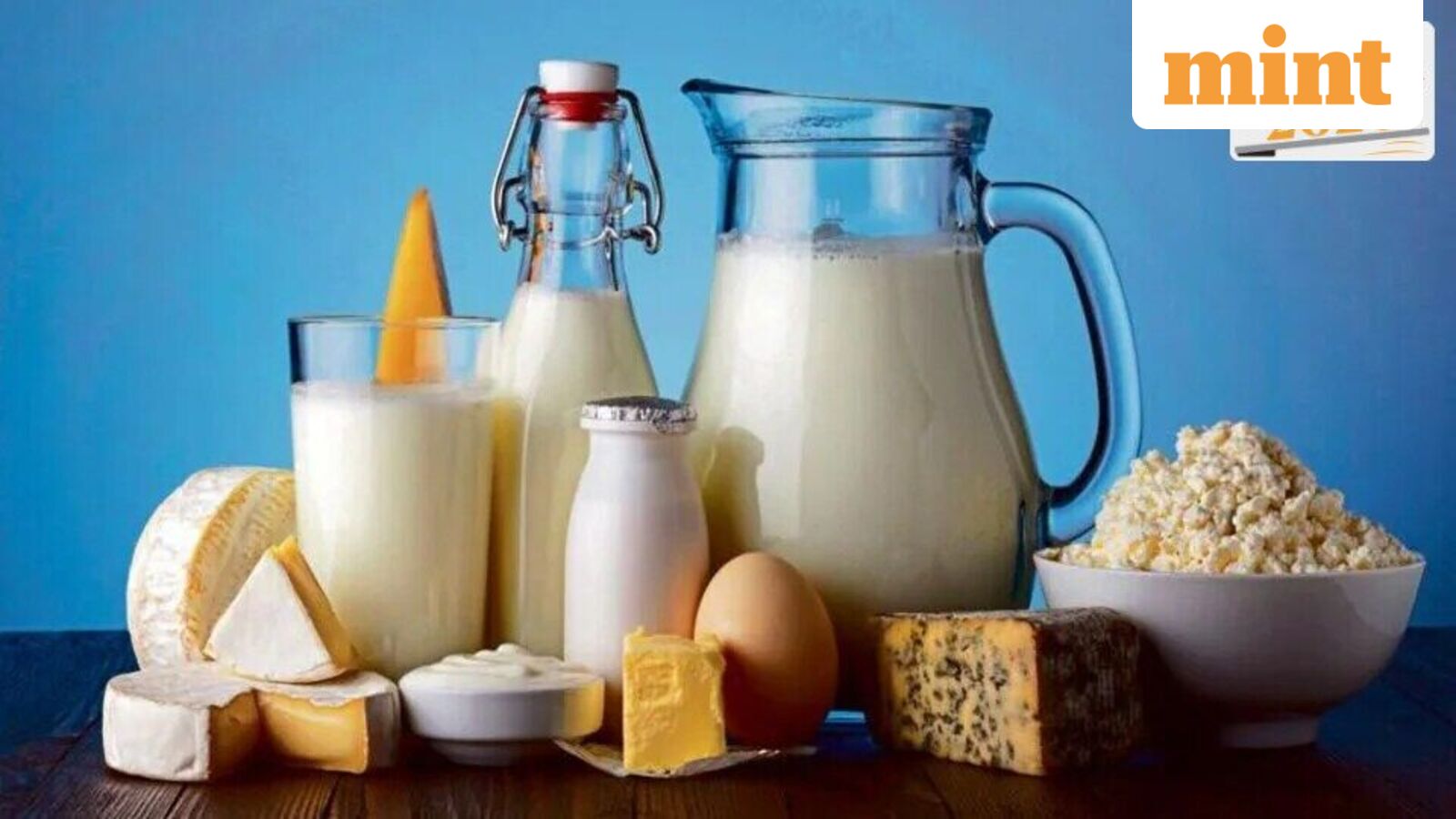
India stands at a critical juncture in its dairy sector, a paradox of immense domestic production juxtaposed against a negligible footprint in the burgeoning global dairy trade. Despite being the world’s largest milk producer, contributing roughly a quarter of the planet’s total output, its share in the international market, valued at over $33 billion in 2024, has remained stubbornly marginal. However, 2026 is emerging as a pivotal year, offering a strategic window for the nation to pivot from a self-sufficient dairy giant to a formidable global exporter, provided systemic challenges in quality, compliance, and market strategy are decisively addressed.
The sheer scale of India’s dairy industry is undeniable. With an estimated milk production of 247.87 million tonnes in FY25, projected to surge to 260 million tonnes in FY26, the country’s capacity to supply is not in question. Projections from the Ministry of Fisheries, Animal Husbandry, and Dairying suggest India’s global milk supply share could reach an astonishing 32% by FY26, solidifying its position as a production behemoth. Yet, this domestic abundance has historically translated into an anemic export performance, capturing a mere 0.25% of global dairy exports, a stark contrast to Oceania’s nearly 30% share from just 4% of world production. This glaring disparity underscores an underleveraged potential that industry analysts are increasingly keen to unlock.
Recent data, however, hints at a nascent shift in this long-standing imbalance. Fiscal Year 2025 witnessed a significant surge in India’s dairy exports, with values escalating to $490 million from $273 million in FY24, representing an impressive 80% year-on-year growth. Export volumes similarly expanded from 63,738 tonnes to over 113,350 tonnes. This upswing, while still modest in absolute terms relative to global trade, signals a potential inflection point. A notable development has been the emergence of India as a player in niche value-added segments, particularly mozzarella cheese. Exports of mozzarella climbed from a negligible base in FY23 to $0.71 million in FY24, reaching $2.29 million in FY25. The momentum continued into the first half of FY26, with shipments between April and September 2025 soaring to $3.29 million, marking a staggering 1,200% year-on-year jump. This foray into higher-value products, coupled with the symbolic entry of Indian dairy cooperative Amul’s homogenized milk into major US retail chains like Costco, underscores a growing ambition to penetrate sophisticated Western markets.
According to Avinash Chandani, a partner at Deloitte India, the genuine opportunity for India lies in scaling its presence in higher-value, processed dairy products. "The focus must shift from raw or low-value outputs to items like ghee, skimmed milk powder (SMP), various cheeses, and whey protein," Chandani asserts, emphasizing that Asia accounts for nearly half of global milk production, with India contributing a significant portion. The current export basket remains concentrated, with ghee and butter constituting nearly three-fifths of total shipments. Diversification into more advanced products such as milk proteins, lactoferrin, infant nutrition ingredients, and functional dairy components is deemed crucial for sustained growth and increased profitability.
Despite the promising recent trends, significant structural impediments persist. The core challenges revolve around enhancing export readiness rather than merely increasing supply. These include a fragmented cold-chain infrastructure, inconsistencies in product quality, a lack of globally recognized branding, and insufficient compliance with stringent international food safety and sanitary standards. Unlike major dairy exporters in the European Union or New Zealand, which benefit from integrated supply chains and sophisticated processing capabilities designed for export, India’s dairy ecosystem has primarily evolved to serve its vast domestic market.

Addressing these constraints requires a multi-pronged strategy. Ajay Kakra, who leads the food and agriculture sector at Forvis Mazars in India, highlights the necessity of prioritizing branding that accentuates Indian dairy specialties, alongside innovations in packaging design and shelf-life extension. Consistent quality assurance, coupled with internationally accepted certifications like ISO, HACCP, and alignment with Codex Alimentarius standards, is paramount. Investment in robust cold-chain logistics is non-negotiable for perishable products to maintain integrity across long supply routes. Furthermore, strategic engagement with target markets for mutual recognition of hygiene standards and comprehensive market research to identify demand niches are essential for sustainable market penetration.
A critical aspect of achieving global competitiveness is establishing end-to-end traceability from farm to port. This is not just a regulatory requirement in many advanced economies but also a consumer expectation, ensuring transparency and trust in the product’s origin and safety. Experts also advocate for strategically positioning buffalo-milk-based products, such as specialized ghee, butter oil, and unique dairy fats, in premium and ethnic segments globally. Buffalo milk, with its higher fat and solids content, offers distinct advantages for certain dairy applications and can carve out a unique identity in a market dominated by cow milk products.
The vision for India’s dairy export future, as articulated by Satyam Shivam Sundaram, a partner in the government and public sector at EY India, involves a transition towards a more premium, competitive, and value-driven dairy economy. This "White Revolution 2.0" necessitates a blend of science-based breeding programs, expanded silage production for improved animal feed, stringent disease control measures, and the implementation of digital traceability platforms across the entire supply chain. Such initiatives would not only enhance productivity and quality but also build the credibility required to access demanding international markets in West Asia, Africa, and Southeast Asia.
Looking ahead to 2026, experts outline two pivotal shifts for India’s dairy export strategy. First, a fundamental transition from a focus on production strength to an emphasis on compliance strength. This entails developing export-grade processing facilities, adhering to rigorous quality and residue standards, building resilient cold chains, and implementing robust traceability systems that meet global benchmarks. Second, a strategic move from scattered exports across numerous countries to building focused corridors in high-growth regions. While India currently ships dairy products to over 130 countries, a more concentrated effort on markets in West Asia, the ASEAN region, and Africa, where demand is rising and cultural affinities for Indian products might be stronger, could yield more substantial and sustainable growth.
The economic implications of a successful dairy export strategy for India are profound. Beyond earning valuable foreign exchange, it promises to significantly boost farmer incomes, particularly for small and marginal dairy farmers who form the backbone of the industry. This uplift in rural livelihoods would contribute to poverty reduction, foster rural economic development, and enhance food security. Moreover, a thriving export sector would stimulate investment in modern processing technologies, cold chain logistics, and research and development, creating new employment opportunities and further integrating India into the global agri-food value chain.
The journey from a domestic dairy powerhouse to a global export leader is arduous, requiring sustained investment, policy support, and a collective commitment from industry stakeholders. However, the recent surge in exports and the growing focus on value-added products indicate that India is now poised to challenge its historical dairy paradox. As 2026 approaches, the objective is clear: not merely to export more milk, but to export compliant milk, trusted brands, and globally acceptable products to strategically targeted markets, thereby unlocking the full potential of India’s white gold on the world stage.