
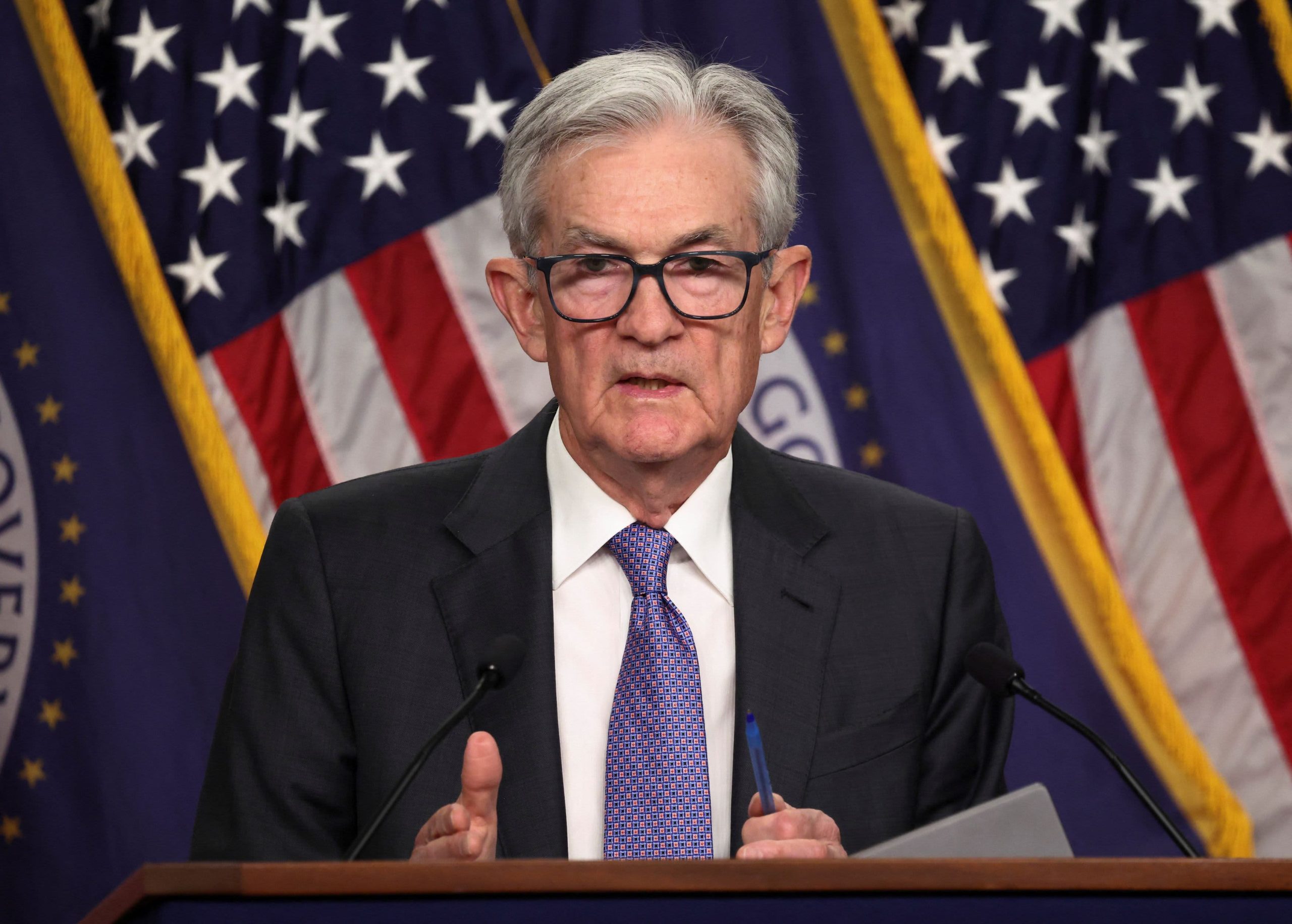
The release of the Federal Open Market Committee (FOMC) minutes from the December 9-10 gathering has unveiled a central bank increasingly at odds with itself, revealing a degree of internal friction not seen in half a decade. While the committee ultimately moved to lower the federal funds rate by 25 basis points to a range of 3.5% to 3.75%, the 9-3 vote marked the highest number of dissents since 2019. This lack of consensus underscores a pivotal moment in American monetary policy, where the dual mandate of price stability and maximum employment is pulling officials in diametrically opposite directions. The summary, released ahead of schedule due to the New Year’s holiday, portrays a committee navigating a "finely balanced" landscape characterized by robust economic growth, a cooling labor market, and an inflation descent that appears to have hit a plateau.
Central to the debate was the concern that the progress toward the Federal Reserve’s 2% inflation target had effectively stalled throughout 2025. For the three dissenters and several others who supported the cut with significant reservations, the persistence of price pressures remains a primary threat. These officials argued that the current economic environment might necessitate a more restrictive stance for a longer duration to ensure that inflation does not become entrenched above the target. The minutes noted that some participants suggested it would be "appropriate to keep the target range unchanged for some time" following the December adjustment, signaling that the era of consecutive rate cuts may be reaching an abrupt intermission.
This internal caution comes despite a domestic economy that, by most traditional metrics, continues to defy expectations of a slowdown. The third quarter of the year saw Gross Domestic Product (GDP) surge at an annualized rate of 4.3%, significantly outperforming analyst projections and building upon a strong second quarter. However, this headline strength is complicated by a "dark period" in economic reporting. A recent government shutdown has left significant gaps in official data, forcing the Fed to operate with a blurred rearview mirror. While the broader economy performs well, the labor market has shown signs of fatigue; hiring has decelerated, even as mass layoffs have yet to materialize. This divergence—strong growth versus slowing recruitment—is the crucible in which the Fed’s current policy is being forged.
The updated Summary of Economic Projections (SEP), including the "dot plot," provides a roadmap for a cautious descent toward what officials call the "neutral rate"—the interest level that neither stimulates nor restricts economic activity. The majority of the 19 officials involved in the projections now envision a slow glide path, with one further cut projected for 2026 and another in 2027. This trajectory aims for a terminal rate of approximately 3%. This long-term outlook reflects a shift from the aggressive "front-loading" of cuts seen earlier in the cycle toward a more deliberate, data-dependent stance.
Adding a layer of complexity to the Fed’s calculus is the evolving fiscal and trade landscape. The minutes explicitly addressed the potential impact of the Trump administration’s proposed tariffs. While Fed officials generally view tariffs as a "one-off" price shock rather than a source of persistent, long-term inflation, they acknowledged that such measures could temporarily buoy inflation figures through 2025. This fiscal uncertainty has heightened the "upside risks" to inflation, providing further ammunition for the more hawkish members of the committee who favor a pause in the easing cycle.
The December meeting also marked a significant technical shift in the Federal Reserve’s management of the financial system’s "plumbing." In a move to stabilize short-term funding markets, the committee voted to resume a bond-buying program, specifically targeting short-term Treasury bills. This initiative, starting at a pace of $40 billion per month, is designed to bolster the level of bank reserves within the system. Officials were keen to clarify that this is not a return to the "Quantitative Easing" (QE) used during the pandemic to stimulate the broad economy; rather, it is a preventative measure to ensure that reserves do not fall below the "ample" threshold required for a smooth-functioning banking sector. Previous efforts to shrink the Fed’s balance sheet had reduced holdings from nearly $9 trillion to roughly $6.6 trillion, and policymakers now believe that further reductions could risk liquidity crunches in the repo markets.
Market participants reacted to the minutes with a mixture of caution and recalibration. While equity markets saw a slight dip following the release, the futures market indicated a marginal increase in the probability of another rate cut in April. However, the prevailing sentiment among traders is that the Fed will likely maintain a "wait-and-see" posture for the first quarter of the new year, particularly as it waits for the data gaps caused by the government shutdown to be filled with more reliable, current figures.
The composition of the FOMC itself is set for a significant transformation that could further embolden the hawkish faction. The annual rotation of regional bank presidents into voting roles will bring four new voices to the table: Beth Hammack of Cleveland, Anna Paulson of Philadelphia, Lorie Logan of Dallas, and Neel Kashkari of Minneapolis. This new cohort is perceived as more skeptical of rapid easing. Hammack has already voiced opposition to previous cuts, and Logan has consistently emphasized the risks of moving too quickly while inflation remains above target. Kashkari’s recent admission that he would have opposed the October cut further suggests that Chairman Jerome Powell may face an even more divided committee in the coming months.
When viewed through a global lens, the Federal Reserve’s predicament is unique. While the European Central Bank (ECB) and the Bank of England (BoE) have also entered easing cycles, they are doing so against a backdrop of much weaker GDP growth and more pronounced fears of recession. In contrast, the U.S. economy’s "exceptionalism"—characterized by robust consumer spending and high productivity—gives the Fed the luxury of time, but also the burden of heightened inflation risk. If the U.S. remains the primary engine of global growth, the Fed may find itself forced to maintain higher rates than its international peers, a dynamic that could continue to put upward pressure on the U.S. dollar and complicate global trade balances.
Expert analysis of the minutes suggests that the "easy" phase of the Fed’s pivot is over. The initial cuts were widely seen as a necessary recalibration as inflation fell from its 2022 peaks. Now, the committee has entered a "restrictive-to-neutral" transition phase where every 25-basis-point move is subject to intense scrutiny. The 9-3 split is a clear signal that the consensus that defined the Powell era is fraying. Policy makers are no longer just debating the timing of cuts, but the very destination of the federal funds rate and whether the "neutral" level is higher than previously estimated in a post-pandemic economy.
As the new year begins, the Federal Reserve finds itself in a state of watchful waiting. With a changing committee, a volatile geopolitical environment, and a domestic economy that continues to send mixed signals, the path to a "soft landing" remains narrow. The December minutes have made one thing certain: the era of unanimous policy decisions has passed, replaced by a period of rigorous internal debate that will define the American economic landscape for years to come. The focus now shifts to the early 2025 labor and inflation prints, which will determine whether the Fed’s current pause becomes a long-term plateau or merely a breather in a continued easing cycle.