


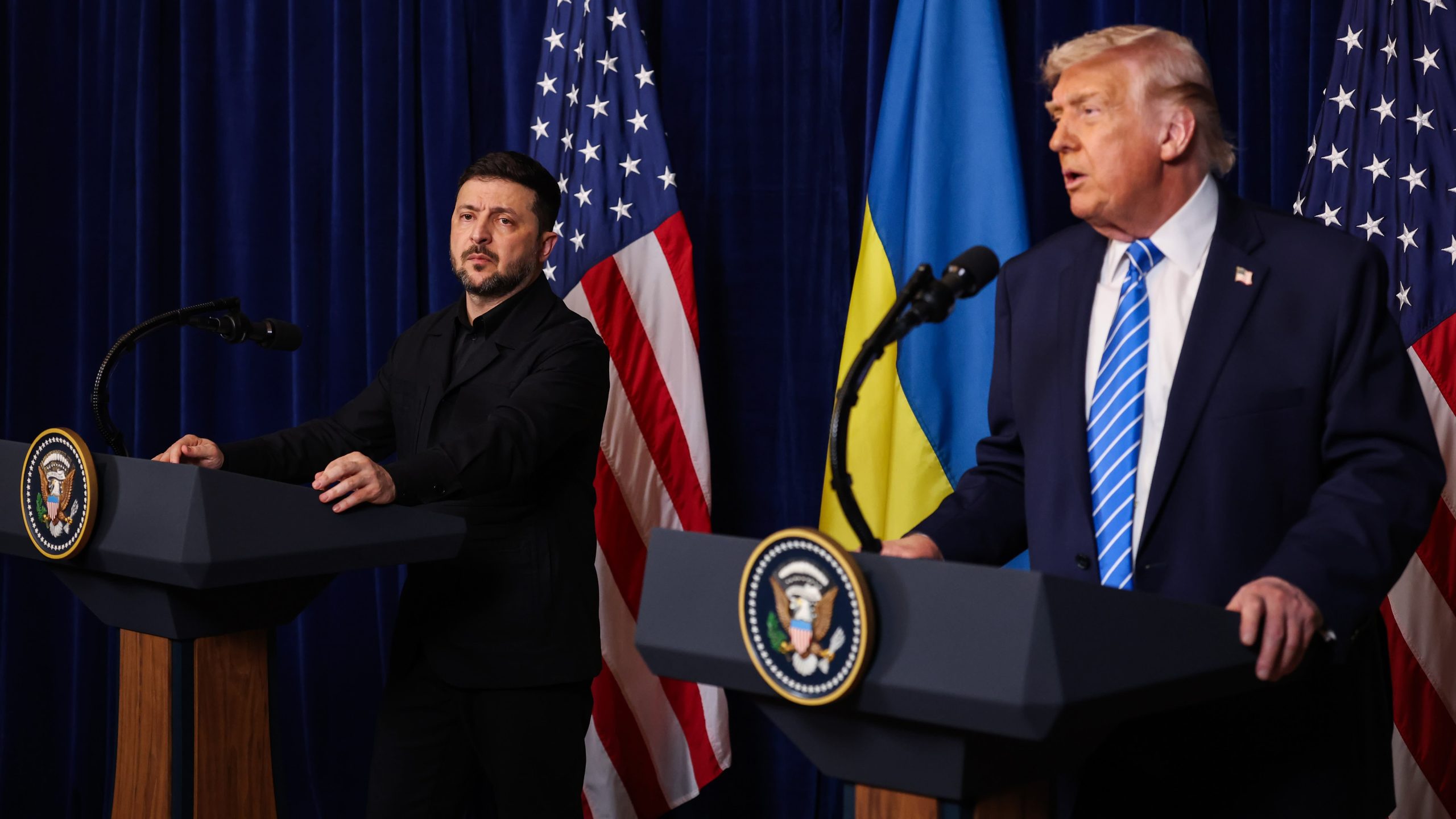
The high-stakes encounter between former U.S. President Donald Trump and Ukrainian President Volodymyr Zelenskyy at Trump Tower in New York was billed as a pivotal moment for transatlantic relations, yet the discussions concluded without a tangible breakthrough or a unified vision for ending the largest land war in Europe since 1945. While the meeting served as a crucial face-to-face engagement amid a volatile U.S. election cycle, it underscored a fundamental divergence in strategy: the transactional, "America First" realism of the Trump platform versus the sovereignty-focused "Victory Plan" championed by Kyiv. As the conflict enters its third year of grueling attrition, the lack of consensus between these two figures signals a period of profound uncertainty for global markets, defense spending, and the future of the North Atlantic Treaty Organization (NATO).
The meeting took place against a backdrop of increasing political polarization in Washington regarding the scale and duration of American support for Ukraine. Since the Russian invasion in February 2022, the United States has authorized over $175 billion in total aid, encompassing security assistance, economic support, and humanitarian relief. For Zelenskyy, the mission in New York was to secure long-term commitments that would survive any potential shift in the White House. For Trump, the session was an opportunity to reiterate his long-standing claim that he could broker a peace deal within 24 hours of taking office—a claim that many European allies view with skepticism, fearing it may involve coerced territorial concessions by Ukraine.
At the heart of the diplomatic impasse is the "Victory Plan" presented by Zelenskyy, which relies heavily on Western permission to use long-range weaponry for strikes deep into Russian territory and a clear, accelerated path to NATO membership. Trump, conversely, has frequently criticized the volume of aid sent to Kyiv, characterizing Zelenskyy as "the greatest salesman on earth" for his ability to secure multi-billion dollar packages. The former president’s rhetoric emphasizes a "fair deal" for the American taxpayer, often suggesting that European nations should shoulder a significantly larger portion of the financial burden. This "burden-sharing" argument has resonated with a segment of the American electorate but has caused consternation in Brussels, where leaders argue that the security of the European Union is inextricably linked to the outcome on the Ukrainian battlefield.
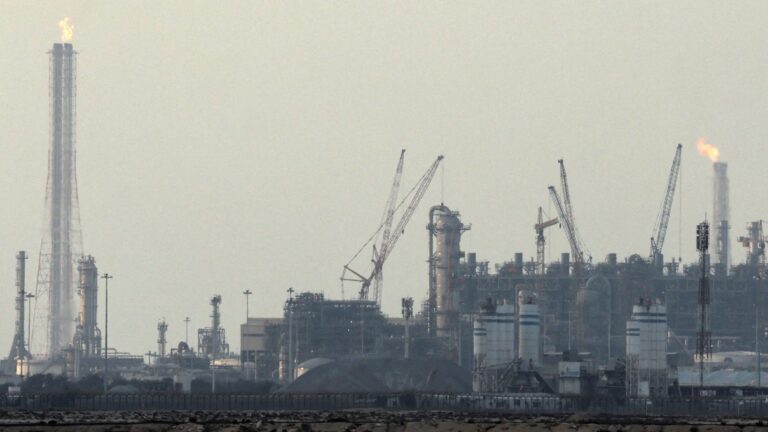
The economic implications of this diplomatic friction are far-reaching. Global energy markets remain sensitive to the stability of Eastern Europe, particularly as Ukraine continues to target Russian oil refineries and Russia retaliates against Ukrainian power grids. The potential for a sudden shift in U.S. policy toward a "frozen conflict" or a negotiated settlement has left energy analysts grappling with multiple scenarios. A prolonged war continues to necessitate the redirection of European energy infrastructure away from Russian gas toward more expensive Liquefied Natural Gas (LNG) from the United States and Qatar. Conversely, an abrupt peace deal that ignores the underlying causes of the conflict could lead to a volatile "gray zone" in Eastern Europe, deterring the massive private investment required for Ukraine’s reconstruction.
According to recent estimates from the World Bank, the Government of Ukraine, the European Commission, and the United Nations, the total cost of reconstruction and recovery in Ukraine has climbed to approximately $486 billion over the next decade. This figure is nearly three times the country’s pre-war GDP. The meeting in New York failed to provide the "market certainty" that international investors and construction conglomerates are seeking before committing capital to rebuilding projects. Without a clear security guarantee—something Trump has been hesitant to provide in the form of NATO membership—the risk premium for investing in Ukraine remains prohibitively high for many Western firms.
Furthermore, the defense industrial base in both the United States and Europe is currently calibrated for a high-intensity, long-duration conflict. Major defense contractors have seen their order books swell as Western governments replenish stockpiles of munitions, air defense systems, and armored vehicles. A sudden pivot in U.S. foreign policy toward isolationism or a forced peace could disrupt these long-term procurement cycles. Analysts note that the "peace dividend" of the 1990s has effectively been reversed, with NATO members now striving to meet or exceed the 2% of GDP spending target. The lack of a breakthrough between Trump and Zelenskyy suggests that defense spending will likely remain elevated as a hedge against geopolitical instability, regardless of the immediate outcome of the war.
The geopolitical stakes extend to the Indo-Pacific as well. Many foreign policy experts argue that the U.S. approach to Ukraine is being closely monitored by Beijing. A perceived abandonment of Kyiv by a future U.S. administration could be interpreted as a sign of waning American resolve in the face of territorial expansionism. This "credibility gap" is a central point of contention in the debate between the internationalist wing of the Republican Party and the populist wing led by Trump. During their meeting, Zelenskyy attempted to frame the conflict not just as a regional struggle, but as a defense of the global rules-based order—an argument that appeared to meet a cool reception from a former president who views international relations primarily through the lens of bilateral trade balances and national interest.
Russia’s role in this diplomatic dance cannot be overstated. President Vladimir Putin has shown no inclination to retreat from his stated goals of "denazification" and the permanent annexation of four Ukrainian regions, in addition to Crimea. The Kremlin’s strategy appears to be one of waiting out Western patience, betting that the political calendar in the West will eventually fracture the coalition supporting Kyiv. The failure of the Trump-Zelenskyy talks to produce a unified front provides Moscow with further evidence that the Western alliance is not monolithic. This perceived disunity emboldens Russian efforts to continue their offensive in the Donbas, despite staggering casualty rates and the degradation of their conventional military capabilities.
The agricultural sector, another critical pillar of the global economy, also hangs in the balance. Ukraine remains one of the world’s top exporters of grain, corn, and sunflower oil. The security of the Black Sea shipping lanes is paramount for food security in the Global South. A diplomatic stalemate that leads to a "war of attrition" ensures that global food prices will remain subject to the whims of military escalations. While the "grain corridor" has functioned with varying degrees of success, the lack of a comprehensive peace framework means that the threat of a global food crisis remains a persistent tail risk for commodity traders.
In the aftermath of the meeting, the rhetoric from both camps remained largely unchanged. Zelenskyy continues to insist that there can be no "peace at any price" and that any deal must be based on the principles of the UN Charter. Trump continues to maintain that his personal relationship with both Zelenskyy and Putin is the key to a swift resolution, though he remains vague on the specific terms of such a deal. This vagueness is a calculated political move, allowing him to criticize the current administration’s handling of the war without committing to a specific, potentially unpopular, policy of his own.
As the U.S. election approaches, the "Ukraine fatigue" mentioned by some Western politicians is becoming a tangible economic and social factor. High inflation and domestic infrastructure needs are often cited by opponents of continued aid. However, proponents argue that the cost of a Russian victory—both in terms of future defense spending and the potential for a wider European conflict—would far outweigh the current price of support. The meeting at Trump Tower did little to bridge this ideological chasm, leaving the international community to speculate on the future of the most significant geopolitical crisis of the 21st century.
Ultimately, the failure to deliver a breakthrough in New York reflects the broader reality of contemporary diplomacy in a multipolar world. The intersection of domestic politics, economic nationalism, and existential security threats has created a complex web that cannot be easily untangled by a single meeting. For Ukraine, the path forward remains a precarious balance of military resilience and diplomatic agility. For the United States and its allies, the challenge lies in defining a "victory" that is both strategically sound and economically sustainable. Until a common ground is found, the road to peace in Ukraine will remain obscured by the fog of war and the volatility of the political arena.