
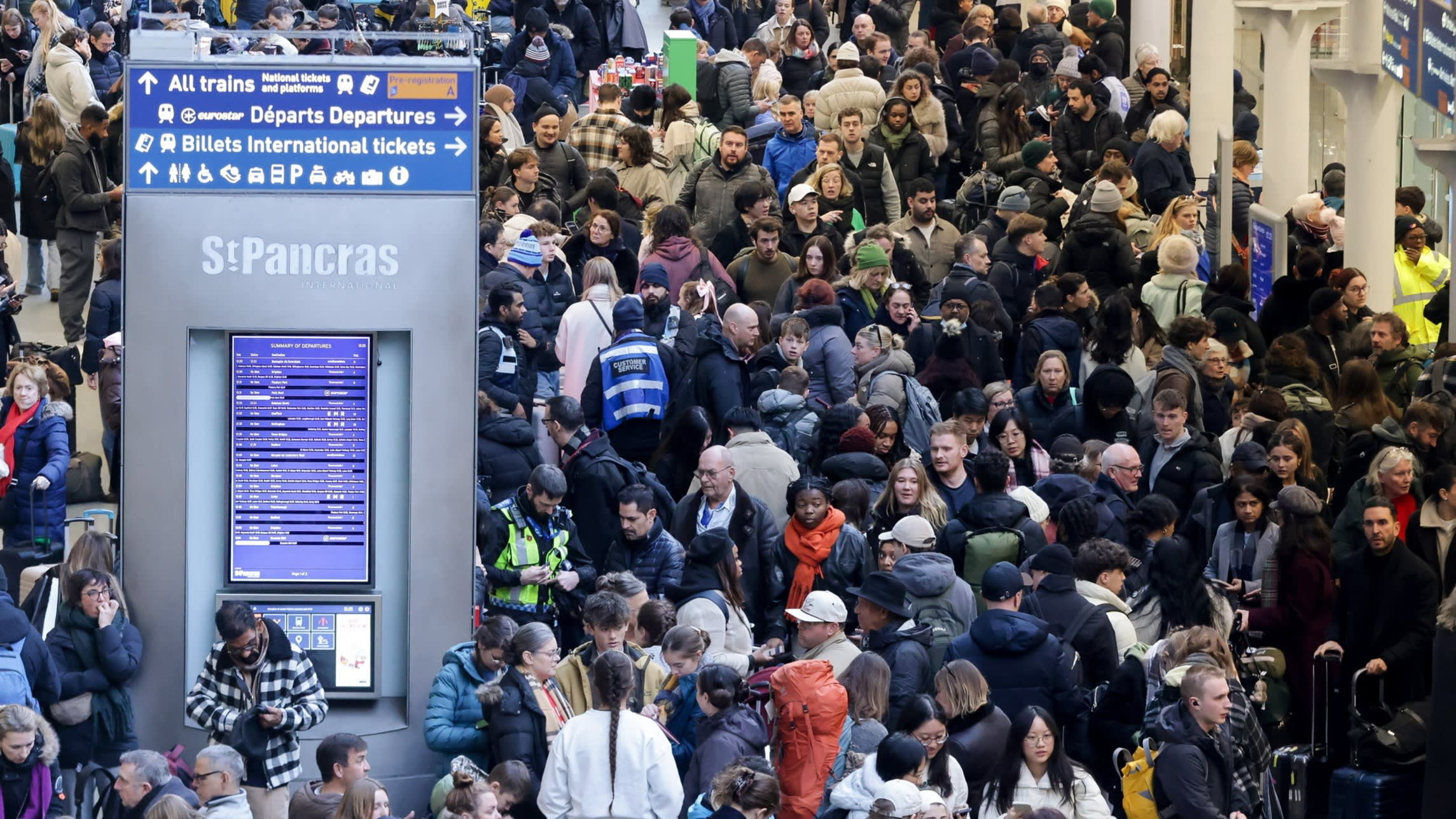
The vital artery connecting the United Kingdom to mainland Europe has been severed following a catastrophic power supply failure, forcing the indefinite suspension of all Eurostar services. This sudden paralysis of the high-speed rail network has left thousands of passengers stranded at major transport hubs, including London St. Pancras International, Paris Gare du Nord, and Brussels-South, while simultaneously sending shockwaves through the regional tourism and business sectors. The disruption, which operators have warned will persist "until further notice," highlights the acute vulnerability of international transit infrastructure and raises pressing questions regarding the resilience of the cross-border power grids that facilitate high-speed travel.
The technical failure appears to be rooted in the complex overhead line equipment (OLE) and the supporting power distribution network that feeds the 25kV AC electrification system required for high-speed rolling stock. While Eurostar operates the trains, the infrastructure within the Channel Tunnel is managed by Getlink (formerly Groupe Eurotunnel), while the high-speed tracks in the UK and France are maintained by Network Rail and SNCF Réseau, respectively. A fault of this magnitude, described by engineering experts as a systemic power delivery collapse, suggests a failure not just in a single wire, but potentially in a substation or a critical switching component that ensures the safe transit of trains through the 31-mile sub-sea tunnel.
For the Eurostar Group—a company that recently emerged from a period of significant financial restructuring following the COVID-19 pandemic and its subsequent merger with the Belgian-Dutch operator Thalys—this operational standstill represents a severe economic blow. Before the pandemic, Eurostar carried upwards of 11 million passengers annually. While ridership had been rebounding toward 2019 levels, an indefinite suspension threatens the company’s cash flow and its ability to service the heavy debt loads incurred during the 2020-2022 period. The "until further notice" timeline is particularly damaging for market confidence, as it prevents corporate travel departments and leisure travelers from making reliable forward bookings.
The immediate economic impact is most visible in the hospitality and retail sectors of London and Paris. Data from previous disruptions suggests that a 48-hour total shutdown of the Eurostar service can result in millions of euros in lost revenue for hotels, restaurants, and high-end retail outlets that depend on the "day-tripper" and weekend-break demographics. Furthermore, the suspension places immense pressure on alternative transport modes. Cross-channel ferry services at Dover and Calais have already reported a surge in bookings, leading to significant congestion on port-bound motorways. Similarly, short-haul airlines, including British Airways and Air France, have seen a spike in demand for the London-Paris and London-Brussels routes, with last-minute ticket prices skyrocketing as the supply-demand imbalance intensifies.
This incident also underscores the environmental cost of infrastructure failure. Eurostar has long positioned itself as the sustainable alternative to aviation, claiming that a single train journey produces up to 90% less carbon dioxide per passenger than a comparable flight. When the rail network fails, the forced migration of thousands of passengers back to carbon-intensive air travel represents a significant setback for regional decarbonization goals. If the suspension lasts more than a few days, the cumulative carbon footprint of the displaced travelers will be substantial, highlighting the irony that the "greenest" way to travel is also currently the most fragile.
From a broader European perspective, the power failure at Eurostar serves as a cautionary tale for the burgeoning high-speed rail industry. The European Union has long advocated for a "Single European Railway Area," aiming to shift more freight and passenger traffic from roads and skies to rails. However, the lack of a truly integrated, cross-border infrastructure management system remains a hurdle. When a fault occurs in the power supply of a trans-national line, the bureaucratic and technical coordination required to diagnose and fix the issue across multiple jurisdictions can lead to the very "indefinite" delays seen today.
Comparisons are inevitably being drawn to other global high-speed networks. In Japan, the Shinkansen system is renowned for its resilience, utilizing redundant power systems and highly advanced earthquake-detection sensors that can shut down and reboot sectors of the grid within seconds. Similarly, China’s expansive high-speed network incorporates massive investment in preventative maintenance and real-time monitoring. In contrast, the European network, parts of which are now several decades old, often suffers from underinvestment in the "invisible" parts of the system—the substations, the transformers, and the catenary wires that keep the trains moving.
The timing of this suspension is also politically sensitive. In the post-Brexit landscape, the Eurostar remains one of the few seamless physical links between the UK and the European Union. Any prolonged disruption to this link is often viewed through a geopolitical lens, emphasizing the physical and regulatory distance that has grown between the two entities. While this is a technical fault rather than a political one, the difficulty in coordinating a rapid response across the border reflects the friction that now exists in Anglo-European relations.
Experts in transport economics suggest that the long-term fallout of this suspension could involve a re-evaluation of the competitive landscape for cross-channel travel. For years, Eurostar enjoyed a de facto monopoly on the London-Paris route. However, competitors such as the Spanish operator Evolyn have expressed interest in launching rival services. A perceived lack of reliability in the existing infrastructure could either deter new entrants due to high operational risks or, conversely, accelerate the call for a second, more modern tunnel or a significant upgrade to the existing power grid to allow for competition and redundancy.
For the thousands of travelers currently displaced, the immediate concern is logistics. Eurostar’s refund and compensation policies will be put to the test, with the company likely facing a massive bill under EU and UK passenger rights regulations. These regulations generally entitle passengers to reimbursement or re-routing, along with meals and overnight accommodation if necessary. For a company that only recently stabilized its balance sheet, these unforeseen costs are a significant "black swan" event.
As engineers work to identify the root cause of the power supply fault, the focus remains on the "until further notice" status. In the world of high-speed rail, where precision is everything, the word "indefinite" is a catastrophic admission of uncertainty. It suggests that the fault may not be a simple broken wire, but perhaps a fundamental failure of a major transformer or a section of the grid that requires specialized parts not currently in stock.
In the coming weeks, there will undoubtedly be calls for a comprehensive audit of the Channel Tunnel’s infrastructure. The suspension serves as a wake-up call for governments in London, Paris, and Brussels: high-speed rail cannot fulfill its promise as the backbone of a modern, green economy if it is susceptible to total collapse from a single point of failure in the power supply. Until the lights come back on and the trains begin to move through the tunnel once more, the economic and social cost of this disconnection will continue to mount, serving as a stark reminder of how dependent modern society remains on the silent, often overlooked systems of the power grid.
The recovery of the Eurostar brand will depend not just on how quickly they can fix the current fault, but on how they communicate the steps being taken to ensure such a total system failure never happens again. For now, the platforms at St. Pancras remain eerily quiet, a silent testament to the fragility of the links that bind the continent together. The ripple effects will be felt long after the power is restored, as businesses and travelers alike reconsider the risks associated with a transit system that can be switched off "until further notice."