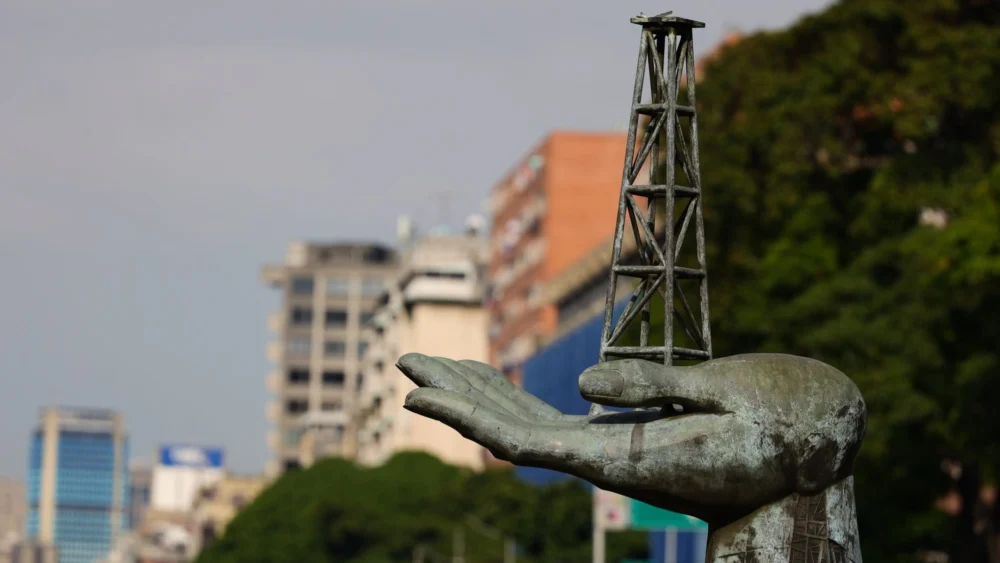
The landscape of the global energy sector is witnessing a stark divergence in strategy within one of the world’s most resource-rich but politically volatile territories. As Venezuela attempts to resuscitate its crumbling oil infrastructure and reintegrate into the global market, a new class of "wildcatters"—smaller, highly risk-tolerant independent firms—is aggressively pursuing deals that the world’s largest integrated energy companies are currently viewing with extreme trepidation. This shift marks a pivotal moment in the South American nation’s economic history, signaling a transition from the era of state-dominated monopolies and "Big Oil" partnerships toward a more fragmented and opportunistic investment environment.
For decades, Venezuela sat at the center of the global energy stage, boasting the world’s largest proven crude oil reserves, estimated at more than 300 billion barrels. However, years of chronic underinvestment, mismanagement at the state-run Petróleos de Venezuela, S.A. (PDVSA), and a suffocating web of international sanctions have seen production plummet from a peak of nearly 3.5 million barrels per day (bpd) in the late 1990s to fluctuations between 700,000 and 900,000 bpd in recent years. Today, the race to recover those lost barrels is being led not by the household names of the Permian Basin or the North Sea, but by a cadre of agile, often opaque, independent players willing to navigate the labyrinth of Caracas’s political and legal uncertainties.
The primary driver of this renewed interest is the fluctuating nature of U.S. sanctions policy. Following the expiration of General License 44—a broad six-month reprieve that allowed for the free flow of Venezuelan oil—the U.S. Treasury’s Office of Foreign Assets Control (OFAC) transitioned to a more granular, individual licensing regime under License 44A. This shift has created a unique "regulatory arbitrage" opportunity. While supermajors like Shell, BP, and TotalEnergies remain tethered to stringent compliance departments and ESG (Environmental, Social, and Governance) mandates that view Venezuela as a reputational minefield, smaller firms are moving into the vacuum. These independents are betting that they can secure individual licenses or operate in the "gray zones" of international trade, banking on the high probability that the global need for heavy crude will eventually outweigh political considerations.
These independent operators, often referred to in the industry as "wildcatters" for their willingness to drill in unproven or high-risk conditions, are bringing a different toolkit to the Orinoco Belt. Unlike the majors, which require multi-billion-dollar long-term commitments and decades of stability, these smaller entities are looking for quick-turnover projects. They are targeting mature fields that require relatively low-tech interventions—such as well workovers, pump replacements, and basic infrastructure repairs—to yield immediate increases in flow. For PDVSA, which is starved for both liquidity and technical expertise, these smaller-scale partnerships represent a lifeline, providing a way to bypass the logistical paralysis that has gripped the state giant.
However, the caution exhibited by the western supermajors is far from unfounded. The history of foreign investment in Venezuela is a cautionary tale of nationalization and legal battles. During the tenure of the late Hugo Chávez, several global giants, including ExxonMobil and ConocoPhillips, saw their assets seized without what they deemed fair compensation, leading to decade-long international arbitration cases. This historical trauma, combined with the current lack of a clear legal framework for private ownership in the upstream sector, makes the boardroom pitch for a Venezuelan return nearly impossible for many publicly traded companies. Furthermore, the 2024 election cycle in both Venezuela and the United States adds a layer of "binary risk"—a situation where a sudden shift in administration could lead to the immediate reinstatement of maximum-pressure sanctions, rendering any new investment stranded overnight.
Chevron remains the notable exception among the giants, having secured a specialized license (General License 41) that allows it to continue its joint ventures in the country. Chevron’s presence serves as both a blueprint and a deterrent. On one hand, it demonstrates that a path to profitability exists; on the other, the strict conditions of its license—which primarily focus on debt recovery rather than new capital infusion—highlight the limitations placed on traditional western players. For the wildcatters, Chevron’s success is proof of concept, but they are aiming for a more traditional profit-sharing model that PDVSA is increasingly desperate to offer.
The economic stakes for Venezuela could not be higher. The nation’s economy is almost entirely dependent on oil exports for hard currency. The decay of its refineries and the shortage of diluents—chemicals needed to thin the extra-heavy crude found in the Orinoco so it can be piped to the coast—have forced the country into expensive and complex swap deals with partners like Iran. By attracting independent western firms, Caracas hopes to diversify its dependency away from its traditional allies in Tehran, Moscow, and Beijing, potentially opening doors to more efficient Western technology and financial markets.
From a global market perspective, the return of Venezuelan crude is a significant variable in the supply-demand equation. As OPEC+ continues to implement production cuts to stabilize prices, and as geopolitical tensions in the Middle East threaten traditional supply routes, the prospect of an additional 500,000 to 1 million barrels per day from Venezuela is a tempting proposition for global refiners, particularly those on the U.S. Gulf Coast designed specifically to process heavy sour crude. The wildcatters are essentially the vanguard of this supply return, acting as the "scouts" for a market that is hungry for alternatives to Russian Urals or Middle Eastern grades.
The operational challenges, however, remain immense. Decades of neglect have left the Venezuelan power grid unstable, and the oil industry’s auxiliary infrastructure—pipelines, storage tanks, and export terminals—is in a state of advanced disrepair. Any firm entering the fray must be prepared to not only manage oil wells but also to rebuild entire ecosystems of logistics and power. This requires a level of hands-on, boots-on-the-ground management that many large, centralized corporations find difficult to execute in a high-sanctions environment. The independents, often staffed by former industry veterans with deep regional experience, are frequently better positioned for this type of "guerrilla" engineering.
The rise of these smaller players also raises significant questions regarding transparency and environmental standards. While major oil companies are under intense scrutiny to meet net-zero targets and report on their carbon footprint, smaller, privately held firms often operate with far less public oversight. In the ecologically sensitive regions of the Orinoco, the potential for environmental degradation is a growing concern for international observers. The lack of a robust regulatory body in Caracas to enforce environmental compliance means that the "wildcatter" era could come at a significant ecological cost, further complicating the country’s long-term relationship with the international community.
As the race intensifies, the role of the U.S. Department of the Treasury remains the ultimate arbiter. The Biden administration’s "carrot and stick" approach—offering sanctions relief in exchange for democratic concessions—has created a stop-and-start rhythm that favors the agile. If the political situation in Caracas remains deadlocked, the wildcatters may find themselves as the only bridge between Venezuela’s vast underground wealth and the global market.
In the coming months, the industry will be watching closely to see which of these independent firms successfully navigates the transition from signed contract to actual production. Their success or failure will determine whether Venezuela can begin a meaningful recovery or if its oil sector will remain a landscape of "what ifs" and "could have beens." For now, the supermajors remain in a holding pattern, watching from the sidelines as a new generation of risk-takers attempts to unlock the most complicated energy puzzle in the Western Hemisphere. The stakes are a high-stakes gamble on the future of global energy security, regional stability, and the survival of the Venezuelan state.