India’s burgeoning defence technology ecosystem is undergoing a profound transformation, moving beyond its traditional reliance on physical hardware to embrace sophisticated software capabilities as the cornerstone of future growth and strategic autonomy. Bolstered by a significant surge in venture capital and robust governmental support, startups are strategically pivoting to become comprehensive, full-stack defence solution providers, recognizing that enduring value and operational superiority increasingly reside in intelligent, adaptable digital systems. This shift is not merely an incremental upgrade but a fundamental reorientation, driven by the imperative for interconnectedness, sovereign control, and rapid adaptability in modern warfare.
The impetus for this strategic pivot is multifaceted. Global geopolitical tensions underscore the critical need for advanced, indigenous defence capabilities, prompting India to accelerate its ‘Make in India’ and ‘Aatmanirbhar Bharat’ (self-reliant India) initiatives. Defence and intelligence agencies are demanding systems that are not only robust in their physical manifestation but also agile and resilient in their digital core. Anirudh Sharma, co-founder and CEO of Digantara, a space-surveillance startup, articulates this shift: "Everybody in the intelligence and defence community wants interconnected systems. Software has become equally important because it’s easy to adapt and scale." Digantara, which initially focused on hardware platforms in 2020, quickly realized that defence clients desired direct, sovereign control over the underlying software layer. This insight led them to evolve into a full-stack provider, offering integrated hardware and software solutions that promise long-term contracts through remote update capabilities, bypassing lengthy procurement cycles often associated with hardware replacements. This comprehensive approach allows firms to charge a premium, which intelligence agencies are increasingly willing to pay for enhanced security and control.
Despite this growing recognition of software’s importance, the procurement landscape still presents a unique challenge. Unlike the commercial sector’s embrace of Software-as-a-Service (SaaS) models, defence buyers often remain hesitant about subscription-based software. Ankit Mehta, co-founder of ideaForge, a prominent drone manufacturer, notes, "Procurement and financial approvals still lean heavily towards hardware acquisitions." For many hardware manufacturers, annual maintenance contracts remain the primary revenue stream, with software often treated as an embedded add-on. Similarly, Galaxeye, specializing in space surveillance, observes that software upgrades are typically tied to hardware refresh cycles, rather than being perceived as a continuously evolving capability in their own right. This structural inertia within defence procurement bodies necessitates a delicate balance for startups, requiring them to integrate software value into hardware offerings while gradually educating clients on the long-term benefits of digital resilience and continuous innovation. Venture capitalists, however, view hardware as the initial launchpad, believing that substantial defence conglomerates will ultimately emerge from this foundation by building out robust software layers. As Vishesh Rajaram, co-founder and managing partner at deeptech-focused Speciale Invest, explains, "Hardware investments are the foundation on which you’ll see larger companies emerge."

The strategic urgency to bolster India’s defence capabilities has catalyzed an unprecedented funding boom. Following critical operational imperatives, the Indian armed forces initiated emergency procurement provisions, securing contracts worth nearly ₹2,000 crore for equipment ranging from drone-detection systems and short-range air-defence systems to remotely piloted aerial vehicles and low-level lightweight radars. This decisive government intervention, coupled with a renewed policy push for indigenization, has transformed the defence-tech investment landscape. The Union Defence Ministry’s unveiling of the Defence Procurement Manual (DPM) 2025 further underscores this commitment, setting a 25% procurement reservation for micro, small, and medium enterprises (MSMEs) and significantly easing turnover, experience, and bidding norms for startups. This policy shift has effectively de-risked the sector for investors who previously shied away from the defence industry due to its perceived ‘lumpy’ or irregular revenue cycles. Consequently, Indian defence tech startups collectively raised an impressive $329 million in 2025 alone, surpassing the $256 million raised in the preceding four years combined (2020-2024), according to data from Venture Intelligence. This surge reflects a fundamental change in investor sentiment, as articulated by Mayuresh Raut, co-founder and managing partner at Seafund: "I wouldn’t have imagined that venture capital would overcome its reservations about this industry and see defence tech as a source of the next wave of value-accretive businesses."
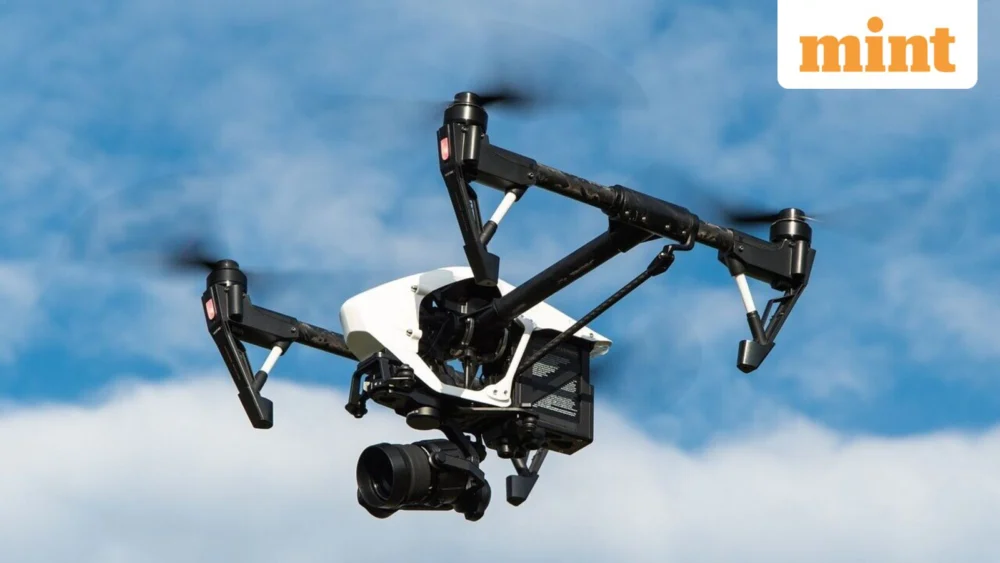
However, the rapid growth has also revealed a concentration issue. Of the 78 defence startups founded between 2020 and 2025, over a third are focused on drone systems or Unmanned Aerial Vehicles (UAVs), as per startup data platform Tracxn. This focus, while addressing immediate operational needs, raises questions about the breadth of innovation. Navneet Kaushik, a former Indian Navy commander and founder of Jamwant Ventures, points out the low barrier to entry in the drone sector, often involving technology transfer or assembly rather than groundbreaking innovation. His fund actively seeks to diversify its portfolio, investing in companies like Spacefields (propellant systems), Axiel Aero (flight simulators), and AstraYAN (digital platforms for smart ships), which tackle more complex, foundational challenges. Despite the drone concentration, leading players like ideaForge and Raphe Mphibir (which secured a $100 million round in June 2025) acknowledge that true differentiation and future-proofing lie in owning the full software stack—encompassing electronic warfare resilience, edge intelligence, and network integration. This recognition highlights a nascent understanding that while hardware provides the platform, software dictates its intelligence, adaptability, and operational longevity.
The Indian defence-tech ecosystem, while rapidly expanding, is still in its formative stages, striving to evolve into a mature, comprehensive capability provider. Policy incentives and procurement structures have historically favored hardware-first strategies, leading to longer gestation periods for startups. Software, despite its inherent modularity and upgradeability, has often been relegated to an adjunct role rather than a standalone capability, reinforcing initial startup strategies that prioritize platform development over intelligence layers. Kartik Bommakanti, a senior fellow with the Strategic Studies Programme at the Observer Research Foundation, suggests this historical context has shaped the current trajectory. Furthermore, the entrepreneurial landscape in India has lacked the deep, symbiotic relationship with the industrial-military complex that has fostered innovation in countries like the United States. "To build a pure-play software company in defence, entrepreneurs also need to know the ground realities of what the actual requirements are on the battlefield," emphasizes Kaushik. This gap in battlefield insights and understanding of operational needs can hinder the development of truly disruptive software solutions.
Nevertheless, the long-term opportunity for software-driven innovation remains immense. Venture funds like Seafund are actively developing playbooks for investing in defence-related software companies, recognizing that "hardware and software go hand in hand, at least for the moment." The potential to ‘smarten’ legacy military hardware through advanced software solutions represents a significant untapped market. Beyond drones, emerging opportunities lie in space and aerospace technologies, component plays for radar systems, quantum cryptography, and optical communications – areas where software and deep tech convergence will be critical. As India aims to become a net exporter of defence equipment, the development of sophisticated, proprietary software solutions will be paramount for competitive differentiation on the global stage. This transformation promises not only enhanced national security but also significant economic ripple effects, fostering a high-skill workforce, generating intellectual property, and reducing reliance on foreign defence imports. The journey from metal to code is a complex one, but it is unequivocally positioning India to forge a self-reliant and technologically advanced defence future.